
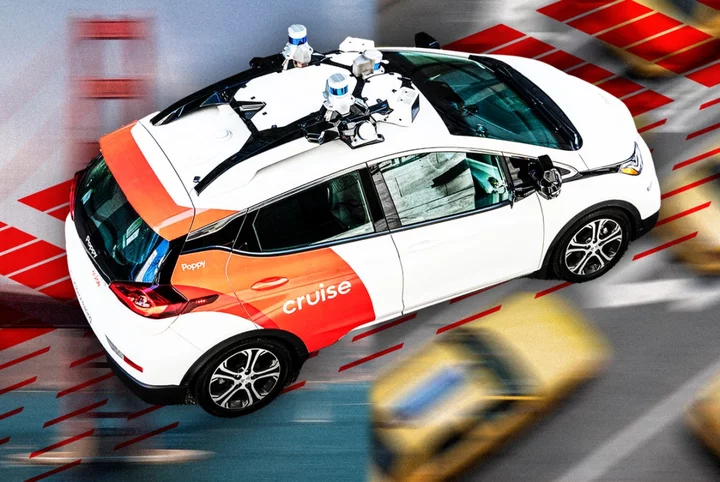
How a vote to empower autonomous ‘robotaxis’ from Cruise and Waymo has divided San Francisco
The future was waiting outside my door, and it was an electric taxi named Saxophone. On Wednesday, 9 August, on the eve of a much-watched vote to expand the footprint of autonomous vehicles (AV) in San Francisco, I summoned a driverless taxi from the company Cruise for a test drive. The Cruise AVs, which began operating paid, Uber-like on-demand rides in June of 2022, are a frequent sight in my San Francisco neighbourhood, the Richmond. And they’re about to get even more ubiquitous: on Thursday evening, following a marathon seven-hour public comment session, the California Public Utilities Commission (CPUC) voted 3-1 to allow Cruise and Google parent company Alphabet’s Waymo venture to run paid rides, without a safety driver in the cabin, 24/7 on San Francisco streets. Much like the members of the public who turned out in droves to comment on the vote, I have mixed feelings about autonomous vehicles. I’ve been trailed, somewhat ominously, on backstreets by a Cruise AV as I rode my bike, with the robo-driver declining to pass me like most human pilots would. I’ve seen a homeless man approach the window of a robotaxi to ask for change, only to find no one inside, a metaphor of San Francisco inequality a bit too on the nose even for a writer like me. I decided, for the time being, to leave the public debating to the local officials and longtime San Francisco residents and start with the basics: what was it like to ride in one of these things? For a 0.8 mile, one-way ride to the local grocery store, I was charged $8.26, about a dollar per minute of driving time. The ride was smooth, though the Cruise AV would occasionally move in a way that was, while perfectly safe, not quite human, gliding without hesitation within inches of a parked SUV’s bike rack, hesitating ever-so-slightly within the normally smooth arc of a turn, accelerating with an almost imperceptible stutter after it dropped me off. Still, I was lucky. Earlier this month, an NBC reporter taking a test drive was stuck inside a Cruise that mysteriously stalled, then blocked two lanes of traffic as it idled at a 45 degree angle against the median. After I got home, driven by “Flora,” I looked it up and the price of my roundtrip was virtually identical to that of an Uber. I sat there thinking about the strange economics of 2023 San Francisco, where the product of billions of dollars of investment had delivered a service that was both an incredible technical leap, the stuff of the Jetsons, that also offered me no financial advantage, snatched a job from a rideshare driver, and took me on a round trip that would’ve been 15 minutes faster – and free – on a rusty old bike. The future had arrived, but was it one that I, or San Francisco, really wanted, let alone needed? Wednesday’s vote exposed how deeply divisive such technologies are in San Francisco, and the thorny considerations inherent in any attempt to carry out large-scale changes to the transit system. Human drivers are unsafe death machines themselves, killing thousands of people each year. And the need for green mass transit has never been higher. But are autonomous vehicles the best solution? The companies, at least, celebrated the decision as heralding a moment of great progress. “Offering a commercial, 24/7 driverless ridehail service across San Francisco is a historic industry milestone – putting Cruise in a position to compete with traditional ridehail, and challenge an unsafe, inaccessible transportation status quo,” Prashanthi Raman of Cruise said in a statement to The Independent. It was indeed major victory for the industry, though regulators warn there’s still much work to be done before autonomous vehicles flood the roads. “The conversation on how best to integrate AVs into our community is far from over,” said CPUC president Alice Busching Reynolds, who voted for the expansion. One commissioner, Genevieve Shiroma, wasn’t yet convinced, and argued the industry hasn’t given good enough data and has been too quick to brush off reports of driverless vehicles behaving strangely around first responders. “Imagine if one of those so-called anecdotes involved a member of your family in need of urgent medical attention, or was trapped in a burning building,” she said, adding, “All it takes is one real-life example.” Outside of the Public Utilities Commission building, protesters rallied and drew messages like ‘people not profits’ in chalk on the sidewalk, as AV company employees showed out in matching t-shirts. Inside, commissioners heard a mosaic of different opinions. “We are in desperate need of people coming to San Francisco,” Matthew Sutter, who has been driving a taxi cab for 31 years, told the commission. “You’re going to take away jobs with this thing.” Meanwhile, a man named Michael Martinez said expanding Cruise and Waymo’s footprint in San Francisco would mean the city, already one of the most expensive and unequal places to live in America, was “pimped out by yet another couple of large tech companies so that all their employees here wearing yellow shirts might get to cash out their stock options.” Numerous advocates pointed out how driverless cars could discriminate against disabled people, given that they sometimes drop people a few doors down from their chosen destination, and they don’t have drivers who are able to help people with wheelchairs or other mobility aides enter or exit a vehicle. A taxi driver can help someone carry their groceries to a front door, but an AV can only go from place to place. Others argued the technologies would in fact help disabled people, overcoming the “last mile problem” of public transit, when passengers aren’t able to get all the way to their destination, and that AVs would limit dangerous human errors like distracted driving. “Too often, patients don’t make it to my operating room because they have been killed by distracted drivers or road rage,” an orthopedic surgeon testified. A representative for Mothers Against Drunk Driving said Cruise and Waymo could be a “pillar” of stopping the “100 per cent preventable crimes” of drunk driving deaths. Robotaxis began operating paid taxi services in San Francisco in June of 2022, and since then, hundreds of Cruise and Waymo vehicles have filled the streets. The city, synonymous with Silicon Valley technology and innovation, is seen as the most important test yet of AV technology, a high-profile audition for a future of mass, autonomous transit. “Operating robotaxis in SF has become a litmus test for business viability,” Cruise CEO Kyle Vogt wrote on X in April. “If it can work here, there’s little doubt it can work just about everywhere.” So far, the experience has been mixed, with a fleet of up to 400 autonomous taxis at a time carrying out thousands of successful rides – and enraging some local residents and city officials, who say the robotaxis carry out bizarre and unsafe behaviour on a regular basis with little accountability. On 21 January, for example, San Francisco firefighters were battling a blaze on Hayes Street when they saw a driverless taxi from Cruise gliding towards them. The Cruise vehicle, a modified electric Chevrolet Bolt, was heading straight for their hoses. The firefighters made attempts to stop the vehicle, but couldn’t. First responders were only able to halt the car once they shattered its window, according to a letter from city officials. Local transit activists say Cruise and Waymo vehicles can be seen creeping creepily towards pedestrians on sidewalks, blocking buses, and getting in the way of first responders. “I’ve seen them not totally stop at a stop sign,” an activist with the local transit group Safe Street Rebel, who asked to remain anonymous, told The Independent. “I’ve seen them get too close to pedestrians. I personally have felt very unsafe crossing the road whenever there is one stopped. I see them stalled on the streets, too. I just saw that the other day one stalled, blocking an emergency vehicle. This is something that they just do on their own.” The group has carried “cone-ing” protests, placing traffic cones on top of empty AVs to temporarily stall them. According to data Cruise shared with CPUC earlier this week, between January and mid-July of 2023, Cruise AVs temporarily malfunctioned or shut down 177 times and required recovery, 26 of which such incidents occurred with a passenger inside, while Waymo recorded 58 such events in a similar time frame. Meanwhile, according to the San Francisco Municipal Transit Agency (SFMTA), between April 2022 and April 2023, Cruise and Waymo vehicles have been involved in over 300 incidents of irregular driving including unexpected stops and collisions, while the San Francisco Fire Department says AVs have interfered 55 times in their work in 2023. Last year, Cruise lost contact with its entire fleet for 20 minutes according to internal documentation viewed by WIRED, and an anonymous employee warned California regulators that year the company loses touch with its vehicles “with regularity.” (The company said at the time Cruise cabs have “fallback” systems directing them to turn on their hazard lights and pull over in the face of such problems.) Since being rolled out in San Francisco, robotaxis have killed a dog, caused a mile-long traffic jam during rush hour, blocked a traffic lane as officials responded to a shooting, and driven over fire hoses. Jeffrey Tumlin, San Francisco’s director of transportation, has called the rollout of robotaxis a “race to the bottom,” arguing Cruise and Waymo weren’t yet definitive transit solutions, and instead had only “met the requirements for a learner’s permit.” "The biggest concern is that someone is going to get really severely injured or killed because we cannot properly respond to an incident," San Francisco fire chief Jeanine Nicholson said in June. "Or if they can get in the way at an incident. We’ve really gotten lucky so far, but it’s only a matter of time before something really, really catastrophic happens." “We have 160,000 calls a year. We don’t have the time to personally take care of a car that’s in the way when we’re on the way to an emergency,” she added. Others worry the AV technology will cause another shock to workers in the city, displacing more transit jobs that were already turned upside-down or eliminated with the arrival of Uber and Lyft. “We’re already seeing it,” Jose Gazo, an Uber driver, told The San Francisco Standard in July. “With business going like this, we’re going to go homeless.” Not that taxis were a particularly worker-friendly technology in San Francisco, either. In 2010, the city began auctioning off driver medallions for $250,000 a piece. Declining taxi revenues, combined with a sky high cost of living, has left many San Francisco taxi drivers barely making survival wages in order to pay off debts on their cabs, even as the future of this investment looks increasingly doubtful. The autonomous vehicle companies insist that human drivers are the real risk. Car crashes are a leading cause of death in the US, according to the CDC, and Cruise and Waymo point to the fact that their AVs haven’t been involved in a single fatal accident in San Francisco. (Such deaths have occured in the US, though; an Uber self-driving vehicle with a backup driver was involved in a 2018 accident in Arizona that killed a pedestrian.) “Autonomous vehicles don’t get drunk or drowsy. They don’t text at the wheel,” Waymo co-CEO Tekedra Mawakana wrote in a July column in the San Francisco Chronicle. “We want our vehicles to improve road safety and to contribute to the city’s economic recovery and its Vision Zero goal of no street fatalities.” However, unlike their fleshy, distractable human cousins, autonomous drivers (and thus their corporate owners) cannot be cited by police for common moving violations like reckless driving or speeding. “The data to date indicates the Waymo Driver is reducing traffic injuries and fatalities in the places where we operate,” the company told The Independent in a statement. “In particular, in a million miles of fully autonomous operations, we had no collisions involving pedestrians or cyclists, and every vehicle-to-vehicle collision involved rule violations or dangerous behavior on the part of the human drivers.” “2022 was the worst year for traffic deaths in San Francisco in nearly a decade,” it added. “Waymo’s mission is to improve road safety and mobility for everyone.” Some city officials, meanwhile, say the companies are attempting to sell a safety record that hasn’t been fully open to public scrutiny, with the companies allegedly declining to share full data or giving city officials redacted reports. “Given that we do not have actual data, what we have is information from reports that have been made by members of the public, by city employees, by firefighters, by transit operators,” Julia Friedlander, senior manager of automated driving policy at the SFMTA, said at a Monday CPUC meeting. “And what we have seen is that things are not getting better. The monthly rate of incidents has been growing significantly over the course of 2023. You’ll see that June was the month with the highest number of incidents of all kinds.” The companies also argue AVs are a green solution. Cruise wrote in a 2022 blog post that “of the nearly 900,000 autonomous miles Cruise drove in 2021, not one added to CO2 emissions, and all were powered by 100% renewable energy.” Some, however, are sceptical of this claim, noting that any transit method that encourages individual car use over low-cost, mass public transit is inherently inferior. “This just adds more cars onto the road. It diverts our attention and financial investment and even legislative action to invest in public transit. It puts more cars on the road,” the Safe Street Rebel activist told The Independent. “We’re big fans of technology that actually benefits people,” she added. “Trying to graft unreliable technology onto a wasteful, dangerous, inefficient mode of transport is hardly looking to the future.” Read More Is this $6.6 billion flying car startup the future of green transit, or just another rich guy fantasy? Recalling a wild ride with a robotaxi named Peaches as regulators mull San Francisco expansion plan Waymo self-driving car kills a dog in San Francisco
2023-08-12 06:19
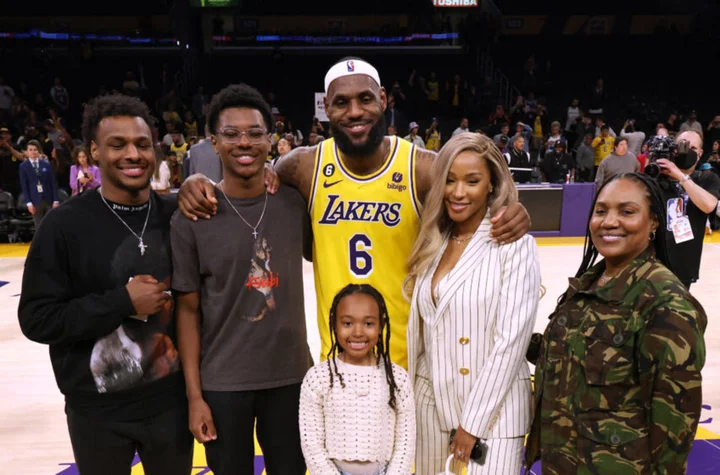
NBA rumors: Bob Myers' new job, LeBron's son transfers, Porzingis injury
NBA Rumors: Former Warriors GM Bob Myers to join NBA CountdownBob Myers stepped down from his role as President of Basketball Operations for the Golden State Warriors in late May after failing to agree to terms on an extension. Myers won four rings as the ringleader in Golden State, becoming well-...
2023-08-12 05:59

Why has Lizzo been dropped from Super Bowl LVII Halftime Show consideration? Rapper accused of sexual harassment by former dancers
The unexpected incident has created a dent in Lizzo's image and now her team is trying their best to 'save her sinking ship' of a career
2023-08-12 05:56
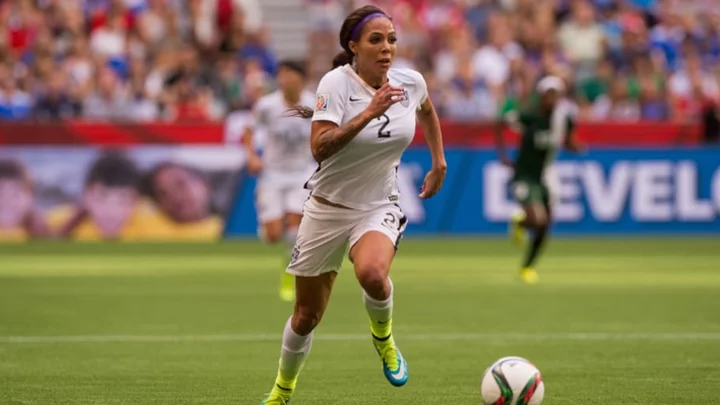
Former USWNT figure Sydney Leroux responds to Lineth Beerensteyn's World Cup dig
Former USWNT star Sydney Leroux responded to Lineth Beerensteyn's comments about the US' exit from the World Cup.
2023-08-12 05:54
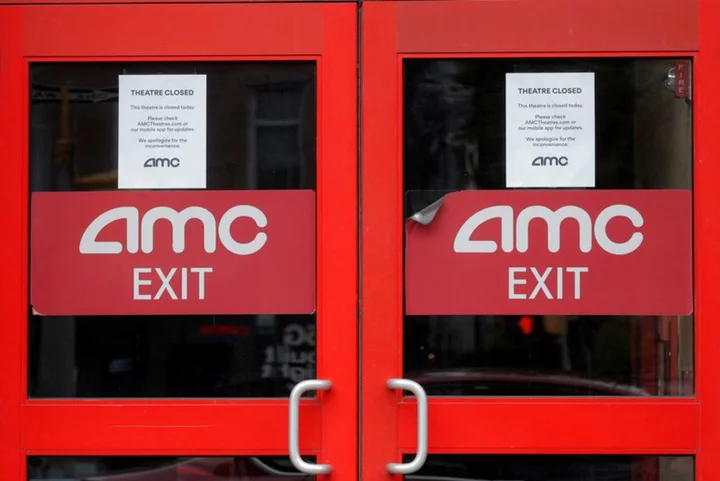
AMC Entertainment gets approval for revised investor settlement, stock soars
By Tom Hals and Jody Godoy WILMINGTON, Delaware (Reuters) -A Delaware judge approved AMC Entertainment's revised stockholder settlement on Friday,
2023-08-12 05:51
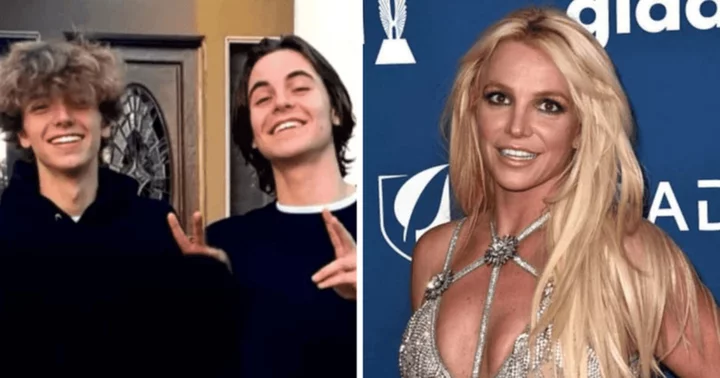
Are Britney Spears' sons safe? Singer's children who just moved to Hawaii find the wildfires situation 'very traumatic'
Britney Spears' sons, Sean and Jayden, were enthusiastic about building their future in their new home state
2023-08-12 05:50
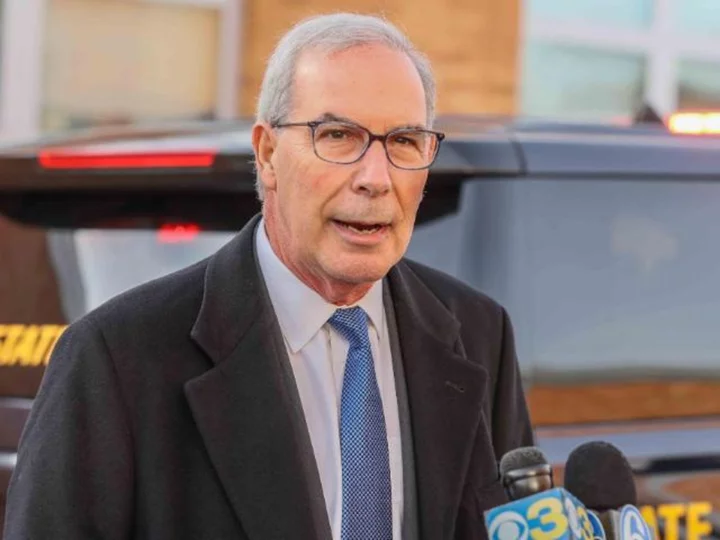
Why was Weiss named special counsel to investigate Hunter Biden? It's complicated.
Attorney General Merrick Garland did not provide a robust explanation on Friday for why he needed to give US attorney David Weiss special counsel status for the Hunter Biden probe, or why it was necessary five years after the investigation began.
2023-08-12 05:49
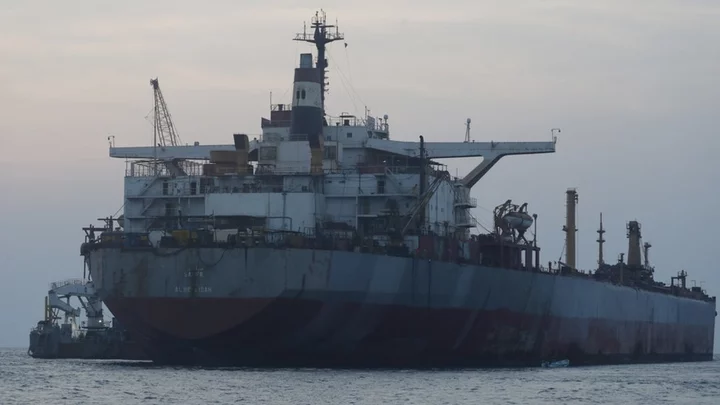
Yemen: Oil salvaged from abandoned 'time bomb' tanker in Red Sea
It was feared the decaying vessel left floating in the Red Sea could explode or cause a major spill.
2023-08-12 05:47
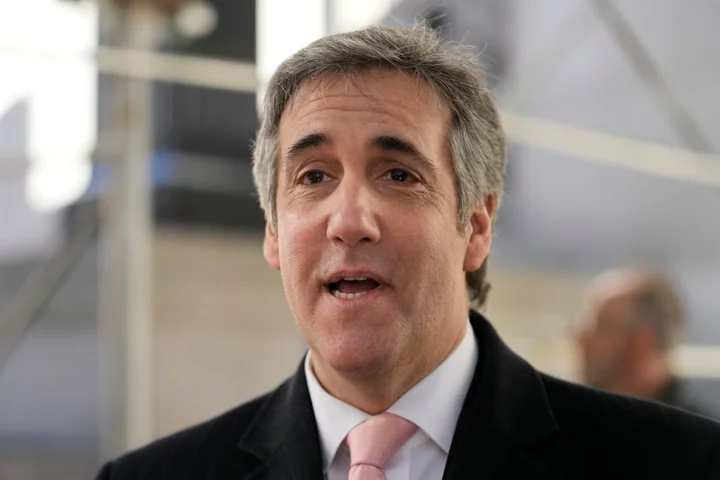
Trump’s former fixer Michael Cohen reveals he’s considering running for Congress
Michael Cohen, former President Donald Trump’s former attorney, is reportedly weighing a run for Congress. “I am interested and there’s a multitude of folks encouraging me to run,” the former president’s former fixer told Semafor. Mr Cohen told the outlet that he would run as a Democrat. “I’m still contemplating the run,” Mr Cohen confirmed to The Independent, but said he wouldn’t be divulging any further details, like a timeline or what would sway his decision one way or another, at this time. Mr Cohen told The Independent that he has been living in Manhattan since 1991. He lives on the East side of Manhattan, according to Semafor, meaning he would run against Rep Jerry Nadler in the 12th congressional district. Mr Nadler is the top Democrat on the House Judiciary Committee and has served in Congress since 1992. A potential congressional run for Mr Cohen would be particularly interesting during the next election cycle, as he is likely to be a key player in the Manhattan trial against Mr Trump involving hush money payments made to adult film star Stormy Daniels. Mr Cohen admitted to paying Ms Daniels hush money payments during Mr Trump’s 2016 campaign — after being directed by Mr Trump to do so. The former president was indicted in March by a grand jury and pleaded not guilty to 34 felony charges for falsification of business records. Mr Cohen has been an outspoken critic of Mr Trump in recent years, and the pair have been engaged in ongoing legal battles. Earlier this month, Mr Trump was called to sit for a September deposition as part of his $500m lawsuit against his former attorney, claiming that he has “suffered vast reputational harm as a direct result of Defendant’s breaches.” Last month, Mr Trump reached a settlement with Mr Cohen over $1.3m in unpaid legal bills. Read More All of Trump’s lawsuits and criminal charges and where they stand Michael Cohen claims Trump’s son-in-law Jared Kushner ‘probably a cooperating witness’ in probe Trump called for deposition in $500m lawsuit against Michael Cohen
2023-08-12 05:46

Polish police arrrest five in swoop on cyber crime site
WARSAW Polish police arrested five people suspected of being responsible for running a web platform that has been
2023-08-12 05:27
Wynn Resorts pulls the plug on WynnBET in certain US markets
Wynn Resorts is winding down its online sports betting and iGaming platform, WynnBET, in certain U.S. states due
2023-08-12 05:25
Texas Republicans invoke Noah’s Ark to defend Greg Abbott’s floating Rio Grande border wall in DoJ lawsuit
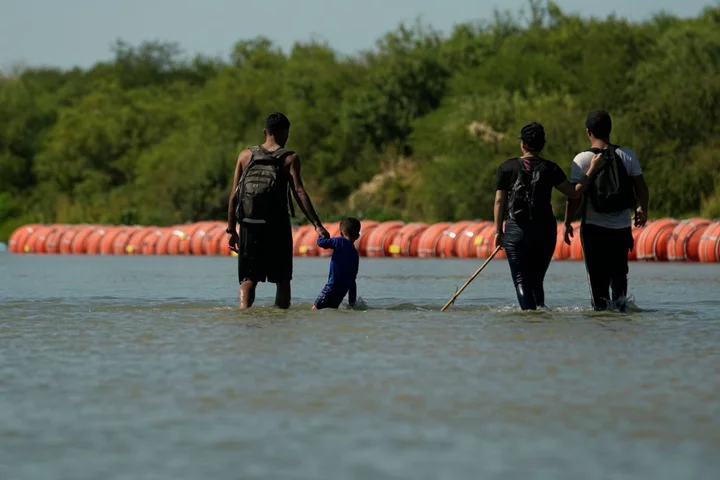
A group of Republican members of Congress are invoking Noah’s Ark and an obscure legal theory to defend Texas governor Greg Abbott’s controversial floating border wall in the Rio Grande, after the Justice Department sued the state and claimed the barrier violates federal law. On Wednesday, a delegation led by US Representative Jodey Arrington of Texas, alongside the Texas Public Policy Foundation, filed an amicus brief in federal court, arguing the Department of Justice is mistaken to argue that the 1,900-mile Rio Grande, the fourth largest river in North America, is a navigable waterway under the definition of federal regulations. The brief argues that an 1870 court case defines navigable waterways as those used in interstate or international commerce. “Indeed, if one takes the Book of Genesis literally, then the entire world was once navigable by boats large enough to carry significant amounts of livestock,” the brief reads. “Under the federal government’s theory, these anecdotes would render any structure built anywhere in Texas an obstruction to navigation subject to federal regulation.” Last month, echoing the arguments from Mr Abbott, Representative Arrington argued that Texas is under “invasion” by drug cartels, so the US Constitutional authorises emergency, military-style action like deploying national guardsmen and building border barriers without federal permission. “The sovereign states created the federal government,” he said, “not the other way around. When the states entered into that social contract of the Constitution of the United States, they may have ceded some of their authority to the central government but they didn’t surrender their sovereignty.” Legal experts told The Independent that this interpretation of the Constitution’s “Invasion Clause” is mistaken and has previously been struck down in federal immigration cases. Last month, the Biden administration sued Governor Abbott, arguing his plan to install thousands of feet of saw-tipped border barriers in the middle of the Rio Grande violating the federal Rivers and Harbors Act by failing to seek permission to build from the US Army Corps of Engineers. The river barrier is also facing a state lawsuit from a river guide named Jessie Fuentes. “You’ve taken a beautiful waterway and you’ve converted it into a war zone,” he told The Independentlast month. Other Texas members of Congress have criticised the border barriers, arguing they are putting already vulnerable migrants at greater risk of death or serious injury. “Today was eye-opening,” Rep Sylvia Garcia of Texas wrote on X this week during a border visit, sharing a video of the orange buoys used in the Rio Grande which are separated with blade saw-like barbed disks. “Seeing the barbaric, inhumane, and ungodly practices in my home state of Texas. This is beyond politics and crosses a line into human rights violations.” Read More Greg Abbott slammed by Texas lawmakers for ‘cruel’ floating border barriers with ‘chainsaw devices’ How governor Greg Abbott is using an obscure ‘invasion’ legal theory for a border power grab in Texas Buoys, razor wire, and a Trump-y wall: How Greg Abbott turned the Rio Grande into an immigration ‘war zone’ Up-close look at buoys with saw-like barbed metal used in Rio Grande Greg Abbott slammed for ‘cruel’ floating border barriers with ‘chainsaw devices’ Texas separates migrant families, detaining fathers on trespassing charges in latest border move
2023-08-12 05:19