

Ultra-processed food may cause ‘tidal wave of harm’ including stroke and heart attack risk
Two new studies have found conclusive links between the consumption of ultra-processed foods (UPF) with increased cardiac disease risk, including heart attacks and strokes. The research, presented at the annual meeting of the European Society of Cardiology in Amsterdam, found highly processed food sold in stores across the world, such as fizzy drinks, cereals and ready-to-eat meals, may lead to an increased risk of cardiovascular diseases and hypertension. Henry Dimbleby, the UK government’s former food tsar, said the findings should be a “wake-up call” for the country. “Britain is particularly bad for ultra-processed food. It is storing up problems for the future,” he told The Guardian. “If we do nothing, a tidal wave of harm is going to hit the NHS.” One of the studies, conducted by scientists from the Fourth Military Medical University in China, conducted a review of 10 studies that included 325,403 participants and 38,720 cases of cardiovascular disease (CVD) events, including heart attack and stroke. It found a conclusive association between UPF and heart disease risk. Scientists found that a 10 per cent increase in UPF consumption in daily calorie intake is linked to a 6 per cent rise in heart disease risk. Researchers also observed that the lowest risk was at a less than 15 per cent per day of UPF consumption out of total calorie intake. However, heavy UPF consumption “was significantly and positively associated with increased risk of cardiovascular events,” scientists noted. The other research, also presented at the world’s largest heart health conference, assessed the link between UPF intake with CVD and hypertension in a population of middle-aged women in Australia. Scientists, including those from the University of Sydney, assessed health data of about 10,000 women aged 46-55 years who were recruited into the Australian Longitudinal Study on Women’s Health and followed for 15 years. They assessed the contribution of UPF in the daily dietary intake of these women as well as their self-reported heart disease and stroke, and/or hypertension incidences. The women included in the study had an average UPF intake of 26.6 per cent of total food dietary intake. Over their 15 years of follow-up, scientists found 1,038 incident CVD and 4,204 hypertension cases. Among the middle-aged women, scientists observed that a higher UPF intake was associated with higher risk of CVD and hypertension. “These findings lend support to minimising UPF intake as a component of a heart-healthy diet,” scientists wrote in the study. Taken together, the findings hinted that the harm caused by UPF may be more than just due to their high salt and fat content. “If there is something inherent in the processing of foods that is harmful, then that is a disaster,” said Mr Dimbleby. Read More First-of-its-kind study finds laughter is indeed good medicine, especially for the heart How many steps a day can cut risk of early death (and it’s not 10,000) Weight loss jabs improve heart failure symptoms in obese patients – study First-of-its-kind study finds laughter is indeed good medicine How many steps a day can cut risk of early death (and it’s not 10,000) ‘Boy moms’ called out for dubious logic behind teaching their sons to cook
2023-08-28 14:48

Terry Gou Says Apple, Tesla Links Mean China Can’t Pressure His Business
Tech billionaire Terry Gou denied Beijing could pressure him through his extensive operations in the country, which include
2023-08-28 14:28

A federal hate crime investigation is underway after a racially motivated shooting left 3 people dead in Jacksonville, officials say. Here's what we know
A federal hate crime investigation is underway after a White gunman with a swastika-emblazoned assault rifle killed three Black people at a Dollar General store in Jacksonville, Florida, on Saturday, authorities said.
2023-08-28 14:22

France set to ban Muslim students from wearing abaya in state schools
France is all set to ban Muslim abaya dress – a full-length, loose-fitting billowy robe worn by some Muslim women as a sign of piety – in state schools, the country’s education minister said ahead of the upcoming school season. French education minister Gabriel Attal said in an interview on Sunday that he would ban Muslim schoolgirls from wearing the abaya in classrooms. “I have decided that the abaya could no longer be worn in schools,” Mr Attal, 34, said in an interview with TV channel TF1. “When you walk into a classroom, you shouldn’t be able to identify the pupils’ religion just by looking at them.” He said he will give “clear rules at the national level” to school heads just as they return to classes nationwide from 4 September, Le Monde reported. “Secularism means the freedom to emancipate oneself through school,” Mr Attal said and described the abaya as “a religious gesture, aimed at testing the resistance of the republic toward the secular sanctuary that school must constitute”. Mr Attal was appointed education minister by French president Emmanuel Macron just last month. France – known for implementing a strict prohibition on religious symbols within state schools and government buildings – has encountered challenges in modernising its directives to address the country’s expanding Muslim minority. Local media quoted Eric Ciotto, head of the opposition right-wing Republicans party as saying: “We called for the ban on abayas in our schools several times.” Clementine Autain of the left-wing opposition France Unbowed party criticised the “policing of clothing”. She said Mr Attal’s announcement was “unconstitutional” and against the founding principles of France’s secular values. She said the ban was symptomatic of the government’s “obsessive rejection of Muslims”. The French Council of Muslim Faith, which consists of several Muslim associations, has meanwhile said that clothing alone is not “a religious sign”. In French public schools, the wearing of sizable crosses, the Jewish kippah or Islamic headscarve is not allowed. In 2004, the nation implemented a prohibition on headscarves within schools, and in 2010, it enacted a ban on full-face veils, or niqab, in public spaces, causing frustration among a significant portion of its Muslim community, which comprises around five million people. In contrast to headscarves, abayas existed in a somewhat undefined space in the country and had not been subject to a complete ban until this point. Read More French minister Marlène Schiappa to appear on Playboy front cover Italian leader tones down divisive rhetoric but carries on with pursuit of far-right agenda It is thanks to the Conservatives’ incompetence that food prices are rising faster than any other G7 country More than one in 10 flats and terraces classed ‘overcrowded’ in parts of England Danish government to present draft law making it illegal to burn the Quran or other religious texts Shein and Forever 21 team up in hopes of expanding reach of both fast-fashion retailers
2023-08-28 14:19

First-of-its-kind study finds laughter is indeed good medicine, especially for the heart
A new, first-of-its kind study has demonstrated that laughter can indeed be good medicine – especially for those with heart disease. Laughter therapy can increase the functional capacity of the cardiovascular system that includes the heart, lungs, arteries and veins, found the yet-to-be peer-reviewed research presented at the annual meeting of the European Society of Cardiology in Amsterdam. Researchers, including Marco Saffi from the Hospital de Clínicas de Porto Alegre in Brazil, found reduced inflammation and better signs of health among coronary artery disease patients who engaged in a course of laughter therapy. They found laughter therapy sessions could cause the tissue inside a patient’s heart to expand, potentially leading to increased oxygen flow through the body. Until now, different treatments without the use of drugs have been studied in coronary artery disease patients, but the benefits of rehabilitation using laughter therapy was not fully assessed, scientists said. In the new study, the impact of laughter therapy on the functional capacity, tissue function as well as markers of inflammation in the bodies of patients with coronary artery disease was evaluated. The condition, which is one of the most common diseases in the world, arises when the heart’s coronary arteries struggle to supply the organ with enough blood, oxygen and nutrients. Scientists conducted a clinical trial involving 26 adults with an average age of 64 from August 2016 to December 2020, measuring each of their oxygen uptake and the widening of their main artery when blood flow increases. Researchers also measured levels of molecules in the patients’ bodies, indicative of inflammation such as interleukin (IL)-6, IL-10, tumour necrosis factor (TNF)-alpha, vascular cell adhesion molecule (VCAM) and intercellular adhesion molecule (ICAM). Thirteen of the patients were assigned to the group that underwent laughter therapy by watching two self-selected TV comedy shows per week. The other 13 served as the control group and watched “neutral documentaries”, scientists noted. They said the study is the first controlled clinical trial to evaluate the impact of rehabilitation using laughter therapy on patients with coronary artery disease. It revealed an increase in the body’s peak oxygen uptake and improvements in tissue function as well as the body’s markers of inflammation. The new findings are in line with previous research that suggested having a good laughter session makes the body release endorphins, which are hormones that reduce stress and inflammation and help the heart and blood vessels relax. Based on the new results, presented at the world’s largest heart conference, scientists say laughter therapy may constitute an “effective form of cardiac rehabilitation in this patient population”. Read More How many steps a day can cut risk of early death (and it’s not 10,000) A broad genetic test saved one newborn's life. Research suggests it could help millions of others Snoring before age 50 is a health ‘red flag’, experts suggest How many steps a day can cut risk of early death (and it’s not 10,000) Experts warn that snoring before you turn 50 is a health ‘red flag’ ‘Boy moms’ called out for dubious logic behind teaching their sons to cook
2023-08-28 13:57

Indonesia central bank believes new certificates will offer 'very attractive' yields
By Stefanno Sulaiman JAKARTA New certificates being introduced by Bank Indonesia for sale next month are expected to
2023-08-28 13:51

'Stolen' totem pole prepared for return to Canada
The totem pole has been in Scotland for almost a century since it was sold to the museum in 1929.
2023-08-28 13:48

Uttar Pradesh: India school shut down over slapping row
A school in India is ordered sealed after its teacher asked students to slap their Muslim classmate.
2023-08-28 13:29

South Korea clears path for Hyundai Motor strike -union
SEOUL Hyundai Motor's unionised workers have won permission to go on strike, the union said on Monday, raising
2023-08-28 13:28

Protests erupt in Libya over contact with Israel
Libya's foreign minister is suspended because of talks with Israel, which Tripoli does not recognise.
2023-08-28 13:19

China's Sinopec plans steady refinery output on fuel recovery
By Chen Aizhu and Judy Hua (Reuters) -Chinese refining giant Sinopec Corp plans to maintain steady refinery output during the
2023-08-28 12:56
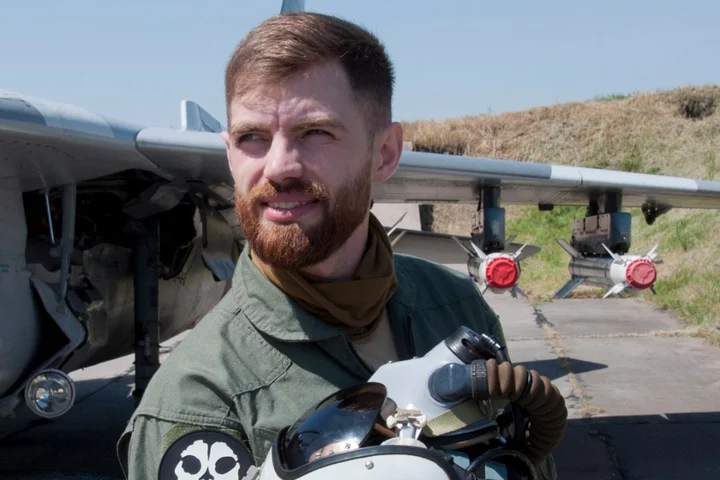
Who is ‘Juice’? The ‘mega talent’ Ukrainian pilot killed in mid-air plane crash
Ukraine is mourning the loss of three fighter pilots killed as two training aircraft collided in the skies some 90 miles west of Kyiv. Singled out for particular praise by president Volodymr Zelensky and Ukraine’s airforce is Captain Andriy Pilshchykov, a pilot who went by the military callsign “Juice”. The late pilot, who was 30 years old when the crash occured over the western Zhytomyr region on Friday, had become known not just for his defence of Ukraine, but also for his passionate advocacy for the United States to provide Kyiv with F-16 fighter jets. The Mig-29 pilot first won fame in Ukraine as he took part in “dogfights” with Moscow’s fighter jets in the skies above Kyiv during the initial months of Russia’s invasion, according to Ukrainian news outlets. As Russian air sorties over Kyiv grew fewer, Pilshchykov continued to defend Ukraine’s skies as he sought to intercept Russian cruise missiles and drones before they struck targets on the ground – and by last May had already racked up 500 hours of combat flights. Last summer, he was one of two Ukrainian pilots chosen to travel to Washington to lobby members of the US Congress to provide Kyiv with F-16 fighter jets, which Joe Biden’s administration eventually agreed to do in May. “Juice” also gave multiple interviews with Western media outlets, speaking to Sky News, the BBC, CNN and Washington Post to name a few, as he fought Ukraine’s case to be provided with the jets. In one interview with the BBC, he said of his missions: “Intercepting the cruise missiles, your mission is to save the lives on the ground, to save the city. If you are not able, it's a terrible feeling that somebody will die. Somebody will die in minutes and you didn't prevent that.” In another broadcast with CNN’s Anderson Cooper, he said: “All of us are ready to fight, just with our jets, with our guns, even just in the fields with rifles. “So our people, including me, we are ready to fight Russians, and we are ready to defend our country, to defend our people in absolutely any ways. But we need tools, effective tools, to do this efficiently.” His call sign, “Juice”, was reportedly given to him by US pilots during a joint training exercise because he did not drink alcohol, and air force spokesperson Yuriy Ihnat hailed him as a “main driver of an advocacy group promoting many decisions on the F-16s”, who was “in constant contact with Californian pilots”. Speaking to The Guardian, Mr Ihnat also praised “Juice” as a driver of reforms in the air force was “trying to bring Nato standards into Ukraine … and even western traditions, such as the burning of pianos to honour a fallen pilot”. His death has struck a chord in Ukraine, where official footage on Sunday appeared to show troops lined up on a runway to commemorate Pilshchykov and his two fallen comrades Major Viacheslav Minka and Major Serhii Prokazin, as a piano played a sombre lament and was set alight in tribute. Ukraine’s prosecutor general’s office has opened a criminal investigation into whether flight preparation rules were violated prior to the fatal crash on Friday, which involved two L-39 training aircraft. As he vowed that the investigation would clarify the circumstances of the crash, Mr Zelensky hailed “Juice” in his nightly address on Saturday as “one of those who helped our country a lot”, adding: “Ukraine will never forget anyone who defended Ukraine’s free sky. May they always be remembered.” Mr Ihnat, of Ukraine’s air force, described Pilshchykov as a “mega talent”, adding: “You can't even imagine how much he wanted to fly an F-16. But now that American planes are actually on the horizon, he will not fly them.” Writing on Facebook, Mr Ihnat added: “Andriy Pilshchykov was not just a pilot, he was a young officer with great knowledge and great talent. He was an excellent communicator, the driver of reforms in Air Force aircraft, a participant in many projects. “I often supported his crazy ideas, which gave incredible results.” Nolan Peterson, a nonresident senior fellow at the Atlantic Council think-tank was among Western commentators to pay tribute to the pilot, saying: “The stories he told me about flying his MiG-29 in combat against Russia are the stuff of epics. He is a hero and will be rightly remembered as such.” Read More Ukraine-Russia war live: Kyiv claims five Moscow fighter jets hit by drones, as Prigozhin ‘confirmed dead’ Ukrainian high jumper Mahuchikh takes gold in emotional close to world championships Wagner boss Yevgeny Prigozhin confirmed dead by Russian investigators after plane crash Ukraine investigates incident that killed 3 pilots while Russia attacks with cruise missiles ‘Gangster’ Putin committed ‘most ostentatious’ act of savagery in our lifetimes, says Boris
2023-08-28 12:54