

Jacksonville shooting: Father, 29, among three killed in racially-motivated attack
Jerrald Gallion planned to spend the weekend with his 4-year-old daughter but the devoted father was instead one of three Black people gunned down Saturday afternoon at a Dollar General store in Jacksonville, Florida. Gallion, 29, was shot as he entered the store's front door with his girlfriend in a predominantly Black neighborhood. The killing marked him as another victim in the latest racist attack in the US. “My brother shouldn’t have lost his life,” his sister, Latiffany Gallion, said Sunday. “A simple day of going to the store, and he’s taken away from us forever.” The gunman, 21-year-old Ryan Palmeter, opened fire Saturday using guns he bought legally despite a past involuntary commitment for a mental health exam. Authorities say he left behind white supremacist ramblings that read like “the diary of a madman.” The other two people slain were identified as Angela Michelle Carr, 52, who was shot in her car, and store employee Anolt Joseph “AJ” Laguerre, Jr., 19, who was shot as he tried to flee. On Sunday, family members recalled Gallion's sense of humor and work ethic. He saw his job as a restaurant manager as a way to provide for his daughter, Je Asia. Although his relationship with the child’s mother didn’t last, they worked together to raise Je Asia. That earned him lasting affection from Sabrina Rozier, the child’s maternal grandmother. “He never missed a beat,” Rozier told reporters Sunday evening after a prayer vigil near the shooting scene. “He got her every weekend. As a matter of fact, he was supposed to have her (Saturday).” Gallion attended St. Paul Missionary Baptist Church in Jacksonville, Bishop John Guns told a crowd during the prayer vigil. “In two weeks I have to preach a funeral of a man who should still be alive,” Guns said. “He was not a gangster, he was not a thug — he was a father who gave his life to Jesus and was trying to get it together." As the child sat nearby in a pink dress with long braids in her hair, Rozier said the girl last spoke to her father at about 2:30 a.m. Saturday when she was having trouble falling asleep. “We’re trying to decide how to tell his one and only daughter that he’s not coming back,” Rozier said. “I’m her grandmother and I don’t know how to tell her. I don’t have the words.” Read More Ron DeSantis booed at Jacksonville vigil as police say racist Florida shooter bought weapons legally – live Everything we know about the Florida Dollar General Shooting Ron DeSantis is booed by mourners as he attends Jacksonville vigil after racist shooting
2023-08-28 17:19

Imaan Mazari-Hazir: Bail for rights lawyer who called Pakistan army 'terrorists'
Imaan Mazari-Hazir was arrested after making a speech criticising the powerful military over abductions.
2023-08-28 17:16

Ukrainians in Herefordshire to get £500 transport grants
It has been hard for families to get around rural areas of Herefordshire, the council says.
2023-08-28 16:58

Oil rises on China moves to support economy; tropical storm eyed
By Alex Lawler LONDON (Reuters) -Oil ticked higher on Monday after China took steps to bolster its flagging economy, though
2023-08-28 16:51

San Marino country profile
Provides an overview of San Marino, including key dates and facts about this small European state.
2023-08-28 16:27

Luxembourg media guide
An overview of the media in Luxembourg, including links to broadcasters and newspapers.
2023-08-28 16:26

Trustar plans to raise fund to manage McDonald’s China stake -sources
By Kane Wu HONG KONG Chinese private equity firm Trustar Capital is planning to raise a so-called continuation
2023-08-28 16:26

Luxembourg country profile
Provides an overview of Luxembourg, including key dates and facts about this west European country.
2023-08-28 16:24

China won't require COVID-19 testing for incoming travelers starting Wednesday
China will no longer require a negative COVID-19 test result from incoming travelers starting Wednesday
2023-08-28 16:19
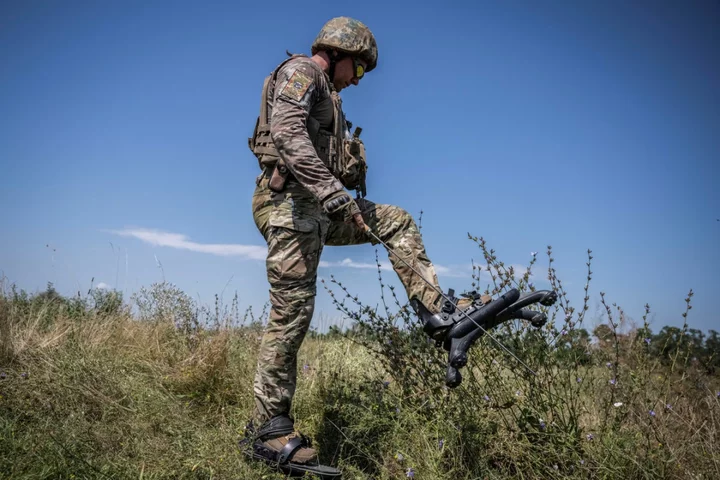
How ‘industrial-scale’ Russian minefields are hampering Ukraine’s counteroffensive
Western hopes for Ukraine’s counteroffensive to achieve a dramatic breakthrough have been significantly pared back, with US officials now reportedly forecasting that Kyiv will fall short of its key aim of severing Russia’s land bridge with occupied Crimea. One of the significant challenges confounding Kyiv’s efforts to redraw the frontline is the millions of mines Russia has laid in their path, to the extent that Ukraine is now being described as the most heavily mined country in the world. “What we are seeing is an industrial level of mine-laying, particularly anti-tank mines,” said Paul McCann, of the Halo Trust, the world's largest humanitarian landmine clearance organisation. “Nothing like it [has been] seen in Europe since the Second World War.” In one part of the liberated Mykolaiv region, close to lands flooded by the Khakovka Dam attack, clearance workers found “incredibly dense” fields of powerful anti-tank mines, with one explosive for every square metre, Mr McCann said. But Ukraine’s defence minister Oleksii Reznikov has warned that the minefields on Russian-held territory – spanning the length of the 1,000km frontline – are up to five times as dense as those found in Mykolaiv. They also deep – with reports of as many as five anti-tank mines being stacked one on top of the other – capable of destroying even tanks equipped with mine ploughs. The painstaking efforts by Ukrainian troops to clear paths towards the enemy through the fields of explosives – often under heavy shelling and other fire – mean that, at one key hospital in Dnipro, the number of wounded troops arriving with mine-related injuries is now said to be second only to victims of artillery fire. Experts have told The Independent that Western hesitance to supply Kyiv with the necessary weapons for its counteroffensive this summer had allowed Russia time to create formidable defences, and lay millions of mines – meaning hopes of a “Hollywood”-style breakthrough are likely “unrealistic”. The minefields are “a serious problem”, warned Mark Galeotti, of the Mayak Intelligence consultancy. “If you’re facing a heavily mined battlefield, you have to move slowly ... at the speed of anti-mining tanks or engineers moving through marking mines, so you are therefore vulnerable to being caught under artillery fire. “Mines fix you slowly or they channel you – often into a ‘kill zone’ where they’re waiting to drop volleys of artillery shells on you. They deny the Ukrainians that kind of fluidity and speed of movement [seen during last year’s lightning counteroffensive].” Meanwhile, as Ukrainians risk their lives to clear the minefields, “the Russians can replenish them if nothing else just by using rocket launchers that scatter mines”, Mr Galeotti added. Mines can even be laid in this fashion to trap Ukrainian troops who have just cleared a path through, often by hand. The mines “would be vastly less formidable”, however, were they not “part of a very complex defensive setup”, said the author and honorary professor at University College London. He was alluding to the array of trenches, anti-tank ditches, “dragon’s teeth” barricades and other obstacles Russia has constructed. “It’s always a danger to underestimate Russians in the defence, they can be very dogged,” Mr Galeotti said. Following initial attempts to punch through Russia’s defences which likely proved costly in both manpower and Western-supplied equipment, including tanks, Ukraine now appears to have broadened its focus to target supply lines, decimate key artillery systems and exhaust the Russian military with drone strikes on targets such as Moscow, Belgorod and the Black Sea fleet. “The change in tactics at the line of contact on the battlefield has been towards using lighter footprints, small units on foot, but in the grander scheme of things we’re seeing a lot of these asymmetric cheap attacks being conducted,” said Dr Marina Miron, of King’s College University’s war studies department. “They don’t want to waste the Nato-trained brigades to run against a concrete wall, which is basically those minefields and the Russian defences,” Dr Miron added. Mr Galeotti estimates that Ukraine has already committed half of its new 10th Corps, comprising troops trained and equipped by Nato – a tens of thousands-strong grouping initially intended to hold back and capitalise on any breakthroughs rather than toil at creating them. The minefields and resulting casualties have been “leading to a degree of fatigue even within the [rest of the] country”, Mr Galeotti believes – pointing to recent reports suggesting that the days of “lines of volunteers eager to sign up” to Ukraine’s war effort are “long gone”. However, Ukraine has been buoyed this week by successes in breaking through the first line of Russian defences near the Zaporizhzia village of Robotyne – a first step on the path to severing Russia’s land bridge with Crimea. This breakthrough is “tactically significant” in that it may allow Kyiv’s forces to start operating beyond Russia’s densest minefields, according to the Institute of the Study for War. The gains have prompted some suggestions that further advances could finally allow Kyiv’s troops to pour through paper-thin gaps in the minefields to establish some control over a vast area between Russian lines. “If the Ukrainians are going to break through, it’s going to be like bankruptcy – it’s gradually then all at once,” said Dr Patrick Bury, a senior lecturer at Bath University and former Nato analyst. “That’s what you’re looking for – you get through the defences and suddenly you’re out in the open,” said the former British Army infantry captain. “Basically, you tell tanks and armoured infantry to drive hell for leather and you’re trying to get to undefended towns and cities because they’re your logistics and transport hubs. “They’ll be trying to drive [as] fast as they can towards the Sea of Azov. It’s not as if they want to cut the Russians off completely but they want to force them to withdraw ... Once you break out and you’re inside, it’s about momentum, decision-making, and you’re the one imposing your tempo on the enemy. You move and they have to react.” But while the gains near Tokmak show “progress”, with Dr Bury also pointing to fighting near the village of Urozhaine as “the one to watch”, he believes the chances of a sudden breakthrough are “50/50 at the moment”. “It’s hanging in the balance, and I think the next few weeks are going to be pretty decisive, one way or the other.” Read More Ukraine-Russia war live: Kyiv claims five Moscow fighter jets hit by drones, as Prigozhin ‘confirmed dead’ Experts warn Ukraine’s frontline push is being damaged by West On the ground in Ukraine, the desperate fight to protect a key city from 100,000 of ‘Putin’s thugs’ Wagner Group: Timeline of Yevgeny Progozhin’s private army as leader ‘killed in plane crash’ Yevgeny Prigozhin ‘Ask Me Anything’ - expert Tim White answers your questions Wagner chief ‘killed’ in crash
2023-08-28 15:56

Vietnam PM Fighting for Future as Economy Lags Growth Target
While disagreements are common between elected leaders and central bankers, they’re unusual in one-party, Communist-run nations. When they
2023-08-28 15:52
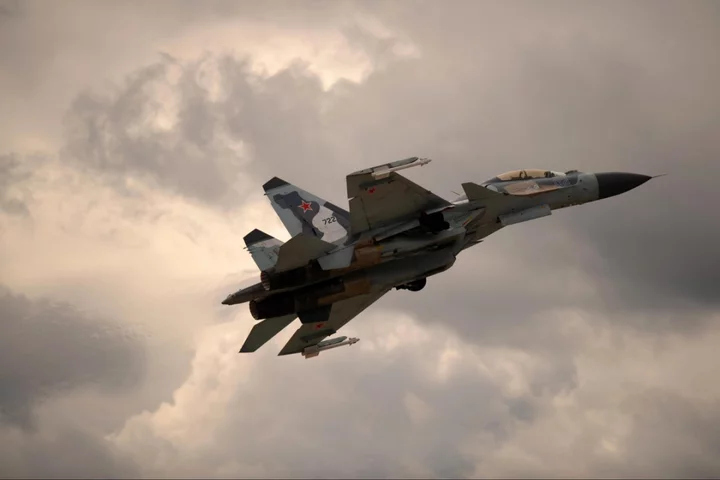
Ukraine-Russia war live: Key village Robotyne liberated as Kyiv claims five Moscow jets hit by drones
Ukraine‘s military have liberated the southeastern village of Robotyne amid fierce fighting, and are trying to advance further south in their counteroffensive against Russian forces. This comes after hitting five of Moscow’s fighter jets with a night-time drone strike on Russian soil, a source in Kyiv’s security service told Ukrainian outlets yesterday. The Kyiv Post and Ukrainska Pravda both cited sources in Ukraine’s SBU security service as claiming successful strikes were carried out on four Russian Su-30 fighter jets and one MiG-29 at an airfield in Kursk. This morning, Russia’s defence ministry claimed to have shot down two more drones in the Bryansk and Kursk regions, which both border Ukraine, without providing further information about possible damage or casualties. It comes as Russia’s Investigative Committee’s said Wagner chief Yevgeny Prigozhin was confirmed to have died in a plane crash near Moscow on Wednesday, citing the results of genetic tests of the 10 bodies found in the wreckage. Western politicians and commentators have speculated that Mr Putin ordered Prigozhin to be killed as punishment for Wagner’s brief mutiny in June, claims the Kremlin has denied as an “absolute lie”. Read More Wagner boss Yevgeny Prigozhin confirmed dead by Russian investigators after plane crash Who is ‘Juice’? The ‘mega talent’ Ukrainian pilot killed in mid-air plane crash Who is Yevgeny Prigozhin? Wagner Group chief killed in plane crash Ukraine investigates incident that killed 3 pilots while Russia attacks with cruise missiles
2023-08-28 15:51