

Culinary Trendsetters Popeyes® and TRUFF Launch the Spicy TRUFF Chicken Sandwich
MIAMI--(BUSINESS WIRE)--Oct 17, 2023--
2023-10-17 19:29

Roundup for Tuesday: Kansas Is No. 1; Tim Scott Is Not; Texas Rangers Inch Closer to World Series
Berkeley Space Center at NASA Ames to become innovation hub for new aviation, space technology ... Antonio Brown arrested in South Florida ... Rick and Morty se
2023-10-17 19:26

BofA profit rises on higher interest income, investment banking gains
(Reuters) -Bank of America's profit rose about 10% in the third quarter as it joined rivals in earning more from
2023-10-17 19:25

Vodafone, Three execs tell lawmakers their UK merger will benefit 5G, jobs
LONDON Executives from Vodafone and CK Hutchison's Three UK unit said their 15 billion pound ($18 billion) merger
2023-10-17 19:24
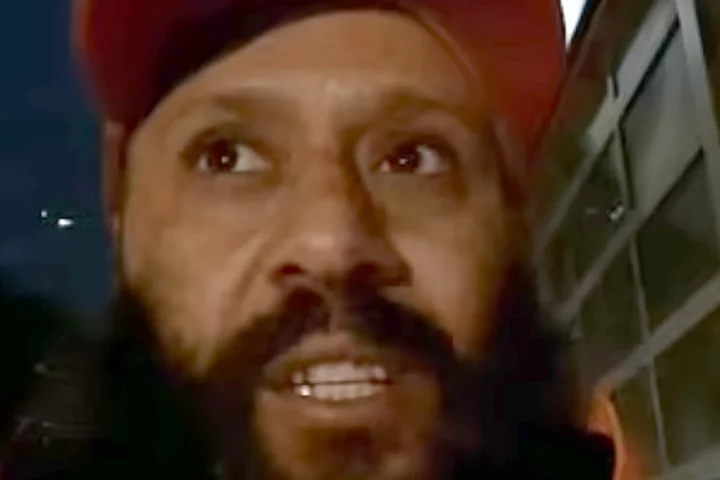
What we know about Isis Brussels terror suspect Abdesalem Lassoued
A terror suspectin Brussels has died after being shot by police in a cafe on Tuesday. The 45-year-old Tunisian man, identified as Abdesalem Lassoued, was shot in the chest and died in hospital from his wounds, local media said. Two Swedish nationals were killed in Brussels after a gunman opened fire in the city centre on Monday night ahead of a qualifier game for the UEFA Euros between Sweden and Belgium at the Heysel Stadium, some three miles away. The second half of the match was later called off. Footage shared online showed a man dressed in an orange jacket unloading several shots, using a large weapon. The bearded man was reportedly seen leaving the crime scene on a scooter. After the shooting Abdesalem Lassoued posted a video on Facebook about the killings, claiming he was a member of Islamic State (IS) and had killed “three Swedes so far”. Authorities searched for the man overnight, before finding him inside a café in the Brussels neighbourhood of Schaerbeek at 8am and ‘opened fire’. Here’s everything we know about the terror suspect: Who is the terror suspect? The gunman was named on Monday night by local media as 45-year-old Abdesalem Lassoued from Tunisia. He was reportedly a failed asylum seeker living illegally in the Schaerbeek area of Brussels, which is about a ten-minute drive from the scene of the shooting. Justice Minister Vincent Van Quickenborn said Lassoued was convicted in Tunisia ‘for common law offences’, but was not reported for a terrorist risk. Why did he carry out the attack? After the shooting, Lassoued posted a video to Facebook, using the name Slayem Slouma, speaking in Arabic: “Islamic greeting Allahu Akbar. My name is Abdesalem Al Guilani and I am a fighter for Allah. I am from the Islamic State. We love who loves us and we hate who hates us. We live for our religion and we die for our religion.” He added that he had “killed three Swedes so far” and also claimed he had carried out the attack in “revenge in the name of Muslims”. A Belgian federal prosecutor said there was no evidence that the attacker had any link to the renewed conflict between Israel and Palestinian militants. What happened after the shooting? Police in Belgium searched overnight to find the suspect who opened fire in the Brussels city centre. Footage shared online showed a man dressed in an orange jacket unloading several shots using a large weapon, before leaving the crime scene on a scooter. Police raided a building in the Brussels neighborhood of Schaerbeek overnight where the man was thought to be staying but did not find him. Authorities eventually found a suspect inside a café in the Brussels neighbourhood of Schaerbeek at 8am. He was shot in the chest before dying in hospital from his wounds, local media reported. Interior Minister Annelies Verlinden posted on X: “The perpetrator of the terrorist attack in Brussels has been identified and died.” The European Commission, which is based in Brussels, has urged staff to work from home and some schools were closed in the wake of the attack. Read More Brussels shooting live: Terror suspect killed by police after Swedish nationals murdered in Belgium Belgium shooting: Video shows moment gunman opened fire, killing two people in Brussels Sweden players take overnight flight home, start returning to clubs after shooting in Belgium How Quran burnings in Sweden have increased threats from Islamic militants Amazon, Tripadvisor and other companies team up to battle fake reviews while FTC seeks to ban them Video shows moments before gunman opened fire in Brussels, killing two people
2023-10-17 19:24

Ariana Grande starts new album with Max Martin
Ariana Grande started working on the album amid the SAG-AFTRA strike.
2023-10-17 19:24

Johnny Marr stopped drinking after kind Noel Gallagher gesture
Johnny Marr decided it was best to stop drinking after he agreed to replace a guitar he gifted Noel Gallagher whilst hungover.
2023-10-17 19:23

Fantasy Football Week 7: Start 'Em, Sit 'Em
Breaking down the toughest start 'em, sit 'em decisions for Week 7.
2023-10-17 19:21

All Blacks back defence to win World Cup after Ireland benchmark
New Zealand's defensive display in victory over Ireland was nothing short of outstanding, setting a benchmark of patience and discipline in a game for the ages that moved them one step...
2023-10-17 19:20
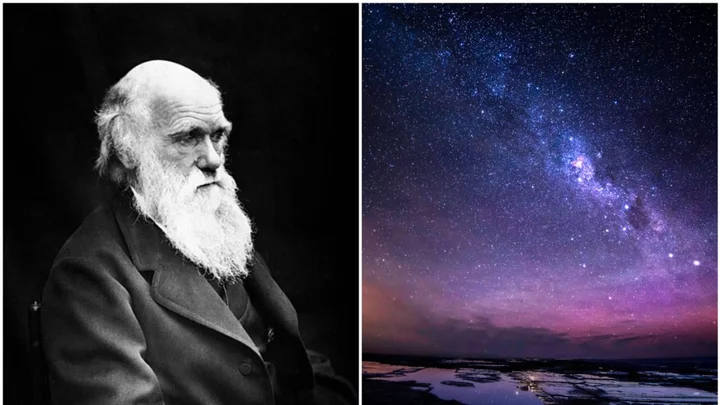
Scientists unveil 'missing' law of nature in landmark discovery
A group of scientists and philosophers claim to have identified a “missing law of nature”, in a discovery which has huge implications for our understanding of how, basically, everything works. Most of us are familiar with the names – if not the intricacies – of many of the physical laws which govern the world and beyond, such as gravity and thermodynamics. And yet, no established physical law has been able to describe the behaviours of countless complex systems that exist across the universe – until now. In a paper published in the PNAS journal on 16 October, a multidisciplinary team from some of the US’s top institutes and universities, unveiled a new law claiming to do just that. In a nutshell, their law states that evolution is not limited to life on Earth, it also occurs in other massively complex systems – from planets to atoms. This means that these systems naturally “evolve” to states of greater diversity, and complexity. In other words, the researchers found evolution to be a common feature of the natural world's complex systems which, according to the Carnegie Institution for Science, comprise the following characteristics: “They are formed from many different components, such as atoms, molecules, or cells, that can be arranged and rearranged repeatedly “Are subject to natural processes that cause countless different configurations to be formed.” Only a small fraction of these configurations survive via a process of natural selection called “selection for function”. According to the researchers, regardless of whether the system is living or nonliving, when a new configuration works and function improves, evolution occurs. The authors' new law – which they have christened "the Law of Increasing Functional Information" – states that the system will evolve "if many different configurations of the system undergo selection for one or more functions." "An important component of this proposed natural law is the idea of 'selection for function,'" the study’s lead author, astrobiologist Dr Michael L. Wong, explained. The team’s research builds on Charles Darwin’s theory of natural selection, which suggests the function exists to ensure the “survival of the fittest”. For their work, Dr Wong and his team expanded on this perspective, pointing to the existence of three types of this selection for function in nature. The first, most basic type, they claim, is stability – the stable arrangements of atoms or molecules which are selected to continue. Second, are dynamic systems which are selected for their ongoing supplies of energy. And the third, and most intriguing, function is "novelty" – the tendency of evolving systems to explore new configurations which can lead to surprising new behaviours or characteristics. Novelties are, ironically, nothing new. Indeed, life’s evolutionary history is rich with examples: photosynthesis evolved when single cells learned to harness light energy; multicellular life evolved when cells learned to cooperate; and species evolved thanks to advantageous new behaviours such as walking and thinking. The same type of evolution happens in the mineral kingdom, as the Carnegie Institution for Science notes in a release published by Phys.org. Indeed, Earth's minerals, which began with about 20 at the dawn of our solar system, now number almost 6,000 known today. This is thanks to the ever more complex physical, chemical, and biological processes which have occurred over the past 4.5 billion years. The paper also notes that just two major elements – hydrogen and helium – formed the first stars shortly after the big bang. Those earliest stars then used this hydrogen and helium to create around 20 heavier chemical elements, which was built upon by the next generation of stars. "Charles Darwin eloquently articulated the way plants and animals evolve by natural selection, with many variations and traits of individuals and many different configurations," co-author and research lead Robert M. Hazen explained. "We contend that Darwinian theory is just a very special, very important case within a far larger natural phenomenon. “The notion that selection for function drives evolution applies equally to stars, atoms, minerals, and many other conceptually equivalent situations where many configurations are subjected to selective pressure." The new law has a number of exciting implications, including a deeper understanding of how the Universe itself came to exist. It could also help explain how life differs from other complex evolving systems, and could help aid the search for life elsewhere. Furthermore, at a time when increasingly autonomous AI systems are of increasing concern, it’s very handy to have a law that characterises how both natural and symbolic systems evolve. It also offers insights into how we could artificially influence the rate of evolution of some systems which, again, could prove invaluable. The key point to remember, as Dr Wong put it, is that whilst life is the “most striking example of evolution”, it’s not the only one. Evolution, it transpires, is everywhere. Sign up for our free Indy100 weekly newsletter Have your say in our news democracy. Click the upvote icon at the top of the page to help raise this article through the indy100 rankings.
2023-10-17 19:20
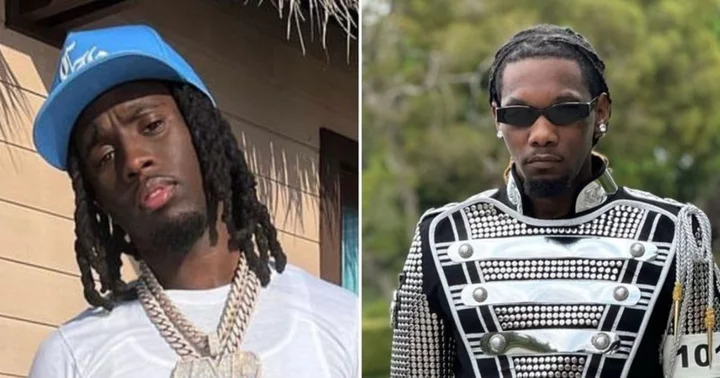
Los Angeles Chargers’ fans react to promo featuring Kai Cenat and Offset: ‘Bolt upp’
Kai Cenat and musician Offset are featured in a promo for the game
2023-10-17 19:19

What the Israel-Hamas war means for US markets
Growing unrest in the Middle East has cast a shadow on global financial markets.
2023-10-17 19:19