

ATP roundup: Alexander Zverev reaches Chengdu final
Top-seeded Alexander Zverev of Germany will meet unseeded Russian Roman Safiullin in the Chengdu Open final in Chengdu, China. Zverev
2023-09-26 02:15

Pitt left tackle Goncalves out for the season, QB Jurkovec's status uncertain for Virginia Tech
Pittsburgh will have to find a way to recover from its worst start since 2017 without left tackle Matt Goncalves
2023-09-26 01:54

Chargers' Mike Williams tore his left ACL during Sunday's win, MRI reveals, says AP source
Los Angeles Chargers wide receiver Mike Williams is out for the rest of the season after suffering a torn ACL in his left knee
2023-09-26 01:54

In a span of 6 plays, the Steelers' offense got its mojo back. Now comes the hard part: keeping it
The Pittsburgh Steelers showed signs of progress in a 23-18 victory that improved their record to 2-1
2023-09-26 01:47

Ex-NASCAR driver Austin Theriault running to unseat Democratic Rep. Jared Golden in Maine
NASCAR driver-turned-politician Austin Theriault wants the opportunity to challenge Democratic U.S. Rep. Jared Golden in Maine
2023-09-26 01:29

Cowboys are having issues in the red zone with Ezekiel Elliott, Pats set to visit
Dak Prescott and the Dallas Cowboys are having trouble getting touchdowns after getting inside the opponent 20-yard line
2023-09-26 01:27

Byron gets milestone win for Hendrick and moves closer to chance to race for team's next Cup title
William Byron grew up a huge fan of Hendrick Motorsports when watching Jimmie Johnson win championships
2023-09-26 01:22
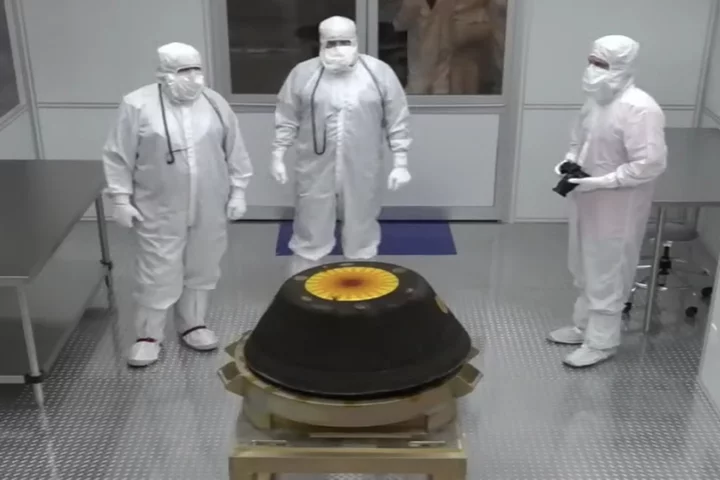
Nasa has gathered a large piece of a distant asteroid. What now?
Scientists have gathered a significant chunk of a distant asteroid, which has made its way to Earth after a mission taking millions of miles. But the really useful work will begin now. Nasa’s Osiris-Rex mission flew to the distant Asteroid Bennu, scooped up a piece of the object into a canister, and then flew back to Earth to drop it off. On Sunday, Nasa picked up that canister in the Utah desert and is now working to secure it. It will then send those samples to a variety of scientists around the world, with a chunk of it being sent to more than 200 people at 38 different institutions across the world. They hope that they can use them as a “time capsule” to peer into the early universe, telling us about where we came from. “This box when it is opened of material from the surface of Bennu can tell us untold secrets of the origins of the universe, the origins of our planet and the origins of life itself,” said Queen musician Brian May, who helped with the research by mapping out the asteroid to find a landing spot. “What an incredibly exciting day.” Sample return missions are particularly exciting to scientists because they offer a look at a pristine piece of a distant world that has been undisturbed by the environment on Earth. While some pieces of asteroids and other objects can fall down to Earth, they have to make their way through the atmosphere and can be damaged and changed in the process. They also mean that researchers are able to use all of the Earth’s latest technology to study the sample. Other pieces of distant worlds have of course been studied by spacecraft and landers, but they are only able to do so with the limited instruments they take to those planets. Another advantage of sample return missions over studying the objects at their home is that scientists can look back at those samples with new sensors and equipment invented long after the sample was actually taken. Many space missions continue for years – Curiosity is still examining Mars after arriving there in 2012, and the Voyager probes are still providing information almost 50 years after they were launched – but they are only able to do so with the technology that was available when they set off. The analysis done in sample return missions really begins when the spacecraft arrives at its target: then, it starts looking at the context of the sample, gathering information about the world from which it came that should prove useful to scientists later. Osiris-Rex arrived at Bennu in 2018, and spent two years mapping the asteroid before it set off back home with its delivery. All of that information in addition to the samples could help answer a variety of questions about our planet, scientists hope. “The asteroids in our solar system contain the raw building blocks from which the Earth was made, so working out their composition will tell us a lot of how our planet formed,” said Boris Gansicke from the department of physics at the University of Warwick. “There are many open questions, for instance, where did the water that we have on Earth come from? And where did the ingredients that made life possible to develop come from? “To answer those questions, ie measure the composition of an asteroid, you need to get your ‘hands’ on them (or in this case the arm of a space mission), and this is what Osiris-Rex achieved. “In a nutshell, it’s similar to sitting in front of a delicious dinner and wanting to have the list of ingredients.” Sample return missions are almost as old as space travel itself, and the first of them were the early Apollo missions, which brought back pieces of the Moon. Those continue to be useful to scientists. Since then, as human travel into space has declined, most of the work has been done by robots. In the early 1970s, the Soviet Union’s Luna missions gathered pieces of the Moon and brought them back, and in 2020 Japan’s Hayabusa2 mission brought back pieces of the asteroid Ryugu. Scientists have high hopes for future missions: perhaps the most discussed is a mission to Mars, which would bring back the first ever pieces of that planet. Engineers have suggested that for decades, and a number of plans have been formed, but none are likely to launch any time soon. Read More Nasa spots shocking number of galaxies like our own Nasa lands Bennu asteroid samples back on Earth Nasa just delivered a piece of a distant asteroid to Earth Pieces of a distant asteroid are about to fall to Earth Nasa to return largest asteroid sample ever as UK helps with research Massive solar flare strikes Nasa spacecraft sent to study Sun
2023-09-26 00:59

Slovenia forward Benjamin Šeško tired of Erling Haaland comparisons after good start in Bundesliga
Slovenia forward Benjamin Šeško is tired of being compared to Erling Haaland
2023-09-26 00:58

European captain Luke Donald is going with statistics over history at the Ryder Cup
Luke Donald is ignoring history when it comes to starting off the Ryder Cup
2023-09-26 00:51

Tennis-Rybakina withdraws from Pan Pacific Open
Former Wimbledon champion Elena Rybakina on Monday pulled out of the Pan Pacific Open in Tokyo, days after
2023-09-26 00:27
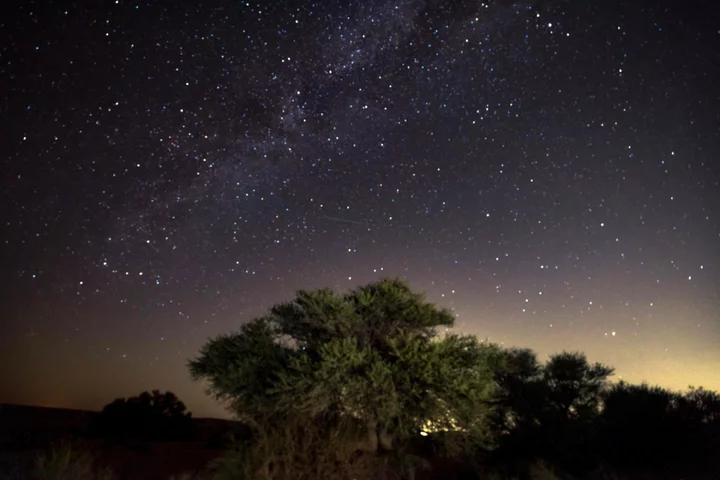
Nasa spots shocking number of galaxies like our own in early universe
Scientists have spotted a shocking number of galaxies like our own in the early universe. The finding will prompt us to entirely rethink our understanding of how the universe formed the structures that surround us. Looking deep into space, scientists found that the galaxies we see in the early universe are much more like our own Milky Way than was thought possible. A team of international researchers including those at The University of Manchester and University of Victoria in Canada, used the James Webb Space Telescope (JWST) to discover that galaxies like the Milky Way are 10 times more common than what was believed based on previous observations with the Hubble Space Telescope. Many of these galaxies formed some 10 billion years ago or longer, going far back into the history of the universe. The Milky Way is a typical disk galaxy, with a shape similar to a pancake or compact disc, rotating about its centre and often containing spiral arms. These galaxies might be the kind where life can develop given the nature of their formation history, experts suggest. Astronomers previously considered these types of galaxies too fragile to exist in the early universe when galaxy mergers were more common, destroying what was thought to be their delicate shapes. Christopher Conselice, professor of extragalactic astronomy at The University of Manchester, said: “Using the Hubble Space Telescope we thought that disc galaxies were almost non-existent until the universe was about six billion years old, these new JWST results push the time these Milky Way-like galaxies form to almost the beginning of the universe.” He added: “These JWST results show that disc galaxies like our own Milky Way, are the most common type of galaxy in the universe. “This implies that most stars exist and form within these galaxies which is changing our complete understanding of how galaxy formation occurs. “These results also suggest important questions about dark matter in the early universe which we know very little about.” “Based on our results, astronomers must rethink our understanding of the formation of the first galaxies and how galaxy evolution occurred over the past 10 billion years.” The researchers say their findings, published in the Astrophysical Journal, completely overturn the existing understanding of how scientists think the universe evolves, and the scientists say new ideas need to be considered. Lead author Leonardo Ferreira, from the University of Victoria, said: “For over 30 years it was thought that these disc galaxies were rare in the early universe due to the common violent encounters that galaxies undergo. “The fact that JWST finds so many is another sign of the power of this instrument and that the structures of galaxies form earlier in the universe, much earlier in fact, than anyone had anticipated.” The improved technology of JWST allows astronomers to see the true structure of these galaxies for the first time. A paper describing the findings, ‘The JWST Hubble Sequence: The Rest-Frame Optical Evolution of Galaxy Structure at 1.5 The Astrophysical Journal. Additional reporting by agencies Read More Nasa just delivered a piece of a distant asteroid to Earth Nasa lands Bennu asteroid samples back on Earth Pieces of a distant asteroid are about to fall to Earth Nasa just delivered a piece of a distant asteroid to Earth Nasa lands Bennu asteroid samples back on Earth Pieces of a distant asteroid are about to fall to Earth
2023-09-26 00:19