

Andrew Tate's documentary maker Matt Shea exposes Top G's bizarre control over masses: ‘To his followers, this man is a messiah’
A survey discovered that 52% of British boys aged 16 and 17 hold a favorable view of Andrew Tate
2023-08-30 15:58

What does 'poppycock' mean? 'Suits' creator claims royal family demanded word be removed from Meghan Markle's dialog
Aaron Korsh claims the royal family insisting on changing Meghan Markle's script for 'Suits'
2023-08-30 15:56

When is the Champions League group stage draw?
The Champions League is nearly upon us for the new 2023/24 season, as treble-winners Manchester City try to retain their crown as the kings of Europe following their 1-0 win over Inter Milan in Istanbul in June. For the final time before the competition takes on a new format next season, 32 teams will be split into eight groups of four. Each group will contain one team from each of the four seeded pots, and clubs from the same national league will not be drawn together in the same group. Pot 1 will consist of the Champions League winners, the Europa League winners and six domestic champions of the highest ranked leagues. The remaining pots will be decided by Uefa’s club coefficient rankings. The final will take place at London’s Wembley Stadium on 1 June 2024. When is the Champions League draw? The draw for the group stage will take place in Monaco on Thursday 31 August, at 5pm BST. Which clubs have already qualified? There are 29 clubs already qualified for the Champions League group stage, and three play-offs still to be decided. England: Arsenal, Manchester City, Manchester United, Newcastle United Spain: Atletico Madrid, Barcelona, Real Madrid, Real Sociedad, Sevilla Germany: Bayern Munich, Borussia Dortmund, Leipzig, Union Berlin Italy: Inter Milan, Lazio, AC Milan, Napoli France: Lens, Paris Saint-Germain Portugal: Benfica, Porto, Braga Netherlands: Feyenoord Austria: Salzburg Scotland: Celtic Serbia: Red Star Belgrade Switzerland: Young Boys Turkey: Galatasaray Ukraine: Shakhtar Donetsk Who are still in the play-offs? PSV Eindhoven 2-2 Rangers, AEK Athens 0-1 Antwerp, Copenhagen 1-0 Rakow Czestochowa. What are the Champions League group stage dates? Matchday 1: 19/20 September 2023Matchday 2: 3/4 October 2023Matchday 3: 24/25 October 2023Matchday 4: 7/8 November 2023Matchday 5: 28/29 November 2023Matchday 6: 12/13 December 2023 Read More On this day in 2015: Manchester City sign Kevin De Bruyne for club-record fee Chelsea’s Academy stars can rise to Carabao Cup challenge – Mauricio Pochettino Atletico Madrid run riot in demolition of Rayo Vallecano Vinicius Jr facing lay-off after hamstring injury Points can’t mask Man United’s muddled start to Ten Hag’s second season Liverpool lucky with availability of centre-backs this season – Jurgen Klopp
2023-08-30 15:56

Megan Rapinoe to play her final USWNT match on September 24
Megan Rapinoe will represent the US women’s national team for the last time on September 24, when the American side hosts Colombia at Soldier Field.
2023-08-30 15:53
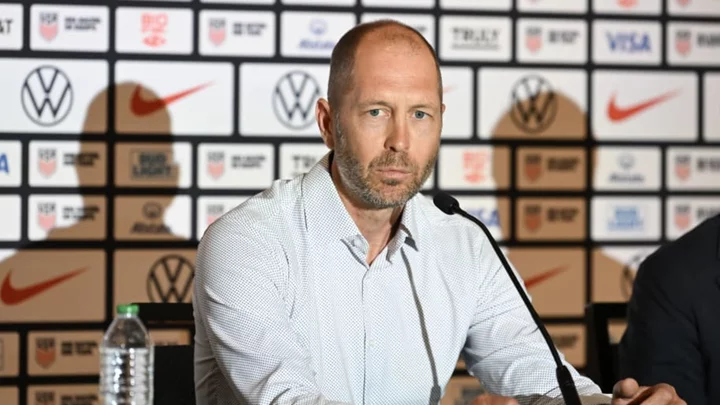
USMNT's Gregg Berhalter reveals updated situation with Gio Reyna
Gregg Berhalter provides insight on the awkward situation with Gio Reyna.
2023-08-30 15:51

When will 'The Ultimatum: Marry or Move On' Season 3 air? Release date, cast, plot and how to watch Netflix show
Viewers will have to wait a few months after Season 2 has ended to know when Season 3 of Netflix's exciting show will premiere
2023-08-30 15:26

How old is Gwen Stefani? 'The Voice' star allegedly blew $100K on plastic surgery to look ageless
'The Voice' star Gwen Stefani's TikTok video promoting GXVE Beauty sparked buzz with her youthful appearance
2023-08-30 15:25

Oppenheimer filming was cut do 57 days to free up funds for huge set costs
Christopher Nolan ended up with just 57 days to wrap filming 'Oppenheimer'.
2023-08-30 15:25

How can I improve my teenager’s low mood?
If there’s one thing associated with teenagers more than anything else, it’s moodiness. But although low mood is extremely common in teens, what’s just as common is that parents don’t know what to do about it. Adolescence is the highest risk period of life to experience depression, and half of adult mental health disorders start before the age of 15, says consultant clinical psychologist Dr Beth Mosley, who provides specialist mental health support to children and their families. “Seeing the signs of low mood in your teen can be worrying if you’re a parent,” she says. “The questions you may ask are likely to be, what are the usual highs and lows of adolescence, and what is something to worry about? Why might my teen be struggling with low mood, and most importantly, what can I do as a parent to help if my teen is feeling down and showing signs of disengaging with life?” Mosley, the author of new book, Happy Families, which is about the most common issues affecting children’s mental health and how parents can help, says although everyone will, at some point, experience low mood, sadness, irritability and loss of interest in things they enjoy, usually such feelings are linked to problems in life. But changes associated with puberty, and brain restructuring, mean adolescents are especially vulnerable to mental health problems, says Mosley, who explains: “These changes increase the possible impact of life stressors and, thus, their vulnerability to mental health difficulties. “The brain changes in adolescence mean teens feel emotions more intensely – both the highs and lows – meaning it’s not unusual to see them experiencing waves of low mood, particularly in the face of challenges.” She says if a teen’s low mood doesn’t go away, and prevents them doing the things they need to, like schoolwork and spending time with others, it would be wise to consider seeking help. The teen’s school may be able to suggest local support. But she adds: “Whether your teen experiences passing or more persistent low mood, the good news is that the brain is flexible and ripe for learning in adolescence, so there’s a lot we can do to support our teens when they’re experiencing low mood. “Importantly, this support will likely improve your relationship with your teen, and help protect them from developing mental health difficulties in adulthood.” If your teenager’s mood is low, these are the things Mosley says might help them… Encourage them to do what’s important to them When someone feels low, they tend to do less of what’s important to them, meaning they get less rewards from life and feel lower, Mosley explains. This is the low-mood cycle. Conversely, by doing more of what’s important to them regularly, they get more reward from life and start to feel better – this is the feel-good cycle, she says. So rather than a teen waiting until they feel better to do the things that are important to them, low-mood teens should do them now to break the low-mood cycle. “Determining what activities they can do more of and what unhelpful activities to do less is a key first step,” says Mosley. “You can support your child by providing more opportunities to do what’s important to them and increasing access to rewards. Give them practical support to do the activities they enjoy, provide encouragement.” Communicate better with them Mosley says that low mood can make it difficult for teens to communicate, but parents learning key communication skills can support how they communicate with their teens and, in turn, help improve their mood. She says being careful how you say things, through tone of voice and nonverbal body language, is important, as teens are more sensitive to criticism and negative social feedback. But there are six communication skills in particular that parents should try to use. They are… Picking the right time to have a conversation. “Open and honest conversations are most likely to happen when we’re feeling calm and not under pressure,” says Mosley, explaining that it’s important to be aware of when your teen isn’t in the right frame of mind for a difficult conversation, and to learn to respectfully pause the conversation and reschedule it for a better time. Starting a sentence with ‘I’ rather than ‘You’ can make a huge difference, explains Mosley, who says starting with ‘You’ often has a blaming tone and makes the teenager defensive and stops them from listening, whereas starting with ‘I’ can explain how you’re feeling, which can’t be disputed and starts a whole different conversation. Instead of over-generalising and using words like ‘always’ or ‘never’, Mosley says it’s much better for parents to be specific and provide an example of a recent event, rather than things that have happened over months or years. She says over-generalising is more likely to make teens feel awful, and less likely to spark a collaborative conversation. Imagining how a young person might feel in/about a certain situation can also help, she says. “Understanding someone else’s point of view, and expressing this to them, can make it easier to have a collaborative conversation and avoid an argument,” she explains. “When we’re particularly worried about our children, thinking about how they feel can sometimes help us connect with them.” If you go into a conversation with your child knowing what you want from it but being aware you might not get it, be prepared with some alternative solutions, Mosley advises. “Having a few solutions in your back pocket before you go into a discussion enables you to show you’re willing to compromise so you don’t get stuck in a stalemate situation,” she says. Although you may not initially get the response you hoped for from your child when you try a new way of communicating with them, it’s vital to persevere, stresses Mosley, who explains: “With these communication hacks we should begin to see communication with our children become healthier and more productive.” Tackle your negative thoughts and help your teenager do it too Mosley advises parents to reduce the habit of getting stuck in negative thinking by trying these tactics, which she suggests should be shared and modelled to teens. Remember it’s just a thought and it doesn’t mean it’s real. “Remind your teen that thoughts are not facts, they are ideas and they don’t predict the future,” says Mosley. Let negative thoughts come and go, rather than fixating on them and becoming overwhelmed, she advises, and take the power out of the thought by sharing it with others. “Getting another viewpoint can stop unhelpful thoughts growing in magnitude,” she says, and suggests parents provide opportunities for teens to share their thoughts with them, on car journeys and walks etc. As many young people get stuck on social media, dwelling on distressing thoughts, Mosley suggests: “Help your teen notice this cycle and learn the art of moving to another activity, even if it’s just moving to a different room or doing some physical activity.” She adds: “If your teen is feeling negative and self-critical, move away from nagging and towards helping them refocus their energy on something they enjoy and/or resolving the underlying problem.” Happy Families: How to Protect and Support Your Child’s Mental Health by Dr Beth Mosley is published by Bluebird on August 31, priced £18.99. Read More Charity boss speaks out over ‘traumatic’ encounter with royal aide Ukraine war’s heaviest fight rages in east - follow live Maya Jama and Stormzy: Can you make it work with an ex? 12 smart ways to save money on everyday back-to-school costs 9 ways to make dark rooms look lighter
2023-08-30 15:24

Chandrayaan-3: What has India's Moon rover Pragyaan been up to since landing?
Pragyaan has had an eventful week - dodging craters, taking the Moon's temperature and checking for sulphur.
2023-08-30 15:24

IShowSpeed pays heartfelt tribute to father by presenting him his Variety Streamer of the Year award, emotional fans say 'what a family'
Darren Watkins Sr, IShowSpeed's father, appeared elated by his son's incredible achievements
2023-08-30 15:24

Doja Cat announces new album Scarlet is coming next month
Doja Cat is releasing her follow-up to 2021's 'Planet Her' next month.
2023-08-30 15:23