

Everything you need to know about perimenopause
Claire Richards has opened up about her experience perimenopause, saying that she feels “lucky” to be experiencing it at this stage in her life. The Steps singer, 46, said on Good Morning Britain: “I feel quite lucky to be going through it [perimenopause] in a period where others have spoken out about it already. There’s a lot more information for me to find. “And I think half the population is going to go through at some point and I was surprised at how little we know as women about perimenopause, menopause, [or] anything that happens to us. Here’s everything you need to know about perimenopause... What is perimenopause? Perimenopause is the transitional period before menopause, and can occur any time between your mid-30s to mid-50s. According to The Menopause Charity, menopause is when your ovaries stop producing eggs and your hormone levels fall. Perimenopause is the gradual process before this when your ovaries start to slow down, and The Menopause Charity says it can last for a few months or several years. Menopause begins when you have not had a period for 12 months, the NHS states. What are the symptoms? The first symptoms of perimenopause are usually (but not always) changes in the normal pattern of your periods, the NHS says. Otherwise, the symptoms are very similar to what women experience once they have reached the menopause. Everyone experiences perimenopause differently, but according to the NHS, mental health symptoms can include mood changes, anxiety, low self-esteem and brain fog. Common physical symptoms can include hot flushes, restlessness, heart palpitations, migraines, muscle aches and joint pains, weight gain, dry and itchy skin, reduced sex drive, vaginal pain and dryness, and consistent urinary tract infections (UTIs). What helps ease the symptoms? Lifestyle adjustments can help ease perimenopause and menopause symptoms. The NHS advises plenty of rest, a healthy diet, regular exercise and doing relaxing things, as well as steering clear of alcohol and cigarettes. Vaginal moisturisers or lubricants can help ease vaginal dryness. Speak to your GP if you are concerned about your symptoms. Hormone replacement therapy (HRT) can be prescribed for people going through both perimenopause and menopause, replacing oestrogen as hormone levels start to drop. Talking therapy (CBT) is another option and could help with symptoms including low mood and anxiety. Read More Woman says she started to wear ‘terrible wigs’ after her job banned her pink hair Joe Wicks defends decision to pull five-year-old daughter out of school TikToker sparks backlash for complaining about popular European vacation spots: ‘Dying to go home’ Can a vegan diet help with hot flashes in menopausal women? Alzheimer’s: How and when to talk to someone about their memory loss What are gynaecological cancers and how can you prevent them?
2023-09-01 16:57

Dollar unlikely to lose global dominance soon even as BRICS expand - note
LONDON The dollar is unlikely to lose its status as the global reserve currency anytime soon, even as
2023-09-01 16:55

Union Berlin looks to bring in Italy defender Leonardo Bonucci on final day of transfer window
Italy captain Leonardo Bonucci’s potential move to Union Berlin and Bayern Munich’s search for a defensive midfielder are among the outstanding matters to be cleared up on the final day of the transfer window in Germany
2023-09-01 16:55

Chelsea confirm signing of Cole Palmer from Man City
Chelsea have confirmed the signing of midfielder Cole Palmer from Manchester City.
2023-09-01 16:54

Hopes rise that U.S. payrolls back bets on Fed pause
By Huw Jones LONDON Global shares were steady on Friday as investors scrutinised China's latest moves to bolster
2023-09-01 16:52
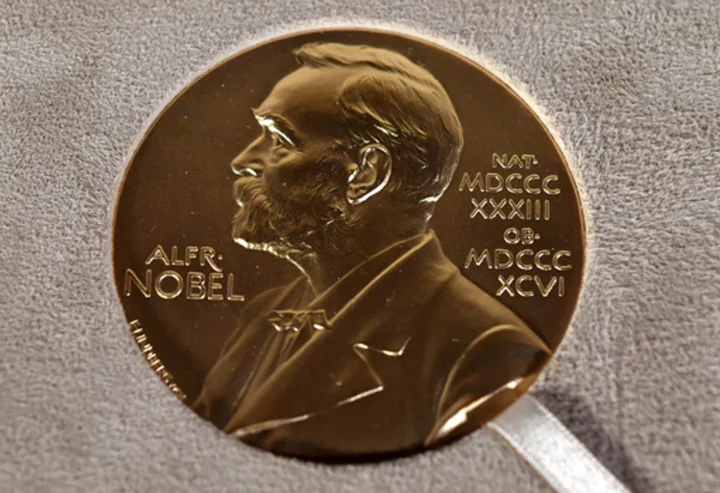
Sweden's Nobel reverses invitation policy. Russia, Belarus, Iran and far-right leader are welcome
The foundation that administers the prestigious Nobel prizes has reversed its policy and invited Russia, Belarus and Iran, as well as a far-right Swedish politician, who all were previously banned
2023-09-01 16:50

Russia reports more drone attacks as satellite photos indicate earlier barrage destroyed 2 aircraft
Russian officials say air defenses intercepted drones heading toward three of the country’s western regions
2023-09-01 16:50

European shares climb on energy boost, on track for weekly gains
By Shashwat Chauhan European shares recouped early losses to edge higher on Friday, as energy and mining stocks
2023-09-01 16:48
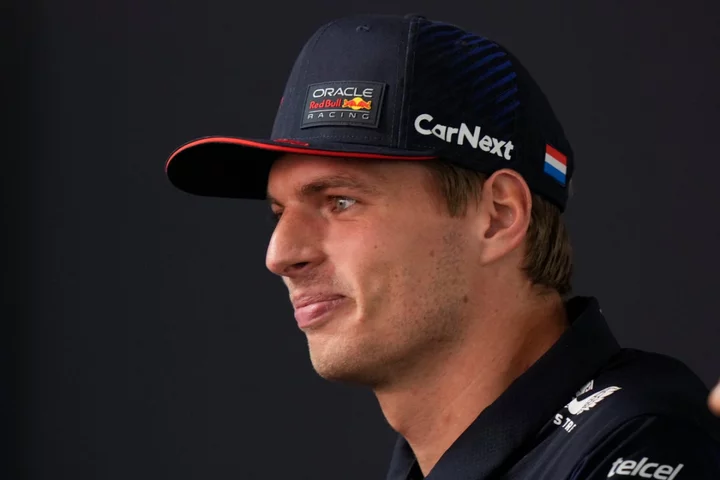
They cannot appreciate dominance – Max Verstappen shrugs off criticism
Max Verstappen has hit back at criticism of his dominance and set the target of remaining unbeaten for the final nine races of the season. The all-conquering Dutchman will become the first driver in history to win 10 consecutive races if he takes the chequered flag at the Italian Grand Prix on Sunday. Verstappen has been in imperious form this year, winning 11 of the 13 rounds staged as he closes in on a hat-trick of World Championships. With a lead of 183 points heading into this weekend’s race in Monza there is a chance he could even close out the title with six rounds still remaining at the Japanese Grand Prix on September 24. However, Verstappen’s emphatic streak has led to suggestions that the sport has become boring. But responding to the accusations in an interview with the PA news agency, Verstappen, 25, said: “They cannot appreciate dominance or just people executing their jobs. “It is nothing really new in Formula One, and I cannot do much with those kind of comments. Does it bother me? No. It would probably be worse if they were talking about other stuff. I am enjoying what I am doing and I hope I can do it for a while. “I don’t want it to stop. We have another good opportunity this weekend. I believe I can win every single race.” Verstappen’s victory on his home track in Zandvoort – which drew him level with Sebastian Vettel’s record of nine straight wins – was among the very best of the 46 of his career so far. At one stage, he was lapping four seconds faster than Sergio Perez in the other Red Bull, and two seconds quicker than anybody else. His virtuoso display in the inclement conditions prompted double world champion Fernando Alonso to say Verstappen’s achievements are being underestimated. “It is not about getting the recognition because I know how hard it is to do,” said Verstappen. “If it was very easy, more drivers would have won nine in a row, and more teams would have done it, and that is not the case. “It hasn’t been straightforward either. In Zandvoort especially, a lot of things could have gone wrong, and in the end we still handled that really well. “I never thought I would get to nine. I remember watching Seb do it, and I was like, ‘Jesus Christ, that is extremely difficult’, and now I am here and it is amazing.” Verstappen will share the grid with long-time rival Lewis Hamilton for at least another two seasons after the British driver signed a new £50million-a-year deal to remain with Mercedes. The contract extension will take Hamilton beyond his 40th birthday, and provides the possibility of a championship rematch with Verstappen if Mercedes can somehow close the gap to Red Bull. Hamilton, who was denied an eighth world title after race director Michael Masi failed to follow the correct rules in Abu Dhabi in 2021, alluded to “unfinished business” after signing his latest deal. Twenty months on from F1’s most contentious race, does Verstappen – who, on new tyres, had to pass Hamilton on the final lap to take the title – feel his maiden championship triumph was tainted? “It was not like it was given to me,” he said. “I still had to do it. “People always have short memories and they can forget a lot of stuff very quickly. “It was a great year, and we had a lot of great battles with two teams going at it and that was amazing for Formula One. “But you will always have a winner, and you will always have a loser. That is how this sport works, and I was also ready to lose. “It was a 50-50 chance and it fell my way. But in the future I could be in a situation where it doesn’t fall my way and that is how life goes. “I don’t really care a lot about other people’s opinions. I only care about people that are very close to me so whatever people say or write, I am like ‘whatever’. “I grew up my whole life wanting to be a Formula One driver and I will do everything it takes to try and be successful at it. “I make my choices and my decisions and that is why I am very relaxed about these things. I go home, I switch off from Formula One, and I am happy with my career. And when I come back to the race weekends I do my thing, and that is it.” Read More Charity boss speaks out over ‘traumatic’ encounter with royal aide Ukraine war’s heaviest fight rages in east - follow live How Max Verstappen equalled Sebastien Vettel’s record for consecutive race wins Max Verstappen reveals Sebastian Vettel prediction as he closes on GP record run Max Verstappen is one of the best drivers in F1 history – Lando Norris
2023-09-01 16:45
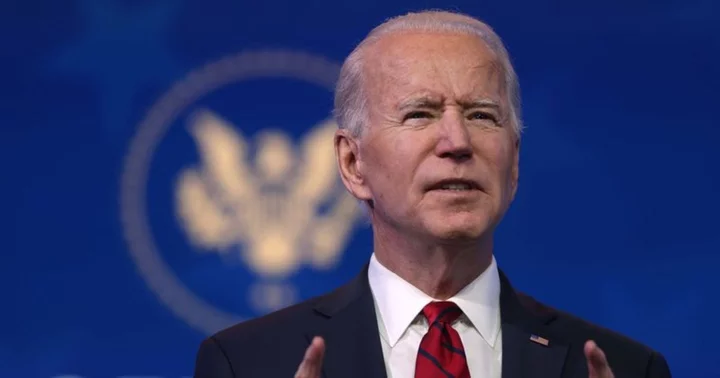
Joe Biden has spent $100K on cosmetic procedures including brow and facelift, plastic surgeon claims
Dr Gary Motykie also claims Joe Biden has had eyelid surgery to remove bags
2023-09-01 16:29
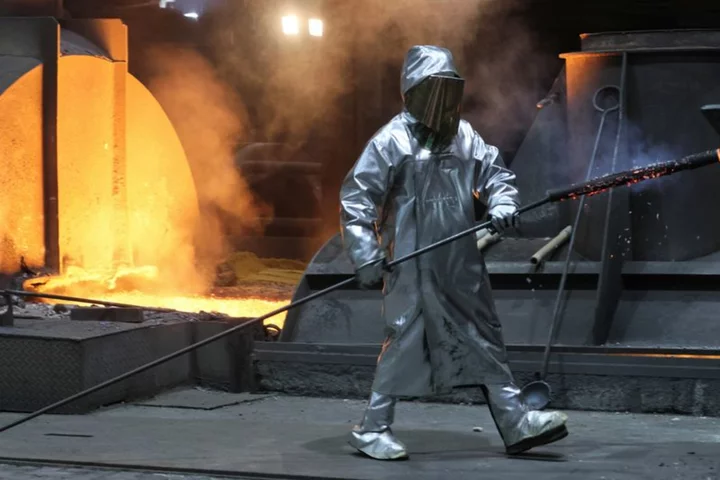
Euro zone August factory activity showed signs of recovery -PMI
LONDON The downturn in euro zone manufacturing eased last month, suggesting the worst may be over for the
2023-09-01 16:29
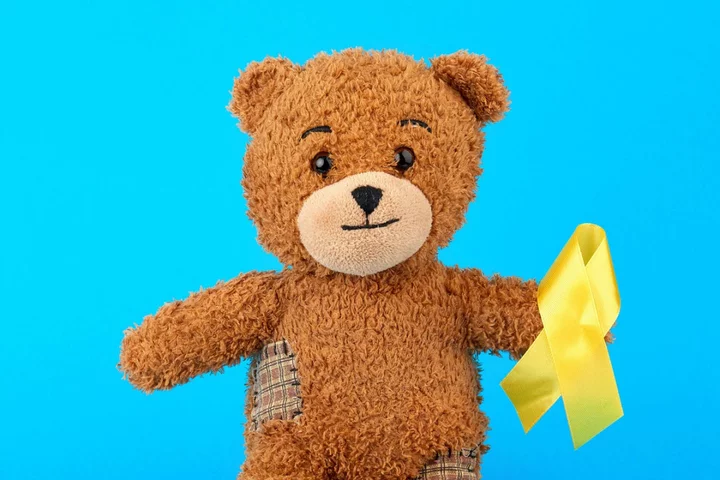
Childhood Cancer Awareness Month: What are the warning signs that your child might have cancer?
It’s heart-breaking to see a child that’s seriously ill, particularly when they’ve got cancer and might not survive. But children do get the disease – and it’s being highlighted during September’s Childhood Cancer Awareness Month. Fortunately, it’s not common. But every day in the UK, 10 families receive a cancer diagnosis for their child, teenager or young adult, and it’s the leading cause of death in children under 14, according to the charity Children With Cancer UK (CWCUK). However, Jeanette Hawkins, chief nurse at the Children’s Cancer and Leukaemia Group (funded by Young Lives vs Cancer), stresses that childhood cancer isn’t as rare as people might think, with a similar risk as diabetes, epilepsy and bacterial meningitis. “Use of the word rare for childhood cancer is a barrier to diagnosis as both GPs and parents therefore don’t consider it’s possible,” she explains. “Families, on average, have three to five GP visits before cancer is suspected. We need to reduce that by increasing awareness. Remember that childhood cancer is often a constellation of non-specific persistent symptoms, rather than a single ‘red flag’ that would alert a GP. “If you’re worried about your child keep going back.” Christiana Ogunbote, head of research at CWCUK, says childhood cancer accounts for less than 1% of all cancers in the UK, and explains there are 12 main categories of cancers affecting children, with the most common being leukaemia (30%), brain, central nervous system (CNS), intracranial tumours (26%) and lymphomas (11%). Ogunbote says cancer symptoms in children can vary widely depending on the cancer type and where it is in the body, but points out: “Often the individual symptoms of cancer can be similar to common childhood illnesses, so it can be hard to identify. “If a symptom progresses or doesn’t get better as quickly as expected, we would suggest getting it checked out by a medical professional. It’s useful for parents who know what’s ‘normal’ for their child to be aware of the signs and symptoms of cancer, as earlier diagnosis will support better outcomes for children and young people.” Here, Ogunbote outlines the symptoms of the three most common childhood cancers… 1. Leukaemia Symptoms of leukaemia in children and babies, which may be acute myeloid or acute lymphoblastic leukaemia (ALL), can include frequent and persistent infections, unusual bleeding and/or bruising, tiredness, paleness, breathlessness and, with ALL, coughing and anaemia. “Childhood leukaemia develops quickly,” says Ogunbote. “but it’s possible for some or all of these symptoms to be apparent.” She says a leukaemia diagnosis can be made from a blood test, which may reveal low numbers of normal white blood cells and large numbers of abnormal white blood cells. Further tests will then be done on a sample of bone marrow to confirm the diagnosis. 2. Brain and spinal tumours The symptoms of brain and spinal tumours (central nervous system tumours) vary between age groups, says Ogunbote, but symptoms in babies may include persistent/recurrent vomiting, balance/co-ordination/walking problems, abnormal eye movements or suspected loss of vision, behaviour change (particularly lethargy), fits or seizures (not with a fever), abnormal head position such as head tilt or stiff neck, and increasing head circumference. Children’s brain tumour symptoms are similar to symptoms in babies, but may also include a persistent/recurrent headache, blurred or double vision, fits or seizures, reduced consciousness and abnormal growth. Ogunbote says symptoms vary depending on the type and site of the tumour, and develop much more slowly with low grade tumours. But she stresses: “It’s important to remember that many of these symptoms are extremely common, and experiencing one by itself is rarely a sign of a brain tumour.” A CT or MRI scan will be done if a brain tumour is suspected, and if the scan confirms the diagnosis, further investigations will determine the type of tumour and best treatment. 3. Lymphoma Children may get a cancer of the lymphatic system known as either Hodgkin or non-Hodgkin lymphoma, and Ogunbote says symptoms of both include a persistent (lasting a few weeks) painless swelling of a single lymph gland, usually in the neck, or possibly in the armpit or groin with non-Hodgkin, a cough or breathlessness (if glands in the chest are affected), fevers, sweats, and weight loss. There may be itching with Hodgkin lymphoma, and with non-Hodgkin there may be tiredness, feeling full after a small meal, stomach pains (if abdominal lymph glands are affected), and sleep sweats. Diagnosis is confirmed by removing part or all of an affected lymph gland, usually under general anaesthetic, and doing a biopsy on it so the cells can be examined in a laboratory. Further tests, like x-rays, CT and MRI scans and blood tests, will also be carried out to determine the size and position of the lymphoma and whether it has spread. This is known as staging. “Many of the symptoms of lymphoma can also be symptoms of other illnesses, so this can make it difficult to diagnose,” explains Ogunbote. “Symptoms your child might experience depend on where the lymphoma is in their body, and symptoms vary from child to child, even if they have the same type of lymphoma.” Read More Charity boss speaks out over ‘traumatic’ encounter with royal aide Ukraine war’s heaviest fight rages in east - follow live 4 viral TikTok make-up trends you’ll actually want to try Daily aspirin dose could help prevent diabetes in older people – researchers Secondhand September: The best places to buy pre-loved fashion online
2023-09-01 16:28