

Chicago police are investigating a shooting at a White Sox game at Guaranteed Rate Field
Chicago police are investigating a shooting at a White Sox game at Guaranteed Rate Field
2023-08-26 13:57

Endangered Grevy's zebra born at Lincoln Park Zoo in Chicago
A zoo in Chicago recently welcomed a stripey new addition to its family.
2023-08-26 13:56

Nate Diaz set to 'whoop' Jake Paul's 'a**' in much-awaited boxing match: 'Not in a gimmick fight with him'
Nate Diaz founded his own promotional fight firm ahead of his fight with Jake Paul
2023-08-26 13:50
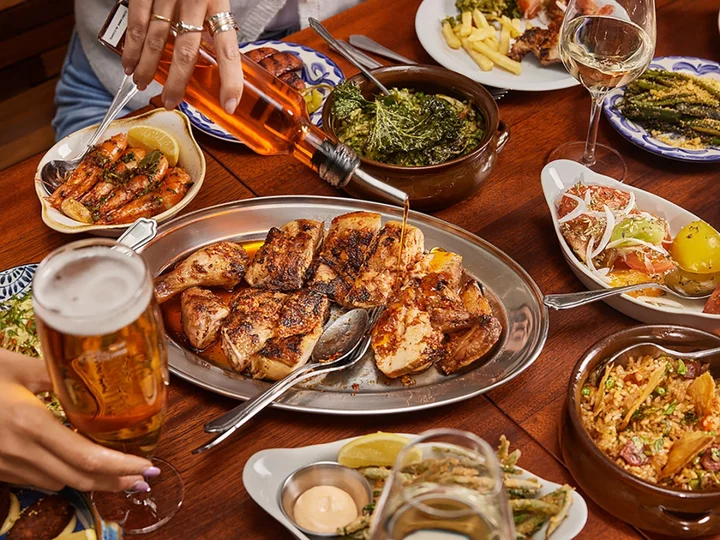
The true story – and murky history – of Portuguese piri piri oil
Most people in the UK think they know piri piri. Thanks to a certain restaurant chain, it is most closely associated with chargrilled chicken, floppy bits of halloumi, corn on the cob and bottomless fizzy drinks. But the chilli oil’s history is a little more nuanced and murky than that. During a recent trip to the Algarve, where “chicken houses” outnumber British expats, I went in search of the truth. While no one can seem to agree on its exact origins, it’s thought that during Portugal’s “mercantile” era, explorers discovered the bird’s eye chilli pepper – the main ingredient in today’s ubiquitous hot sauce – somewhere in the Americas in the 15th century. Seeing its potential to rival the “black gold” (black pepper) trade, they brought it back to their colonies in Africa to cultivate it before selling it on to Asia and Europe, significantly cutting down the shipping time. And so the global spice trade was born. But the plant suited Africa’s hot, dry climate and quickly became an important ingredient in local cooking. Fermenting it in the baking African sun and using it to marinade meat cooked over fire produced the first iteration of the classic piri piri flavour we know and love today. It wasn’t until the late Sixties, however, when Portuguese settlers and native Africans started arriving in southern Portugal, bringing with them this centuries-old technique and an appetite for spice, that it took off globally. Around the same time, chicken was becoming more affordable in Portugal, with poorer families buying whole birds to keep everyone fed and the famous “chicken houses” opening up across the Algarve offering an economical meal out. Pairing it with the piri piri oil brought over from the colonies was a natural evolution. Its enduring popularity is evident in sell-out restaurants like Marufo – affectionately referred to as “the chicken shack” – where come dinnertime there’s a queue out the door. But with 20 chickens rotating on the purpose-built spits at any one time, meticulously tended by a hot in temperature as well as temper chef, service is quick. They churn out over 700 chickens a day. As a self-identified aficionado, it’s some of the best I’ve had. It’s also the place where Marco Mendes, co-founder of MJMK Restaurants, conceived the idea for Casa do Frango, London’s authentic Algarvan piri piri outpost. “I’ve been going to Marufo since I was a kid,” he tells me as we pitch up in the queue. “I took Jake [Kasumov, the other half of MJMK] to stay with my family. We were eating this chicken and we started to have that lightbulb moment of: ‘You know, this is really something special. Could we bring this to London?’” They opened the first site in London Bridge in 2018, and have gone from strength to strength, opening three more sites, with the latest one earlier this year in Victoria. Keeping things authentic in London’s melting pot of cuisines is the driving force behind the concept. Aside from the centrepiece of the menu, the piri piri chicken, “there are other touchpoints like the African rice” – supposedly created at a restaurant in the Algarve as a simple rice dish for staff to use up leftover ingredients – and other things that are particularly Algarvan, such as the montanheira salad (mountain tomato salad), which “really feels like home”, or particularly Portuguese, like “pastel de nata, the iconic custard tart of Portugal”. (“That obviously had to be on the original menu, and it’s been there ever since.”) They’re also the only restaurant using the smaller 800g-1kg chickens, known as chooks, that are traditionally used in the Algarve, which they source from a higher welfare farm in the UK. “We adhere to the authentic route of the dish as it’s done in the Algarve,” Mendes explains. “From how we prepare our chicken to how we choose them to begin with; the fact that we reverse spatchcock them; that we don’t marinate them before they go on the grill, they’re just basted in salt.” So what’s happening at Casa do Frango is pretty unique, and London is lapping it up. “For people who know Portugese cuisine or know southern Portuguese food and have been to the Algarve, I think it really resonates with them,” says Mendes. That being said, Portuguese isn’t a cuisine that’s all that well represented in the British capital or across the country, with only a handful of big name spots (MJMK also counts Nuno Mendes’ Lisboeta in its canon) and smaller, family-run eateries paying true homage. Busting myths is an exercise close to Mendes’ heart. “Eating seasonally, eating with respect to the environment, understanding the ecosystem that you’re living in, that to me is what Portuguese cuisine is,” he explains. “But I also think that there’s a wealth of creativity. Some of the stereotypes around Portuguese food can be that it’s potentially a little bit rustic, or not as flavourful or complex or dynamic as our neighbours in Spain, but I think that’s untrue. I find that there’s so much deft in Portuguese cuisine. “I think the storytelling or marketing side of it has felt quite fragmented, but now amazing chefs from across the country are bringing the message out and telling that story. And I think people are realising just how profound the cuisine is and what it’s got to offer.” He’s quick to acknowledge, though, that the wider cuisine and the offering at Casa do Frango would be nothing without the controversial history that brought the bird’s eye chilli pepper to Portugal in the first place. “It’s definitely to do with Portuguese mercantile history in some form or another,” he says. “But I believe that in turn, we received a ton back from the countries and the people that formed part of that mercantile exploration.” He mentions Japanese tempura, brought by Portuguese missionaries to Japan in the 16th century, or vindaloo curry, which was originally invented as a way to preserve fresh ingredients by Portuguese sailors, and was later adapted by local cooks in Goa. He also says “a lot of our dishes came from the interaction between the Portuguese and their land. Take a dish like açorda [a Portuguese bread soup]. It came from Alentejo. The Portuguese living there need sustenance and nutrition, but they didn’t have any money. So they put a piece of bread and a poached egg in broth, and made what was effectively a savoury bread pudding.” It was a frugal way of filling peasant bellies, but today typically includes a handful of other ingredients like fresh herbs or seafood. Back at Casa do Frango in London, Mendes has some tips on how to have a truly authentic Algarvan experience. “If I were to go through my perfect order that’s truly intrinsic to Portugal, I would start by having the couvert, which is the bread and butter and the carrots and the lupin beans. As a starter, I would have the chorizo and the prawns, because both those dishes are iconic to Portugal. I would dip the bread into the piri piri oil as one should do.” Of course. “And then I would follow that with the patatas fritas [the fries], the African rice and the montanheira salad. Then the piri piri chicken. And I would finish it off with what is the most icnoic Algarvan dessert: the mousse de chocolat.” And, while most of the Casa do Frango recipes are a closely guarded secret, he’s shared exclusively with The Independent a few dishes so that you can host the perfect Algarvan feast at home. Saúde! Casa slaw Ingredients: For the slaw: 1 x hispi cabbage (approx 700-800g) 350g carrots 1 red onion (finely diced) 1 bunch of parsley (finely chopped) Sherry and mustard dressing Pinch of Maldon salt For the dressing: 50ml aged sherry vinegar 150ml extra virgin olive oil 3 tsp Dijon mustard 1 tsp Maldon salt 5 turns of black pepper 2 tbsp caster sugar Method: Mix all the ingredients for the dressing in a large bowl and whisk until fully emulsified. Wash the cabbage, cut in half lengthways, remove the core root and discard any outer leaves if bruised or damaged. Wash the carrots, peel and remove the tops and tails, then grate. Finely shred the hispi cabbage (use a food processor if you have one). Mix the cabbage and carrots together evenly. In a large bowl, mix the slaw with finely diced red onion and the sherry and mustard dressing. Place in a large serving dish and top with a pinch Maldon salt and the finely chopped parsley. Montanhiera salad Ingredients: For the dressing: 75ml white wine vinegar 200ml extra virgin olive oil Large pinch of table salt 1 tsp sugar For the salad: 3 medium green peppers 2 medium white skinned onions (or red onions) 250g cherry tomatoes on the vine 1 cucumber, diced 150ml classic French dressing (shop-bought or homemade) Salt and pepper to season Pinch of dry oregano, to serve Method: Mix all the ingredients for the dressing in a large bowl and whisk until fully emulsified. Pour into a clean bottle and keep refrigerated while you prepare the salad, or save for later. Grill the peppers on the barbecue, turning regularly. Cook for approximately 5 minutes or until the skin is evenly charred. Cool, peel off the skin and discard the seeds, then dice into 1cm cubes. Peel the onion and dice into 1cm cubes. Peel the cucumber, slice in half lengthways, remove the inside with a spoon and dice into 1cm cubes. Wash the tomatoes and slice in half through the eye. Mix the ingredients for the salad with the dressing in a large bowl apart from the oregano, add a pinch of Maldon salt and a few turns of black pepper, and mix well to coat all the ingredients. Serve in a salad bowl, with a sprinkle of dry oregano on top. Classic piri piri oil Ingredients: 5 garlic cloves (crushed to a paste) 1 tsp dried red chilli flakes 1 tsp chilli powder 2 tbsp whisky or brandy 1 tbsp lemon juice 1 bay leaf 1 tsp Maldon sea salt 250ml (1 cup) olive oil Method: Place all ingredients except half of the olive oil in a small pan on a medium heat and bring to a simmer. Then remove from the heat and whisk in the remaining 125ml oil. Cool down and refrigerate until needed. Casa do Frango has four locations in London Bridge, Victoria, Shoreditch and Piccadilly. Find out more or make a reservation at casadofrango.co.uk Read More 30-minute summer recipes for all the family to enjoy What to cook this week: Tomato tart, sweetcorn pasta and other summery suppers Dorshi, Dorset, restaurant review: Funky dumplings are a hit on the south coast Tofu chicken to chickpea bacon – how and why you should make plant-based meat at home The dish that defines me: Mallini Kannan’s baked honey-soy salmon Breakfast for dinner and four other things you should cook this week
2023-08-26 13:48

Pham loses homer on bizarre fan interference, Diamondbacks beat Reds 10-8
Tommy Pham lost a homer due to a bizarre fan interference after stretching his hitting streak to 15 games, and the surging Arizona Diamondbacks held off the Cincinnati Reds 10-4
2023-08-26 13:30

Strider becomes first 15-game winner, leads Braves over Giants 5-1
Spencer Strider became the major leagues’ first 15-game winner, pitching three-hit ball over seven inning in leading the the Atlanta Braves over the slumping San Francisco Giants 5-1
2023-08-26 13:29

On this day in 2014: Man Utd break British record to sign Angel Di Maria
Manchester United smashed the British transfer record when they completed the signing of Argentina’s Angel Di Maria on this day in 2014. The Red Devils, in a rebuilding phase following the departure of their hugely successful manager Sir Alex Ferguson the year before, paid £59.7million for the then 26-year-old. Di Maria, brought in by the club’s new Dutch boss Louis van Gaal, arrived at United fresh from helping his old club Real Madrid seal their 10th European title the season before. Di Maria said at the time of his signing: “I am absolutely delighted to be joining Manchester United. I have thoroughly enjoyed my time in Spain and there were a lot of clubs interested in me, but United is the only club that I would have left Real Madrid for. “Louis van Gaal is a fantastic coach with a proven track record of success and I am impressed by the vision and determination everyone has to get this club back to the top – where it belongs. I now just cannot wait to get started.” However, things never really clicked for Di Maria at Old Trafford on the pitch. He also endured a fairly miserable time off it, after an attempted burglary at his home in February 2015. Less than a year later, he joined Paris St Germain, and told the French media that he did not have a great relationship with Van Gaal. Di Maria spent seven years at PSG before joining Juventus in 2022. Last year was a special one for him, as he played and scored in the World Cup final as Argentina beat France on penalties. Earlier this summer he rejoined Portuguese side Benfica, his first European club after leaving Rosario Central in 2007. Read More Charity boss speaks out over ‘traumatic’ encounter with royal aide Ukraine war’s heaviest fight rages in east - follow live
2023-08-26 13:28

Purdy runs for a TD before Chargers backups roll past 49ers 23-12
Brock Purdy ran for a 5-yard touchdown during a brief tune-up for the season opener for San Francisco before the Los Angeles Chargers backups beat the 49ers 23-12 in the exhibition finale
2023-08-26 13:25

Fukushima residents react cautiously after start of treated water release from wrecked nuclear plant
Fish auction prices at a port south of the Fukushima Daiichi nuclear power plant have dropped amid uncertainty about how consumers may respond a day after treated and diluted radioactive wastewater began to be released into the sea
2023-08-26 13:18

Can Wagner survive, even if Prigozhin didn't?
Yevgeny Prigozhin turned the Wagner Group from a shadowy band of mercenaries into a feared military powerhouse operating across multiple countries on three continents. Now that he is gone, the future of the group is anyone's guess.
2023-08-26 13:00

Arizona's Pham robbed of homer by fan who stole the ball from Steer
Cincinnati Reds left fielder Spencer Steer had the ball in his glove, a home run stolen
2023-08-26 12:54

German Budget Hawk Steers Faltering Coalition as Far Right Rises
When German Finance Minister Christian Lindner was asked this year where he sits on the “government boat” –
2023-08-26 12:53