

Elegant Hotel Collection Launches
LONDON--(BUSINESS WIRE)--Oct 17, 2023--
2023-10-17 15:17

'The middle seat was the toughest': Japan Airlines adds extra flight to carry heavy sumo wrestlers
The sumo wrestlers weighed an average of 120 kilograms (264 pounds) each.
2023-10-17 14:59
Rolls-Royce to Cut 2,500 Jobs as CEO Extends Efficiency Drive
Rolls-Royce Holdings Plc said it’s cutting as many as 2,500 positions and will streamline the business, enacting the
2023-10-17 14:58

Here are the key leaders joining the Belt and Road forum and their wish lists to Beijing
China is hosting its third international forum centered around President Xi Jinping’s signature policy, the Belt and Road Initiative, which over the past 10 years has built infrastructure across continents, burdening some smaller countries with debt
2023-10-17 14:57
Scientists have discovered two giant mystery structures lurking under Africa
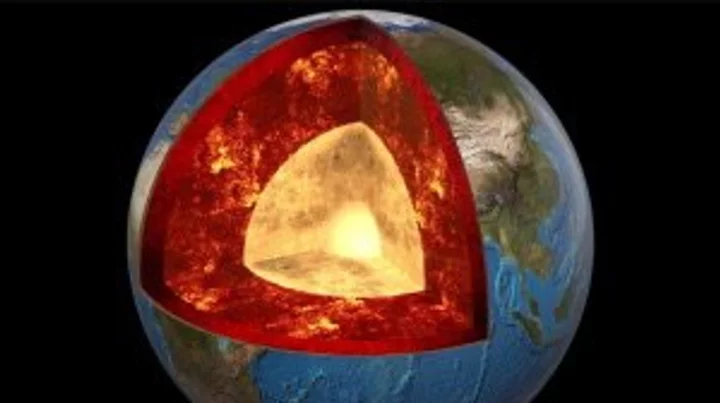
Many of us look to the stars for answers to life’s most complex questions. But actually, some of the greatest mysteries lie beneath our very feet. One might think we’d know the Earth pretty well by now but, in fact, our planet’s core remains shrouded in enigma. Indeed, there are two gigantic blobs located beneath Africa and the Pacific Ocean that occupy around six per cent of the world’s entire volume. And yet, we’re still not entirely sure what they’re made of or where they came from. There are a number of hypotheses, including that they are piles of oceanic crust that have accumulated over billions of years. Sign up for our free Indy100 weekly newsletter But a more interesting theory is that they are huge chunks of an ancient planet that hit the Earth around 4.5 billion years ago. To give an indication of just how massive these things are, the structure under Africa – an area known as Tuzo – is thought to be around 800km (497 miles) tall – the equivalent of some 90 Mount Everests stacked on top of one another, as IFLScience notes. The problem with determining the origin of these monster formations is that there are no direct ways of observing the Earth’s core. The deepest hole humans have ever dug – branded the "entrance to hell" – reached a pretty staggering 12,263m (40,230ft), but that doesn’t even come close to breaking through the crust to the layers beneath. Our most effective tool for analysing what lies beneath the ground is a technique called seismic tomography, which looks at how waves of energy travel when earthquakes occur. Since rocks and liquids have different densities, the waves move through them at different speeds. By measuring the tremors from different points on the surface, geologists can determine what kind of material the waves are travelling through and, in so doing, map out the Earth’s interior. It was by using this technique that the two unusual structures – known as large low shear velocity provinces (LLSVPs) – were found. Waves travel more slowly in these areas – fondly known as “blobs” – than through the surrounding lower mantle, indicating that they’re made of something different. We can’t tell what this material is based on seismic tomography data alone, but some scientists like to believe that they are the remnants of an ancient planet called Theia – an idea known as the “giant impact hypothesis”. According to this hypothesis, around 4.5 billion years ago, a Mars-sized object collided with the Earth. This impact not only created the planet we call home today, but also threw off enough rock to form the moon that lights up our night skies. Some scientists suggest that some of Theia’s leftovers also sunk to the bottom of the planet, probably settling somewhere above the core – thereby forming at least one of the two LLSVPs. More Updates About Strange Blob Structures Inside Planet Earth youtu.be Experts have been investigating the area for decades but there’s still no way of knowing for sure just what these two giant blobs are. Still, studies into Theia have offered important insights into how the possible collision might have kickstarted key plate tectonic and mantle motion inside our planet – crucial processes for establishing the world on which we live. It’s also a useful reminder that we still have so much to learn about our planet and where we came from. Have your say in our news democracy. Click the upvote icon at the top of the page to help raise this article through the indy100 rankings.
2023-10-17 14:56

This is shoe designer Jimmy Choo’s proudest achievement
His shoes have been worn by everyone from Diana, Princess of Wales, to Beyoncé, but legendary designer Jimmy Choo said his greatest achievement is setting up his own fashion school. Professor Choo – as he’s known to his students – set up the JCA London Fashion Academy in September 2021, calling it “my dream”. “I feel very proud – I know my dream has come true,” he told the PA news agency ahead of the masters students presenting their final collections. “My father said to me: whatever you learn, put it back to the industry. So we are lucky we have the JCA – I can put all my spirit and my knowledge, [and] give back to the students.” Before becoming a professor, Choo, 74, made his name with glamorous high-fashion footwear. After moving from his native Malaysia to study in the UK, he set up his eponymous brand in 1996 – designing heels for Diana, as well as being worn on red carpets all over the world and getting a nod in an episode of Sex And The City (when Sarah Jessica Parker’s fashion-obsessed character Carrie Bradshaw famously laments: “I lost my Choo!”) He’s delighted with the JCA Academy, but in a nod to his glittering career, Choo added: “I’ve had a lot of proud moments, from personally designing shoes for Princess Diana and other incredible VIPs [to] seeing emerging designers that I’ve mentored succeeding in their careers.” And while he’s an industry veteran, Choo said he’s still constantly learning. “The best piece of advice I received was to learn as much as possible,” he said – which is particularly important in the fashion industry where “everything changes”. He said: “The material, design, machinery, fabric – everything changes. So you have to adapt. Whatever you do, you must learn something.” Sustainability is one of the biggest areas of change in the fashion industry. “Now people [are] talking about sustainability – how to help the environment and that kind of thing,” Choo explained. “Everyone has to think about the future of the earth – if you spend so much and waste so many things, nature will be in trouble and so will we.” He looks to his students for inspiration, who “never fail to amaze me”. “Sophie Park was one of our footwear designers who made shoes out of plant-based materials such as cacti, pineapple and leaves. Olivia Black and Polly McKevitt both have collections made out of deadstock and materials that would have otherwise been discarded.” Choo enjoys working with young people because “they will listen to you”, and added: “They’re also very down to earth, willing to learn – that’s very important.” In turn, Choo emphasises to his students the importance of asking questions. “You have to ask why,” he said, giving the example of making a suit that doesn’t fit right and questioning why you can’t button the jacket up. “Because you’ve cut the pattern wrong, so your button cannot close. [With] only one inch, you made the whole thing difficult. The key to success, according to Choo, is collaboration – something which isn’t necessarily the norm in the highly competitive fashion industry. At JCA, he said he never wants anyone to think they’re “better than you, [or] you’re better than me”, he said. “If you’re better than anyone we should share their ideas and the whole thing benefits. We cannot be selfish.” It’s something he suggests is missing from the wider fashion industry. “Of course it’s important to own your ideas, but creativity flourishes when you can bounce ideas off other people. I think it’s important to have a network of people that you can speak openly with in the interest of improving and sparking creativity.” Among all the good advice propelling Choo’s career to the stratosphere, what was the worst he ever got? “Maybe it’s when someone told me I should retire.” See jca.ac.uk and @JcaLondon. Read More 4 black women on their experiences with breast cancer See Madonna’s extravagant tour outfits – including an updated cone bra Halloween pumpkins – how to grow your own Presenter Louise Minchin: Menopause conversations are no longer taboo – but we need to keep going Online apps recommended to manage lower back pain From choppy bobs to fox red, 5 celebrity-approved hair trends for autumn
2023-10-17 14:54

Desperately needed aid piles up outside Gaza as WHO warns water is running out
Vital humanitarian aid is piling up at the shuttered Gaza border, despite diplomatic efforts to open a corridor with Egypt, as the World Health Organization warned that water is running out for hundreds of thousands of displaced Palestinians in the bombarded territory.
2023-10-17 14:48

UK regular pay growth slows for the first time since January
By David Milliken LONDON (Reuters) -Growth in British workers' regular pay - which is being watched closely by the Bank
2023-10-17 14:47

Asia stocks rise on earnings hopes; keep wary eye on Mideast tensions
By Selena Li HONG KONG Asian stocks made some cautious gains on Tuesday, with investors choosing to focus
2023-10-17 14:24

Neu REFIX β-glucan reduces muscle fibrosis in Duchenne muscular dystrophy MDX mice, in joint research with Dr. Yoshitsugu Aoki, NCNP, Tokyo, Japan.
TOKYO--(BUSINESS WIRE)--Oct 17, 2023--
2023-10-17 14:23

Ericsson Says Weakness Persists in Quarter After Sales Miss
Ericsson AB said market weakness that has depressed sales will persist into the fourth quarter as the company
2023-10-17 14:20
This is why time ‘speeds up’ when we get older, according to scientists
We've all heard and probably have used the saying "time flies," but why does this expression resonate more and more as we get older? From being a happy-go-lucky child counting down the days of school left until the summer holidays to finding ourselves in adulthood with responsibilities like a full-time job and bills to pay, everything changes in what feels like a blink of an eye. While there isn't any scientific evidence that explains why we feel time moves faster as we age, there is a theory that may provide the answer. "One is that when we are older, we tend to have lives that are more structured around routines, and fewer of the big landmark events that we use to demarcate different epochs of the 'time of our lives,'" Cindy Lustig, a professor of psychology at the University of Michigan, told the Daily Mail. She explained how as children we have fewer experiences to reflect on. And so 20 per cent of a five-year-old's life is just one year and in this year there are momentous milestones and life experiences. While the same duration of time only two per cent of a 50-year-old's life who wouldn't have as many new experiences within this period. The professor added how our brains often merge similar days and weeks together and this blending of memories means that many of us can remember something they've done once rather than recalling the hundred times they have done it before. Well, there you go - something to think about whenever we feel old and like time is passing us by. Sign up to our free Indy100 weekly newsletter Have your say in our news democracy. Click the upvote icon at the top of the page to help raise this article through the indy100 rankings.
2023-10-17 14:18