
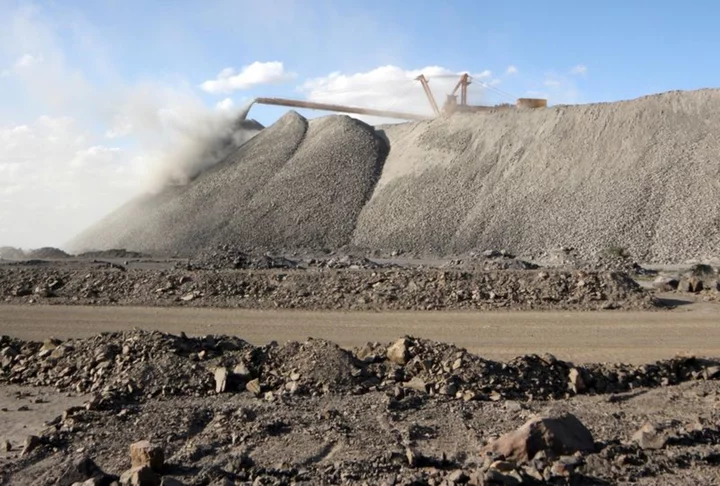
Chinese rare earth prices hit 20-month high on Myanmar supply worry
BEIJING/HANOI (Reuters) -Chinese rare earth prices jumped to their highest in 20 months, as mining suspension in major producer Myanmar
2023-09-07 20:22
Dutch company Philips reaches U.S. settlement over respirators
PARIS Philips and some of its local units reached an agreement to resolve all economic loss claims in
2023-09-07 20:18

Global regulators seek to crack down on decentralised finance
By Huw Jones LONDON Global securities regulators set out on Thursday their first blueprint to make participants in
2023-09-07 20:16

Ian Maatsen tracked by Man City as Chelsea contract uncertainty continues
Man City are among the sides tracking Ian Maatsen as his contract uncertainty continues.
2023-09-07 19:54

What Nelson Mandela and John Madden taught this NFL coach about leadership
Ahead of the start of the NFL season, Washington Commanders coach Ron Rivera sat down with CNN This Morning for a wide-ranging interview on leadership and other topics. Since he took the position in 2020, Rivera has coached the Commanders through a name change, a personal cancer diagnosis and a cultural reckoning for the organization.
2023-09-07 19:50
Massive bubble of galaxies could be ‘fossil of the Big Bang’, say scientists
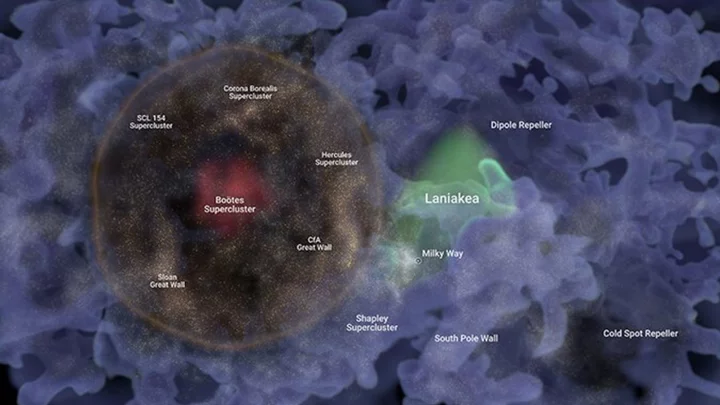
A huge bubble of galaxies that is one billion lightyears across could be a remnant of the ripples caused by the Big Bang, according to astronomers who have mapped the structure. The structure, named Hoʻoleilana by University of Hawaii scientists, is thought to have been caused by so-called Baryon Acoustic Oscillations (BAOs). These were ripples in the particles of the early Universe in the period following the Big Bang, when planets, solar systems and galaxies were not yet fully formed. As the ripples went outward, they created areas of density in the particles, causing bubble-like structures in which galaxies eventually coalesced. Until now, the BAOs were just a prediction – part of the wider Big Bang theory. No specific structures in the Universe had been found which mimicked their patterns. But Hoʻoleilana fits the description of these huge cosmic bubbles perfectly, according to Brent Tully, who led the study at the University of Hawaii’s Institute for Astronomy. “We were not looking for it. It is so huge that it spills to the edges of the sector of the sky that we were analyzing,” he said. “As an enhancement in the density of galaxies it is a much stronger feature than expected. The very large diameter of 1bn light years is beyond theoretical expectations. “If its formation and evolution are in accordance with theory, this BAO is closer than anticipated, implying a high value for the expansion rate of the universe.” The bubble is absolutely huge. It is made up of several superclusters, structures which themselves are thought to be among the Universe’s largest arrangements of matter. This includes the Hercules Supercluster, the Corona Borealis Supercluster and the Sloan Great Wall. All of these structures contain thousands of galaxies. In the middle of Hoʻoleilana sits the Bootes Supercluster and the Bootes Void, an immense space of nothingness which is an incredible 330m lightyears across. Daniel Pomarede, from the CEA Paris-Saclay University, who contributed to the research, said: “It was an amazing process to construct this map and see how the giant shell structure of Ho’oleilana is composed of elements that were identified in the past as being themselves some of the largest structures of the universe.” The research was published on 5 September in The Astrophysical Journal. Sign up to our free Indy100 weekly newsletter Have your say in our news democracy. Click the upvote icon at the top of the page to help raise this article through the indy100 rankings.
2023-09-07 19:45
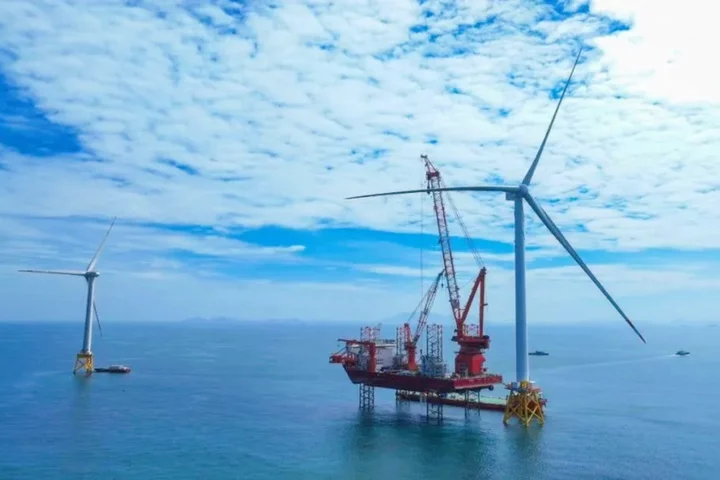
World’s largest wind turbine breaks record for power generated in a single day
A wind turbine in China has set a new world record for the most amount of electricity generated in a single day, after operating during typhoon conditions. The Goldwind GWH252-16MW turbine, which was installed at an offshore wind farm in Fujian Province in June, produced 384.1 megawatt hours in a single day – enough to power roughly 170,000 homes. The record was achieved on 1 September, according to state-owned power company China Three Gorges (CTG), surpassing the previous record set by Danish company Vestas in August. The turbine’s rotor has a diameter of 252 metres – more than double the diameter of the London Eye – and at full speed each blade can reach up to 70 per cent of the speed of sound. The record-breaking wind turbine features an innovative design that allows it to adjust its blades in real time when winds reach high speeds. This allowed it to continue operating during Typhoon Haikui last week, during which conventional turbines were forced to shut down. “We are closely monitoring critical components like the main control programme, pitch system and generators to gradually lift power restrictions while ensuring operational safety,” a spokesperson for Goldwind told the South China Morning Post. Figures from the Chinese Wind Energy Association show that China installed more than 11,000 wind turbines last year, 90 per cent of which were at onshore wind farms. Separate figures from the International Energy Agency (IEA) suggest that China added nearly three times as much wind capacity in 2022 compared to the European Union, and accounts for more than a third of all of the world’s installed wind capacity. Projections from the agency indicate that electricity from wind and solar will double over the next five years, providing almost 20 per cent of global power generation by 2027. “China is forecast to install almost half of new global renewable power capacity over 2022-27, as growth accelerates in the next fice years,” a recent IEA report noted. “Very ambitious new renewable energy targets, market reforms and strong provincial government support provide long-term revenue certainty for renewables. In most Chinese provinces, utility-scale renewables are cheaper than regulated coal electricity prices, driving rapid adoption. In the main forecast, China is expected to reach its 2030 target of [renewable] capacity five years in advance.” Read More How tech could turn our homes into renewable energy power stations World’s first solar powered hybrid truck tested on public roads Period and fertility tracking apps scrutinised over data security concerns AI can help generate synthetic viruses and spark pandemics, warns ex-Google executive Google boss says he wants to make people ‘shrug’
2023-09-07 19:24
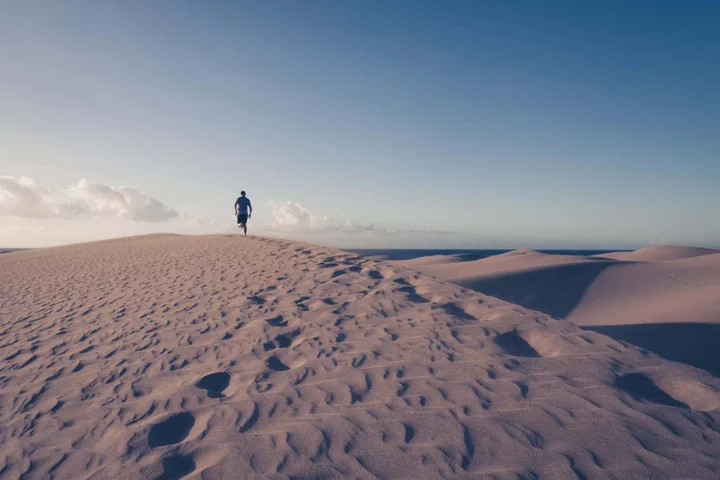
Athlete who ran over 200km through the desert shares advice for running in a heatwave
We’ve been hit with a September heatwave and, for runners – whether beginner or seasoned – it means added concerns around dehydration, chafing and generally keeping safe in the heat. Ultramarathon runner Leon Bustin, 36, completed a 220km run through the Wadi Rum desert in Jordan in October 2022, so he knows a thing or two about dealing with hot weather while exercising. Here is the athlete’s advice for heatwave running right now. Be sun safe “Covering your skin to avoid too much direct sunlight will really help,” says Bustin, who is also a content creator for Lean Machines and a personal trainer. “I highly recommend using a good zinc stick under the eyes and across the nose as well. “I used a bright purple one in the desert to remind me of my daughter and also to show very clearly if there was a part I’d missed. [Use] a higher factor than you think you need.” Hydration starts before a run “Working on your hydration starts before you take a single step out of the door,” he says. “I even start my day with an electrolyte-rich glass of water as we even become dehydrated in our sleep. “So having a good 500ml of electrolyte-rich water pre-run will really help, then as a good basic guideline take a further 500ml for each hour you are out. “The important thing is adding the electrolytes to the water. If we over-consume [pure water] we may dilute and flush out essential electrolytes and trace minerals as we pee.” Cool bare skin “Try cooling the glabrous – or none hairy- areas, it really helps flush heat out of your body fast,” says Bustin. “Those areas include the palms of your hands, under eyes, ears and soles of your feet. “Every time l arrived at an aid station in the desert l would hand over my water bottles to be refilled and plunge my hands straight into a bucket of coldish water, splash my face then keep the hands there for a good 30 to 40 seconds.” For those of us without air stations, Bustin suggests wetting exposed skin with water from a bottle. Pop a flannel in the freezer before going on a run and run it across your skin afterwards, or midway. “The key to keeping cool on a run is managing your core temperature because if that rises too much, put simply, it will be the end of your race,” he adds. Breath correctly “Breathing right for you is really important to get nailed down regardless of the running conditions, but especially in the heat as we don’t want to put any unnecessary extra stress on our bodies – because it will just cost more energy,” says Bustin. “We all tend to over-breathe through our mouth so simply focusing more of our inward breaths to be through the nose will help more than you think and over time both bring down and regulate your average heart rate greatly.” Be careful of the chafe Chafing can put you off pretty early in your running journey, and in the heat, where shorts can leave thighs rubbing together and slick with sweat, it’s a run-ruiner. “Anti-chafe cream is your best friend in the key areas (between the thighs and under the arms),” says Bustin, “but also if you get lots of toe blisters like me. “I put a generous dose between my toes of a good oil-based anti-chafe or even just some good old Sudocrem to keep those toes gliding. The right cream for you will take trial and error and is also combined with wearing the right run kit for you as well.” Read More Charity boss speaks out over ‘traumatic’ encounter with royal aide Ukraine war’s heaviest fight rages in east - follow live Women being invited to help shape the future of reproductive healthcare – from period pain to menopause How to style your home like a professional One in 10 ‘spending beyond their means’ – try these 7 cutbacks guaranteed to save families money
2023-09-07 19:22

'Gossip Girl' star Taylor Momsen recalls 'alienating' experiences as child actor
"Gossip Girl" star Taylor Momsen has opened up about how "alienating" she found being a child actor.
2023-09-07 19:21

Period and fertility tracking apps scrutinised over data security concerns
The UK’s data protection regulator is to review period and fertility tracking apps over concerns around the data security of such platforms. The Information Commissioner’s Office (ICO) said the review was in response to figures it had obtained from its own research, which found that more than half of women using these apps had concerns over how their data was being used. The data protection watchdog’s research showed a third of women have used apps to track their periods or fertility, and more than half of those who have used an app believed they had noticed an increase in baby or fertility-related adverts since signing up, with 17% said they had found this distressing. The ICO said its poll showed concerns around data use and how secure their data was were named as bigger fears among women than the cost of these apps or ease of use. We want to make sure women can use these services with confidence, so we’re calling for people to share their experiences Emily Keaney, ICO The regulator is now urging users to come forward and report their own experiences using tracking apps as part of a call for evidence. It said it had also contacted companies who provide period and fertility tracking apps to find out how they are processing users’ personal information. The ICO said the focus of its work would be to identify if there was the potential for harm and negative impact on users. “These statistics suggest data security is a significant concern for women when it comes to choosing an app to track their periods or plan or prevent pregnancy,” Emily Keaney, ICO deputy commissioner of regulatory policy, said. “That’s not surprising, given the incredibly sensitive and personal information involved. “We want to make sure women can use these services with confidence, so we’re calling for people to share their experiences. “This will help us understand whether there are areas that need improvement – from how easy it is to navigate privacy policies to whether people have experienced upsetting and unexpected targeted advertising. “We also know some users feel these apps bring many benefits and we’d like to hear about these too. “As with all health apps, we would expect organisations to safeguard their users’ privacy and have transparent policies in place. “This review is intended to establish both the good and bad of how the apps are working currently. “Once we have more information, we will explore next steps, but we will not hesitate to take regulatory action to protect the public if necessary.” Read More Charity boss speaks out over ‘traumatic’ encounter with royal aide Ukraine war’s heaviest fight rages in east - follow live Russian cyber-attacks ‘relentless’ as threat of WW3 grows, expert warns Warner Music sign first digital character Noonoouri and release debut single Met should thoroughly investigate cyber security practices, say experts
2023-09-07 19:15

China moves to widen state employee iPhone curbs -sources
By Julie Zhu and Kevin Yao HONG KONG/BEIJING China has in recent weeks widened existing curbs on the
2023-09-07 18:58
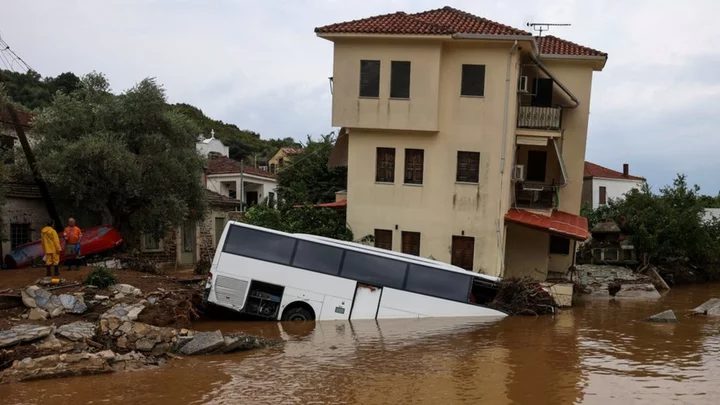
Greek floods: Austrian honeymooners missing after holiday home swept away
Rescuers are searching for the couple after torrential rains swept away their holiday home.
2023-09-07 18:56