

Meta, TikTok given a week by EU to detail measures against disinformation
By Charlotte Van Campenhout and Bart H. Meijer BRUSSELS (Reuters) -Meta and TikTok have been given a week by the
2023-10-19 18:46

Georgia May Jagger hails Jerry Hall her beauty inspiration
Georgia May Jagger looks up to her supermodel mom Jerry Hall as a beauty inspiration.
2023-10-19 18:25

Scarlett Johansson is terrified of receiving facials
Scarlett Johansson is "terrified" of facials because her struggles with acne in the past have made her wary of what she uses on her skin.
2023-10-19 18:19

Miriam Margolyes now has part of a cow’s heart as she opens up about health after surgery
Miriam Margolyes has shared a health update after heart surgery, revealing that she now has part of a cow’s heart. Back in May, the Harry Potter actor underwent a minimally invasive procedure called a Transcatheter Aortic Valve Implantation (TAVI) to replace a narrow aortic valve after it fails to open properly. Appearing on the Table Manners podcast, Margolyes, 82, discussed the heart operation with hosts Jessie Ware and her mother, Lennie. “I’ve got a cow’s heart,” Margolyes revealed. “Well, not the whole heart. I’ve had an aortic valve replaced by a cow’s aortic valve.” Jessie asked if that was “common”, with Margolyes joking: “I think it’s rather refined, actually… I don’t know how common it is, I’d never heard of that operation. But it saves you from having open heart surgery, which would be infinitely more invasive.” Further discussing the surgery, Margolyes explained: “They made two little holes in your groin, one in each groin. and then they shoved this thing through. And I don’t know how they pull it up but they sort of pull it up with strings, into your heart. “And then when it comes to the point when it’s in your heart, they pull a little string and it goes pow! And lo and behold, your artery or your aortic valve is shoved unceremoniously to the side, and the cow’s aortic valve says, ‘Moo, I’m here.’ It’s rather amazing.” Margolyes also shared that she would “probably” use a wheelchair soon due to her bad back, but had “just sort of accepted” that it was going to be necessary. On her new fandom and being seen as a “national treasure”, thanks to her outspoken nature, she added: “It’s lovely to hear that you like me and you approve of me. But I truly am a little old lady. Trying to make a living. Trying to keep going.” Last month, the actor released her new memoir, titled Oh Miriam: Stories from an Extraordinary Life. In the book, which was full to the brim with revelations, Margolyes wrote that her current state of disability meant that she now is mostly unable to perform on the theatre. Describing herself as “semi-crippled”, she wrote that “usually that means you have to stop”. “I don’t think I can do theatre again unless I’m playing a character similarly disabled,” she said. “I know Maggie [Smith] and Eileen [Atkins] and Judi [Dench] and Vanessa [Redgrave] still tread the boards, and they’re older than me – but they’re fitter, b***** it, and good luck to them!” Read More Tilda Swinton, Steve Coogan and Miriam Margolyes among 2,000 artists calling for Gaza ceasefire 11 biggest revelations from Miriam Margolyes’ hilarious new memoir Miriam Margolyes says Steve Martin was ‘horrid’ on film set: ‘Perhaps he was method acting’ Call The Midwife ‘should come with a health warning’ My kids don’t have sushi in their packed lunches – does it make me a bad mum? Adele reveals she’s three months sober after being ‘borderline alcoholic’ in her 20s
2023-10-19 17:58
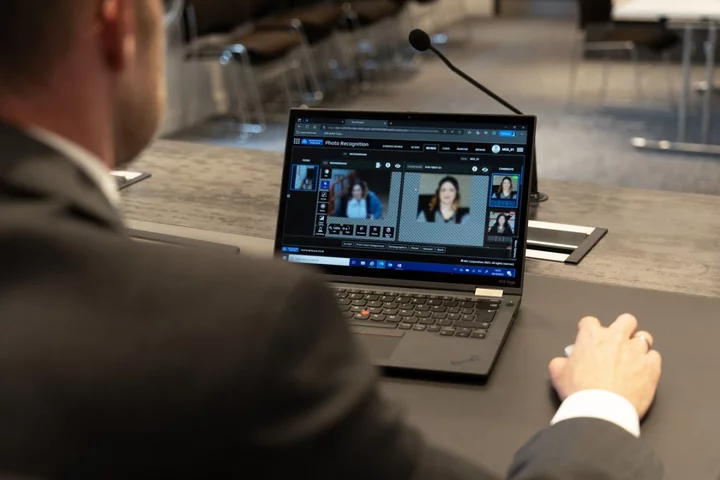
‘Game-changing’ facial recognition technology catches prolific shoplifters
Britain’s biggest police force is using “game-changing” facial recognition technology to catch prolific shoplifters. The Metropolitan Police asked 12 retailers to provide images of 30 of the worst offenders who steal from their shops in a pilot of the new software. They were compared against the force’s custody shots, and of 302 images submitted, 149 came up as positive matches. Those matches are now being investigated further with a view to building criminal cases. The software uses biometric measures of a person’s face and works even if part of their face is covered. It takes around 60 seconds to find a match. Commissioner Sir Mark Rowley said: “We’re working with shops across the capital to target and track down criminals in a way we never have before. “We’re pushing the boundaries and using innovation and technology to rapidly identify criminals. “The results we’ve seen so far are game-changing. The use of facial recognition in this way could revolutionise how we investigate and solve crime.” He claimed that most of the prolific offenders were involved in other, more serious criminal activity. “What’s most powerful is what we’ve learned about those involved in this offending so far. It’s clear the majority are career criminals involved in serious crime,” Sir Mark said. “This data and information helps us focus our efforts in an even more precise way than we originally anticipated. “Through this tactic we’re not only improving how we protect shops and support the business community, we’re stepping further forward in identifying and tracking down serious criminals and protecting all of London’s communities. “The scale of business crime in London is huge. To be successful we have to be precise in our approach and this is a really promising step forward.” Met police last year." data-source=""> Chief executive of the Association of Convenience stores James Lowman said while the technology could save police time, there is still a challenge in getting offenders off the street. He said: “Using artificial intelligence to identify prolific offenders can be an effective way of drastically reducing the amount of police time it takes to make links between crimes committed against different businesses locally. “Whether its artificial intelligence or local intelligence that leads to criminals being identified, the real challenge remains apprehending these offenders and getting them off the streets.” The Met started using the software in August and began the retail pilot in late September. The new system can use images from CCTV, dashcams, doorbell cameras or phones. It uses the same algorithm as the Met’s live facial recognition technology, about which there have been well-publicised concerns over potential bias. Lindsey Chiswick, director of intelligence for the Met and national policing lead on facial recognition, said the algorithm has been independently tested by the National Physical Laboratory. She said: “Facial recognition technology, which is able to match faces after the event, has actually been around for quite a few years. “What’s changed and what is improving all the time, and in the last few years with real speed, is the accuracy of the algorithm. And that’s the real game changer here. “With this technology, it’s an algorithm that we’ve independently tested through the National Physical Laboratory so we have assurance it’s 100% accurate when it comes to retrospective usage, and we understand how it works.” Around 50,000 shoplifting incidents were reported to the Met last year, estimated to be between 5% and 10% of the offences that are actually committed. Emmanuelle Andrews, from human rights charity Liberty that has campaigned against the use of facial recognition, said: “Facial recognition has no place on our streets, in our shops – or in any other areas of our lives. “This technology threatens our privacy and stifles free speech – and we should all be worried about moves to expand its reach. “We’re also concerned about the creep of facial recognition technology into other areas of policing. “Let’s be clear: we cannot rely on tech to solve deep societal problems, this is an unjustified expansion of state surveillance and there are numerous alternatives.” Read More Facial recognition firm Clearview AI overturns UK data privacy fine Sadiq Khan, Met Commissioner to ask phone companies to ‘design out’ theft Microsoft gets go-ahead to buy Call of Duty maker Activision Incels using TikTok to spread ‘hateful beliefs’, research suggests Duke and Duchess of Sussex call for overhaul of social media Google to trial AI in UK traffic light systems to reduce stop-and-go emissions
2023-10-19 17:53
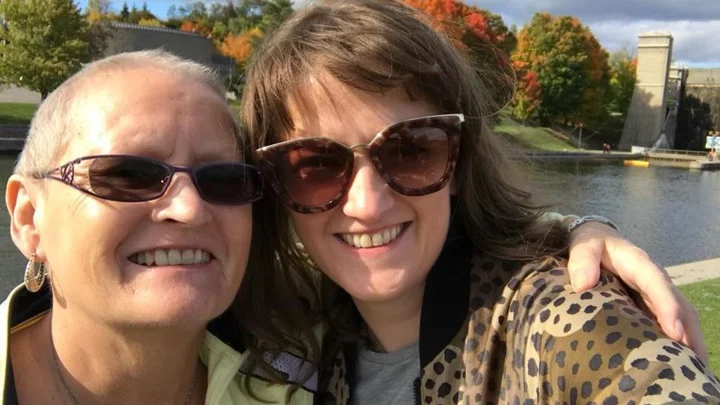
Woman's campaign for assisted death law change
Nichola Harris' mother died surrounded by "friends and loved ones singing and holding her hands".
2023-10-19 17:51

IMF, Bangladesh agree on first review of $4.7 billion bailout
The International Monetary Fund and Bangladesh reached a staff-level agreement on Thursday on the first review of a
2023-10-19 17:49

Putin's prominence and the shadow of conflict: Key takeaways from China's Belt and Road Forum
A two-day global gathering billed as China's "most important diplomatic event" of the year wrapped up in the Chinese capital on Wednesday, with Beijing touting its outsized role in world development -- and its alternative vision to that of the United States.
2023-10-19 17:22

'I basically wrote off Hollywood': Rick Riordan didn't want Percy Jackson on screen again after film issues
Rick Riordan was wary of adapting 'Peter Jackson' for the screen again as he didn't like the films based on his fantasy novels.
2023-10-19 17:20
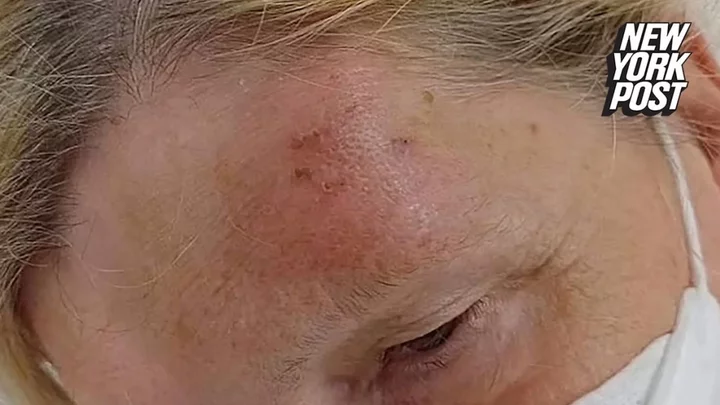
Pets pose a serious health threat that we've all been overlooking
While millions of people own cats and dogs and wouldn’t dream of getting rid of them, pets pose a health risk to humans that is massively overlooked, according to a new study. Since the Covid-19 pandemic swept the world with devastating impact, it has become evident how much of a risk new viruses can pose to our well-being. However, experts are warning that it is not just the wildlife trade or exotic animals that we should be concerned about, as pets could also be sources of zoonotic diseases (which jump from animals to humans). Back garden pets, house pets, working animals and even rodents and pests could host new viruses that could affect humans, according to a new study. It warns that the urbanisation of our habitats and climate change will have an impact on diseases and their dynamics. The study was shared in Science Translational Medicine and penned by disease ecologist Amandine Gamble along with a group of colleagues, who gave examples of how companion animals (aka pets) and stray animals carried a risk of zoonotic spillover. While the risk is thought to be small, experts warn it is significantly underappreciated, especially given the frequent proximity human beings have to pets and strays. The study said: “These animals can play critical roles in zoonotic spillover by enabling the maintenance of a zoonotic pathogen, facilitating its spatial spread, acting as a bridge between otherwise unconnected species, or providing particular opportunities for its evolution.” While the zoonotic spillover that caused Covid-19 sparked a global pandemic, any instance of infection that jumps from animal to human is known as a zoonotic, regardless of the numbers affected. Pet parrots are a known transmitter of the Chlamydia psittaci bacterium to humans. Elsewhere, bats and horses are also known sources of zoonotic diseases. In terms of common household pets, cats can act as a link to a number of fatal diseases. The experts explained: “Numbers of infections are low, but plague is endemic in 17 western U.S. states, and many of the small mammals on which cats prey carry Y. pestis. “Consequently, outdoor cats and cats with incomplete veterinary care, combined with human interaction, suggest that cat-transmitted plague can be considered an increasing public health risk.” They conclude that “it is critical to implement surveillance programs allowing us to track changes in pathogen dynamics”. Sign up to our free Indy100 weekly newsletter Have your say in our news democracy. Click the upvote icon at the top of the page to help raise this article through the indy100 rankings.
2023-10-19 17:19

Olivia Rodrigo announces limited-edition GUTS vinyl with four bonus tracks
Only fans who purchase the 'Guts: The Secret Tracks’ vinyl will get to hear four bonus tracks.
2023-10-19 17:18

WhatsApp update changes how billions log in to messaging app
WhatsApp is changing the way billions of users log into the messaging app, ditching passwords and two-factor authentication in favour of quicker and more secure passkeys. The move is part of a major shift within the tech industry to move away from decades-old password technology and replace it with the more modern passkey format, which combines biometric information like fingerprints with a simple numeric code in order to identify people. A similar switch was recently announced by Google, which will introduce passkeys to its apps like Maps, Search and YouTube. WhatsApp’s update will only impact Android users to begin with. “Passkeys are a new way to log back into your account,” said Will Cathcart, who heads WhatsApp. “This is a more secure way of confirming it’s really you – and gives you an added layer of security.” WhatsApp is also rolling out self-destructing voice notes to users as part of new measures to improve privacy on the world’s most popular messaging app. The update is currently only available for beta tester users who have the latest version of WhatsApp installed on their phone or computer, though it is expected to eventually be introduced for all users. With more than 2.7 billion users worldwide – the majority of which on Android devices – WhatsApp updates typically need to be introduced gradually in order to make sure any potential security bugs do not have a critical impact. The self-destructing audio messages, first spotted by WhatsApp feature tracker Wabetainfo, is compatible with both Android and iOS users, though no date has been given for when a wider roller out might be expected. WhatsApp does not comment on release schedules for feature updates unless they relate to security. “After sending the voice note with view once mode enabled, you won’t be able to listen to it and the recipient can no longer listen to the voice note after dismissing it,” Wabetainfo noted. “This mode effectively minimises the chances of unauthorised access or later listening, providing a new layer of privacy for sensitive and confidential information.” The latest update follows recently added features like ‘Channels’, which allow people to follow celebrities and companies within the app, and a ‘Create’ button that gives users the ability to make custom art on the platform. The Create feature brings generative artificial intelligence to WhatsApp for the first time, and means users do not require external tools or specific design skills to create the stickers. Instead, the custom stickers can be produced using simple text-based prompts, similar to other AI image generators like Midjourney and OpenAI’s Dall-E. Read More Facebook and Instagram users face monthly fee for ad-free version Meta launches AI chatbots with ‘personalities’ to take on ChatGPT Viral WhatsApp warning of cyberattack targeting Jewish people is fake Amazon trials humanoid robots to see if they can help staff warehouses Tesla’s profits dip as Musk goes on rant about staff working from home
2023-10-19 17:15