
WeWork Plans 1-for-40 Reverse Stock Split to Save Listing
WeWork Inc., the troubled co-working company on the brink of collapse, is moving forward with a 1-for-40 reverse
2023-08-18 19:47

This CNN Hero's battle with cancer inspired her lifesaving work helping families in her Native American community
After navigating the daunting challenges to access the treatment she needed, Tescha Hawley started the Day Eagle Hope Project to help other Native American cancer patients. Today, her organization is addressing gaps in health care and nutrition for thousands on her reservation.
2023-08-18 19:29
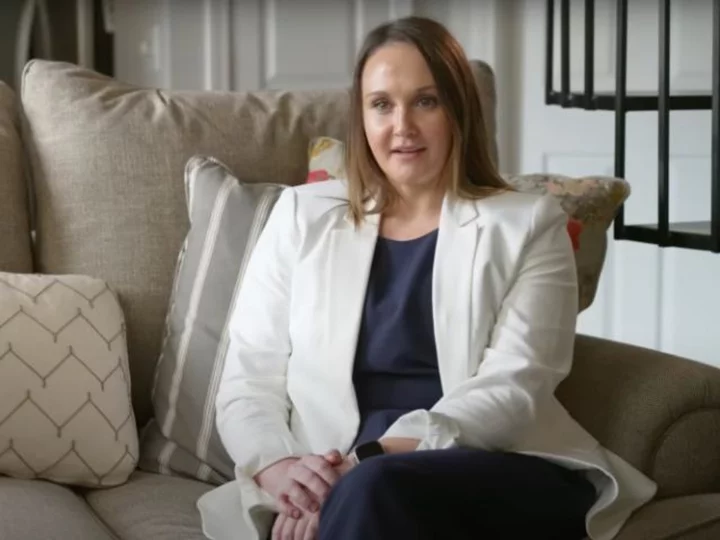
School board votes to fire teacher who read book on gender identity to Georgia fifth-graders
A suburban Atlanta school board has voted to terminate the contract of a teacher who read a book about gender identity to gifted fifth-graders -- the latest salvo in a nationwide clash over how issues like gender and race are discussed in public school classrooms.
2023-08-18 19:27

Russians are flocking to bootleg Barbie screenings amid Hollywood ban in country
Russians are going to see bootleg viewings of the Barbie movie thanks to Hollywood pulling out of Russia. Warner Bros and other big Hollywood names like Disney and Netflix pulled out of the country after Putin invaded Ukraine last year. So, since then, copies of popular films have come into the country through other Russian-speaking markets, such as Kazakhstan, to work around the sanctions. To get around the system, some cinemas sell people tickets for a little-known Russian documentary or short film and then show a different film during the preview, to skirt American copyright laws and Russian laws that require distribution certificates from the Russian Ministry of Culture. But in June, the primary Kazakh-based distributor that had been illegally delivering Hollywood-licensed films to Russian cinemas announced it was pulling out of the business for financial reasons. This is how pirated viewings have started becoming popular. Nikita Zabolotskikh, 17, has spent an estimated Rbs300,000 — or more than $3,000 — bringing Barbie to the big screen in the city of Perm by acquiring a pirated copy, hiring a Russian dubbing company and rolling out an extensive marketing campaign. He told the Financial Times that he and a friend came up with the idea after reading news reports that the Kazakh company was ending its business — just as Barbie was about to hit cinemas worldwide. “The demand was unbelievable. People were losing their mind buying tickets . . . A huge number of people want to see Barbie,” he said. They now plan to show a higher-quality, re-dubbed version of the film at Kinomax, one of Russia’s biggest cinema chains — with plans to expand to 15-20 other Russian cities afterwards. “It’s the best-quality version on the [Russian] market,” he said. “And probably will be for the next two to three months.” Meanwhile, in Russia’s central city of Tyumen the Gorkiy cinema has already shown a pirated version of the film on its rooftop. Organisers noted that the quality might not suit “lovers of 4k resolution and ideal sound”. Some Moscow politicians don't like the liberal western values shown in the film. Maria Butina, a Russian lawmaker convicted in the US for operating as an unregistered foreign agent, has called for a ban on the sale of Barbie dolls and the new Mattel movie, which she labelled as an “advertisement” for the agenda of the US Democratic party. “What do we see [in the film]? Gays. Trans people. Women who have taken over the world. Nothing about the union between men and women, nothing about love,” she said in an appearance on the Russian Duma TV channel. But that is clearly not enough to stop Barbiemania. Sign up to our free Indy100 weekly newsletter Have your say in our news democracy. Click the upvote icon at the top of the page to help raise this article through the indy100 rankings.
2023-08-18 19:27

India's Jio launches Netflix subscription on prepaid plans
Reliance Jio Infocomm, the telecom arm of Indian billionaire Mukesh Ambani's Reliance Industries, said on Friday it has
2023-08-18 19:26
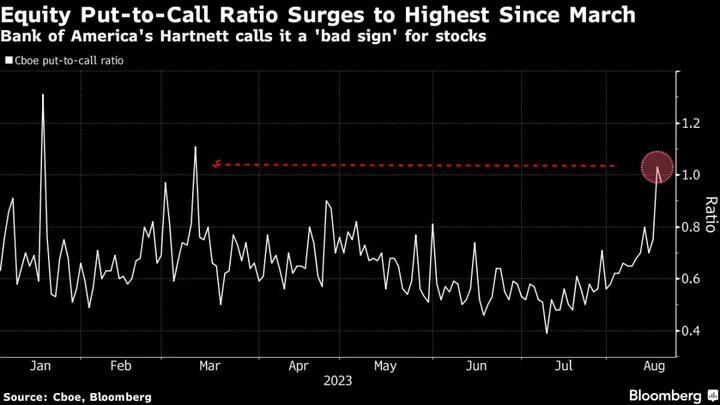
Stocks Face More Losses as China Woes Grow, BofA’s Hartnett Says
US stocks could drop another 4% as the economic turmoil in China spooks global investors and bond yields
2023-08-18 19:24

Ethiopia's Tigray crisis: Deaths from starvation after aid halted - official
The region estimates at least 1,400 have died since a food corruption scam was uncovered in April.
2023-08-18 19:21

Furious Chinese investors lodge complaints over trust firm's missed payments
BEIJING Angry investors in trust products of a leading Chinese shadow bank have lodged complaint letters with regulators,
2023-08-18 18:56

Why Maui's rebuilding effort will be so expensive
Beyond the devastating human toll from the recent wildfires on Maui, there will be a financial cost far above what a disaster like this would have caused on the mainland.
2023-08-18 18:55
AI poses a profound threat – but could also help us in a variety of important ways, experts agree
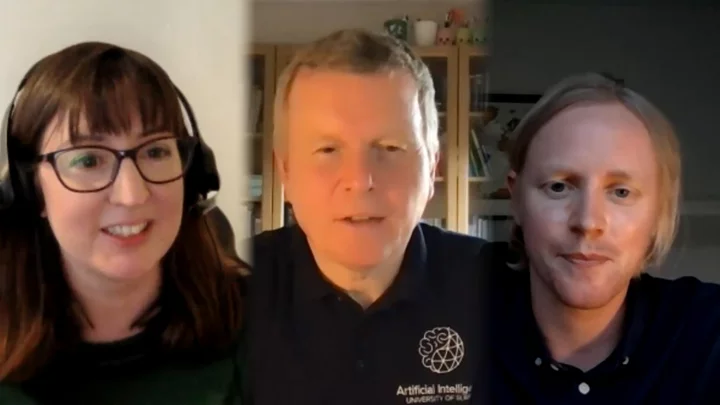
Artificial intelligence poses a major threat to humanity and the world – but also has a range of positive uses, experts have said. Those positive uses include the development of new kinds of life-saving drugs, revolutionary new educational technologies and ways to make media and art more accessible to people. But the potentially liberating and exciting uses of AI risk being overshadowed by the fear and panic over the potential problems of the technology, the experts warned. That was the conclusion of The Independent’s latest premium live event, which saw experts discuss the question: “How much of a threat does AI really pose?” To attempt to answer the question, The Independent’s technology editor, Andrew Griffin, was joined by deputy technology editor Anthony Cuthbertson and two world-recognised experts in their field. Andrew Rogoyski is director of innovation and partnerships at the Surrey Institute for People-Centred AI, and Catherine Breslin is a machine learning scientists and consultant who previously worked on Amazon Alexa and at other companies, and now runs Kingfisher Labs, an artificial intelligence consultancy. All panelists agreed that one of the most pressing issues about artificial intelligence is it being used to fill the internet with “sludge”: “automatically generated noise”, as Rogoyski described it, that could make it difficult to tell humans from artificial intelligence systems. “If you think of how much we depend on information on the internet, the idea that it's filled with rubbish – it's bad enough as it is,” he said. “But the idea that it's automatically generated, I think, is the most real extant threat of the misuse of AI.” Catherine agreed and noted that “sludge” could be made up of not only text but also “images and video and audio as well”, warning that people are not aware of just how easy it is to create convincing audio and video that pretends to be somebody else. “We won't necessarily be able to trust what is real and what is not real and without better ways of validating where images and video and audio come from,” she said. “So I think that this being able to generate media quickly, convincing media quickly, and then being able to send it out on the internet and the speed and scale at which information disseminates there – I think those two things combined will make for interesting times in the future when we have to grapple with the realities of validating our media.” But even amid that fear, the experts said that there were many very exciting possibilities being offered by technology. “Some of the biggest problems humanity faces could potentially be solved by an advanced artificial intelligence,” said Cuthbertson, pointing to its use in medicine and elsewhere. Rogoyski said that many of the benefits of AI are already being “taken for granted”. The technology is already used in science, medicine, to moderate the internet and to improve manufacturing and logistics, he said, and in every day ways such as the organisation of photos on our phones and information in our search engines. Even the fear that people could lose their jobs to artificial intelligence might be misplaced, the experts said, if companies instead use the technology to augment rather than replace their employees. Already, legal professionals are using artificial intelligence to navigate court audio, and doctors are using it to transcribe medical notes – freeing those people up to do helpful work for their clients and patients, Breslin noted. The entire conversation – which included discussions on the military use of artificial intelligence, its effects on the arts, and much more besides – can be viewed above. Read More Google may soon roll out AI ‘personal life coach’ ‘I’m scared’: Snapchat’s AI posts image that terrifies users How much of a threat does AI really pose? Get your ticket for our free event
2023-08-18 18:53
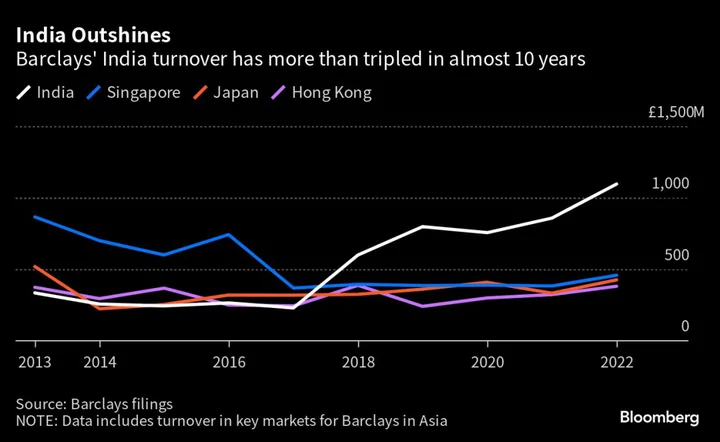
Barclays Names New India CEO, COO in Reshuffle of Key Market
Barclays Plc named new executives to its top management in India, a major overseas market for the lender,
2023-08-18 18:52

Arsenal rival Barcelona by opening Joao Cancelo talks
Arsenal have opened talks with Joao Cancelo's representatives, rivalling Barcelona as they continue to try to negotiate loan from Manchester City.
2023-08-18 18:27