
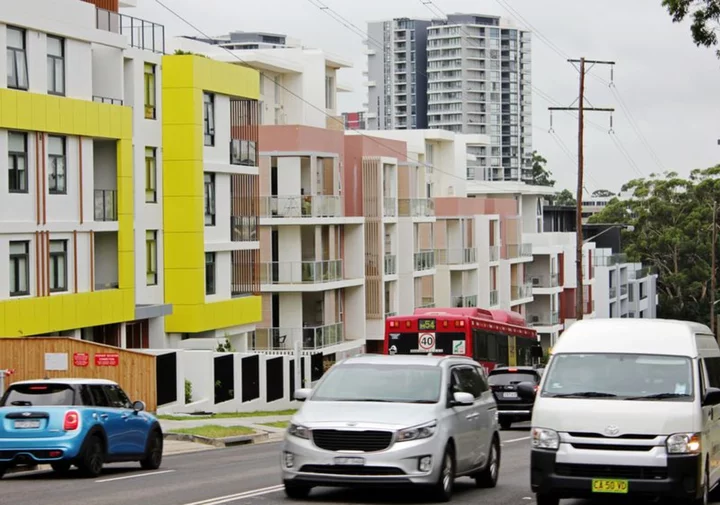
Analysis-Australian office landlords face price reckoning amid buyer impasse
By Lewis Jackson SYDNEY Australia's largest landlords have announced a string of downgrades to the values of their
2023-07-19 13:57
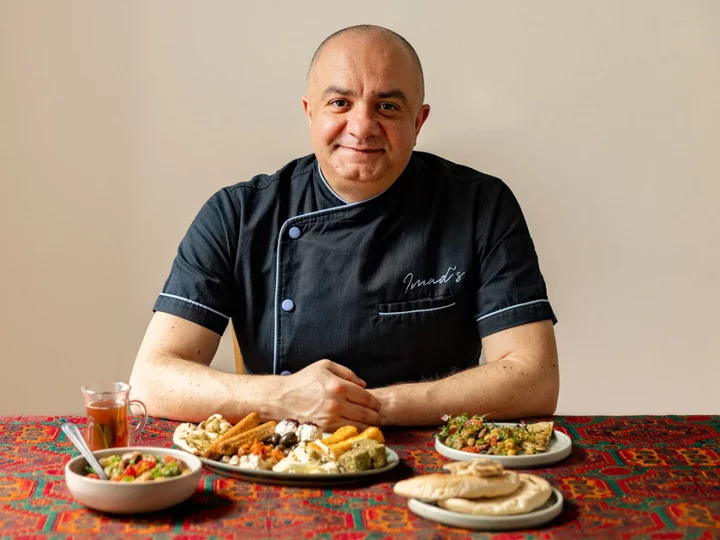
Imad Alarnab: In The Jungle, food restored our faith
Food can bring people comfort in the darkest times, and for Imad Alarnab, this time came when he was stranded as a refugee in Calais for more than two months. A hot plate had been donated, people collected leftovers from supermarkets, and having been a successful chef back in Damascus – with three restaurants, and a string of cafes and juice bars – Alarnab did what he did best, night after night, he cooked. “It was just something I felt like I needed to do, because you get to make a lot of people happy. Especially at that time, they needed something to be happy about,” says the 45-year-old, who would feed as many as 400 people at a time. The overcrowded camp that became known as The Jungle was close by, but Alarnab says it was too terrifying and overcrowded, so he and a group of several other Syrians slept on the steps of a church instead. And it was here he cooked the food of home – adapted, of course, depending on what they had. “To have a decent warm meal – for people whose lives have been on hold, they can’t cross to safety – was a big deal for all of us,” says the father-of-three. In fact, it was the first time he’d cooked for lots of people since all of his businesses were bombed within a week in 2012, in the country’s civil war, and this was the moment hope returned. “I think it restored all of the faith that things could, and would, get better,” Alarnab writes in his debut cookbook, Imad’s Syrian Kitchen. By July 2015, he’d made the painful decision to leave his wife and three daughters in Damascus to make the treacherous journey via Lebanon, Greece and North Macedonia, to the UK, where they had relatives. With his children too young to make the journey, the family planned to join once he’d been granted asylum. “If I had any other choice, I would have definitely taken it. [Fleeing] wasn’t the easiest but it was somehow the safest,” he says. “When I was in Syria during the war, people were saying, ‘It’s not safe to go out of the house because maybe you’re going to die’. But I needed to feed my family, if I stayed in the house they would die from hunger. There’s no good choice or bad choice, but maybe it’s the only one you can make. “When I was leaving Damascus, my oldest daughter made me promise I would see her within one year. I said, ‘Yes, I promise,’ but I wasn’t really sure if I was going to keep that promise or not.” And during the three months before he reached the UK – walking hundreds of miles on foot, on train, in the back of cars, on push bike, at the mercy of smugglers, with false IDs and the kindness of strangers – there were moments of doubt, like when he was crammed in the back of a lorry in Turkey for seven hours. “There were about 95 of us, I felt it was a stupid decision, risking my life so much. I believe the driver was so scared, or maybe drunk – the speed was absolutely scary. I thought we were not going to make it.” His journey ended eventually by using a fake passport to cross the Channel in October 2015 (the moving, often harrowing, story is weaved through his new cookbook), and first finding work illegally in a car wash, where he also slept as an overnight security guard, sending money home. After his family were able to emigrate (just under the year he’d promised his daughter) someone introduced him to the Cook For Syria scheme – and soon he was hosting super clubs at his house. By May 2021, he’d opened his London restaurant, Imad’s Syrian Kitchen. His first cookbook is a combination of dishes served up at the restaurant and his late mother’s recipes. “Almost every single dish is somehow related to my mother – I keep seeking her approval in everything I do in life, but especially with cooking,” he says. It was his mum, Summer, who first taught him to cook. “Even if you create your own recipes, somehow you will [always] be inspired by your first teacher”. She died very suddenly while Alarnab was living alone in a caravan in west London. Syrian food at its heart is “simple, first of all, and affordable for everyone”, he says. “We use a lot of mild spices, not very hot spices.” They’re mostly things you’ll know; “cumin, mint, garlic, nothing really special about it. [but] you put it together in a special way”. Middle Eastern in identity, much of it might feel familiar; tabbouleh, hummus, baklawa; while traditional dishes include buttered halibut, jaj bailfurn (grilled chicken thighs) and kippeh (lamb and bulgur wheat dumplings). Lunch is typically a feast of many dishes. “We’re a family of five and we never ever have one dish for lunch,” says Alarnab. “And we don’t throw anything away.” Before the war – which began as an uprising against President Bashar al-Assad in 2011 but has since involved a complex number of groups fighting one another, including so-called Islamic State, leaving at least 11 million people displaced – Alarnab was one of the lucky ones, he says. “We had a comfortable life, but most people in Syria were suffering. When you have a dictatorship for more than 50 years, of course people will be suffering. You cannot explain life without freedom to someone who’s lived all of their life with it. “People keep asking me silly questions – ‘Why did you have to go to 10 different countries to come to the UK? You could just get a plane ticket straight from Lebanon to Heathrow’. No, it doesn’t work like that. As a Syrian, my passport takes me to three countries – war zone countries. Even if I wanted to go to every country supporting Assad, I’d still need a visa.” Once the fighting started, food, that once brought him so much joy, lost all meaning. “I don’t know how to describe it, but the food tasted like blood. I know it’s disgusting, but nothing tasted the same. When you live in fear for your family, when your daughters are not safe to go to school, food will taste [bad], nothing can make you happy.” Cooking Syrian food now makes him feel “connected” to his home country, of course, “but it also makes me feel part of this unique community in the UK”. Arriving in London, he says: “I felt safe, I felt ‘I can be different, I can be myself, no one cares’. Everyone’s so different, it makes all of us lookalike.” Even after starting from scratch in a new country after losing everything, with a highly-acclaimed restaurant and now a cookbook, he’s most proud of his daughters. His eldest is studying at Warwick University after gaining straight As, his middle child is a talented artist. “The youngest [13] is the naughty one still,” he laughs. “But you can feel they appreciate their life – they are so happy about it.” ‘Imad’s Syrian Kitchen’ by Imad Alarnab (HQ; £26). Read More The National Portrait Gallery’s new restaurant is fabulous upgrade The dish that defines me: Alex Outhwaite’s Vietnamese bun cha 3 TikTok-approved recipes for picnic season It’s easier to make baklava at home than you might think Get set for Wimbledon with top pastry chef’s strawberry recipes Pinch of Nom: Healthy eating doesn’t have to cost the earth
2023-07-19 13:54

Japan's yen slips to one-week low, kiwi jumps after NZ inflation data
By Rae Wee SINGAPORE Japan's yen hit a one-week low against an insipid dollar on Wednesday as traders
2023-07-19 13:52
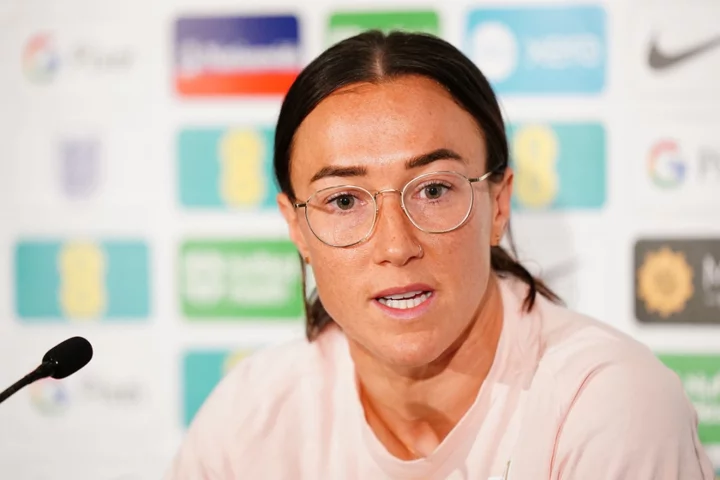
Lucy Bronze: Lionesses ’empowered’ after taking FA discussions public
England defender Lucy Bronze said the Lionesses are feeling “empowered” ahead of their World Cup opener after releasing a statement addressing the players’ ongoing row with the Football Association (FA) over bonus payments and other commercial concerns. In a message from the team posted on social media by captain Millie Bright, the Lionesses said they were “disappointed that a resolution has still not been achieved” but would “pause discussions, with full intentions of revisiting them following the tournament”, which begins for England on Saturday against Haiti in Brisbane. Bronze, speaking at England’s team hotel on Wednesday, was adamant that the decision to go public about the situation was motivated not just by personal financial benefits but wider principles, and maintained she is “one hundred per cent confident that we will not be distracted by this”. Bronze said: “I think the players are feeling very empowered. I think it’s the first time as a player group we’ve actually ever sent the message out ourselves, that we’ve collectively done together and set our sights on. So I think in that respect it’s been a very empowered player group last night and this morning and these past few weeks. “I feel like we felt it was important that we sent the message out, because there has been some talks (and) we want to show that we’re focused for the World Cup, that is our main focus. “It’s super sad that we have these issues. I think that again, this was something that we spoke about as an England group. We’re not only doing this for ourselves, we’re doing it so that we can set a standard.” The Lionesses join players from teams including France, Spain, Jamaica, Nigeria, Canada and co-hosts Australia who have in recent months expressed concerns over issues ranging from pay to personnel in their own federations and beyond. Bronze continued: “It’s unfortunate that it has come before the World Cup, but at the same time, it’s because the World Cup gives us the big stage. It’s when people want to listen to us, it’s when things really matter. “And that’s why so many teams now are coming out and speaking about it, because it’s the only moment that they get the stage or the opportunity to speak out, which is unfortunate.” For the first time in a Women’s World Cup, players will be guaranteed performance-related remuneration directly from FIFA, with amounts increasing the deeper teams go in the tournament. In addition, the Lionesses were also understood to be frustrated by a lack of clarity over what their cut from any commercial deals done by the FA linked to the team will be, as well as the restrictions around their personal sponsorships. The PA news agency has contacted the FA for comment. Bronze said the Lionesses benefit from a generally amiable relationship with the FA that leaves the squad feeling optimistic that they can reach an agreement without taking more dramatic steps, like threatening to boycott their Nations League fixtures, set to follow the World Cup in September. She said: “I don’t think we made any threats as players, I think we’re quite well spoken. And we know how to kind of stand our ground – I can’t say the conversations ever got to be that heated.” At the same time, Bronze suggested she and her team-mates deserved more, particularly after their victory at last summer’s Euros led to a paradigm shift for women and girls’ football in England, from a 173 per cent uptick in Women’s Super League attendance to a surge in participation at the grassroots level. She added: “There’s constantly another level and another step you can take. Whether that’s commercially – or on or off the pitch. Whether that’s performance-based, it’s being rewarded for the things you have done. “We are the European Champions. We have changed the game massively in England, so we want everything to fall in line. If we are going to do well on the pitch, then you would expect things to follow.” Read More Charity boss speaks out over ‘traumatic’ encounter with royal aide Ukraine war’s heaviest fight rages in east - follow live Schedule announced for 2025 British and Irish Lions tour of Australia Day one of fourth Ashes Test: England won’t hold back in bid to level series Gerwyn Price and Michael Smith crash out of World Matchplay
2023-07-19 13:51

South Korea’s LG Unveils AI Software for Use Across Its Units
South Korea’s LG Group introduced an upgraded version of its artificial intelligence software, and demonstrated how it can
2023-07-19 13:20
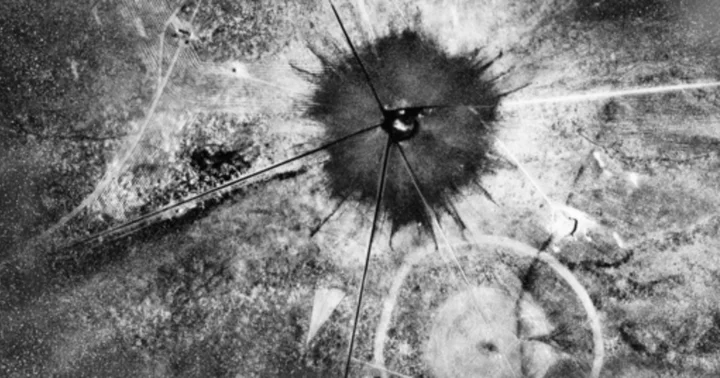
'Oppenheimer' stirs up conflicted history for Los Alamos and New Mexico downwinders
An upcoming movie about a man who changed the course of the world’s history by shepherding the development of the first atomic bomb is expected to be a blockbuster
2023-07-19 13:19

Russia: Chechen agriculture minister to run seized Danone unit
Yakub Zakriev is a deputy prime minister and the agriculture minister of the Russian republic of Chechnya.
2023-07-19 13:18

Marketmind: Britain's CPI the next frontier
A look at the day ahead in European and global markets from Tom Westbrook British inflation data this morning could
2023-07-19 12:56
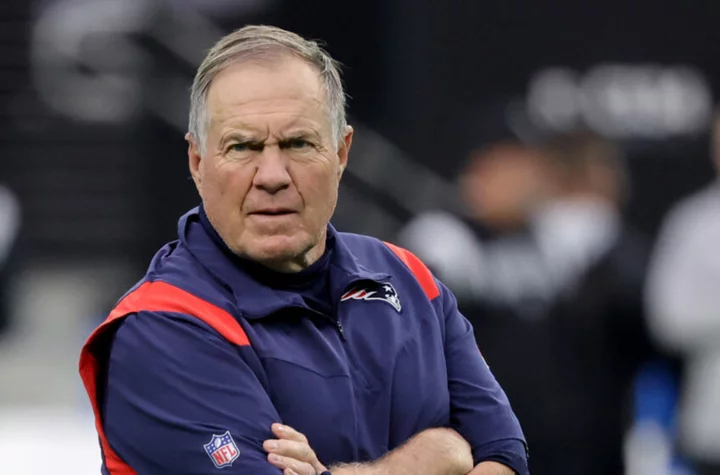
NFL rumors: Bill Belichick is on Patriots hot seat, but that isn’t new
A recent report indicated that New England Patriots head coach Bill Belichick is on the hot seat this season. A team insider says that Belichick has been on the hot seat for longer.The New England Patriots missed out on the playoffs last year, which can be attributed to the offense, which was su...
2023-07-19 12:46

Chinese livestreamers set their sights on TikTok sales to shoppers in the US and Europe
Chinese livestreamers have set their sights on selling to TikTok shoppers in the U.S. and Europe
2023-07-19 12:20

Voting fraud claims spread ahead of Spanish election
Claims of vote rigging and election fraud are spreading in Spain ahead of that nation's pivotal election on Sunday
2023-07-19 12:17
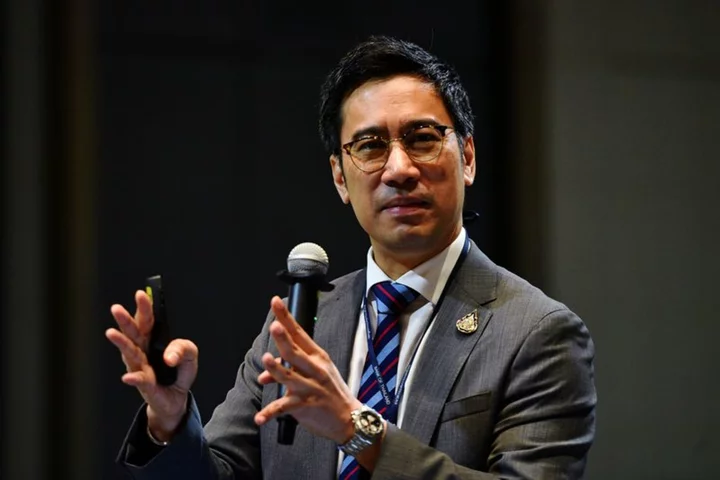
Thai recovery intact, interest rates to normalise gradually - central bank chief
BANGKOK Thailand's economic recovery is intact, with growth of 2.9% likely in the first half of this year
2023-07-19 11:59