

Hexion’s Versatics Business Achieves EcoVadis Gold Medal for Sustainability Performance
COLUMBUS, Ohio--(BUSINESS WIRE)--Sep 14, 2023--
2023-09-14 18:24

Frugal but fun: 'Simpsons' and podcast star Yeardley Smith on wealth
By Chris Taylor NEW YORK Even if Yeardley Smith does not ring a bell, you certainly know her
2023-09-14 18:22

Oil rebounds as market refocuses on supply tightness
By Alex Lawler LONDON (Reuters) -Oil rebounded on Thursday as expectations of a tighter global crude supply outlook for the
2023-09-14 18:19

China to avoid 'Lehman moment' despite property woes, Goldman says
By Saeed Azhar NEW YORK The Chinese government's support of banks hit by property woes will enable it
2023-09-14 18:18

Futures climb on Fed pause hopes; investors await Arm debut
Rising optimism about a pause in interest rate hikes in September lifted U.S. index futures on Thursday, while
2023-09-14 18:16

CEOs from Alphabet, Walmart, Pfizer meet White House officials on refugees
By Jeff Mason WASHINGTON Chief executives from a wide array of U.S. companies will meet White House Chief
2023-09-14 18:15

Harry Kane signs memorabilia deal with American company Fanatics
England captain Harry Kane has agreed a deal to make his memorabilia available to purchase exclusively through American company Fanatics. The platform will become the sole distributor of the Bayern Munich striker’s autographs, match-worn shirts and boots and other collectable items. Kane, who is both England and Tottenham’s record goalscorer, is the first British athlete to partner with Fanatics, who have signed deals with a host of big-name American athletes including former NFL star Tom Brady and MLB’s Aaron Judge. The 30-year-old, who was drawn to the company by its links to the NFL, which he has said he one day hopes to play in, said: “I’m thrilled to announce my new exclusive memorabilia partnership with Fanatics, who is the renowned, innovative leader in this space. “This partnership will allow me to share some of my most incredible career memories and experiences with sports fans across the globe. “It’s an honour to join their world-class roster of athletes across all sports – including the NFL, which I am incredibly passionate about. “I am extremely proud to be aligned with a company that is raising the game for sports fans all over the world, and I can’t wait to show what we have in store for fans over the years to come.” The partnership comes after Kane scored his 59th goal for England in Tuesday’s friendly win over Scotland at Hampden Park. He recently told the PA news agency that he is targeting a century of goals for his country. The striker is in the early days of his time at Bayern following his £100million move from Spurs in the summer. He left his boyhood club as their record goalscorer, with 280 competitive goals, 16 more than Jimmy Greaves. Read More Charity boss speaks out over ‘traumatic’ encounter with royal aide Ukraine war’s heaviest fight rages in east - follow live
2023-09-14 17:56
London’s best new restaurants: From Spanish-Welsh fusion at Mountain to British kitsch at 20 Berkeley
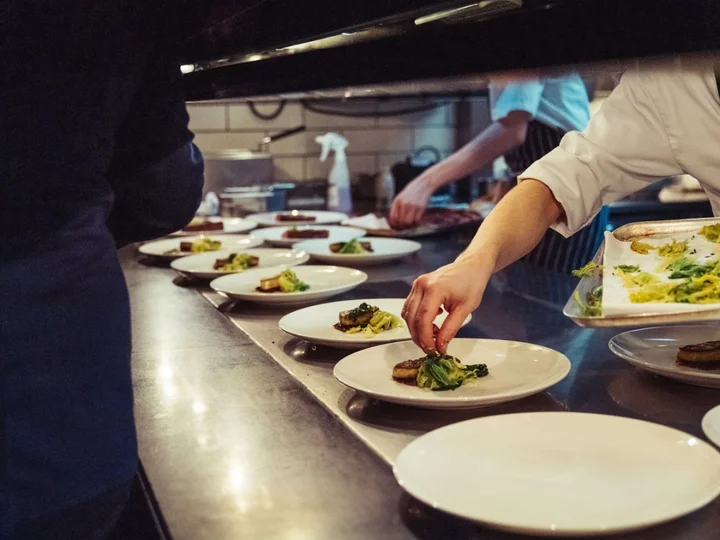
Against all odds, London’s food scene is still thriving. Proof is in the unfathomable number of new restaurants that open every week in the capital, and the thousands of diners still clamouring for a booking. It’s almost impossible to keep on top of. But, as a professional eater (or, more aptly, snob), here’s a non-exhaustive list of favourites that have sparkled in the past 12 months. Some of our recommendations are as follows. Get elbow-deep in a steaming cauldron of seafood at Brat-famous Tomos Parry’s Mountain in Soho (the only one to earn five stars from us, if the accolade exists). Gorge on goat curry in The Good Front Room, Dom Taylor’s well-earned prize for winning Channel 4’s Five Star Kitchen. Go classic at Paris-abroad eatery 64 Goodge Street or Mayfair’s grandiose 20 Berkeley, an ode to the brilliance of British produce. Or have fun at Papi, the new home for pandemic troublemakers Matthew Scott and Charlie Carr. There’s much more, and surely more to come. Stay tuned (and hungry). Mountain ★★★★★ Brat is back. Well, more specifically, its head chef and co-founder Tomos Parry is, with his new opening Mountain, in Soho. The formula is much the same as what gave the 2018 hit its cult status: wood-fired cooking combining Spanish influences with Parry’s Welsh heritage, plus excellent wine. Well, if it ain’t broke… And it certainly ain’t. Sobrasada toasts with honey and guindilla pepper pray at the altar of salt, spice, smoke and fat. I never thought a bowl of tripe would get people so excited, but apparently it does. A spider crab omelette, its innards submissively oozing out like one of those satisfying TikTok videos, has even the egg-adverse at the table gleefully tucking in. Another in our party, fists to the table, demands bread – baked onsite, of course, the butter organic, cultured, from Cardigan. But among many myriad must-haves, there is one that’s truly worth shelling out for: the Anglesey lobster caldereta (£90 for three to four or £120 for four to five). A steaming cauldron (hence the name) of charcoal-roasted Welsh lobster chunks bathing in a broth made satiny from the velvet crab and grilled salt cod stock. Get elbow deep, don’t wear white, let them demand bread. If turbot put Brat on the map, this is the dish that will define Mountain. And just like that, Brat grew up. There’s no elbow-grazing Shoreditch hipsters here, for one thing. Everything that made its younger sibling over-hyped (my DMs are closed) makes Mountain glorious. Take your friends, take your dates, or both, order the hits, go off-menu for wine, then saunter off into Soho for the evening quite content. 6-18 Beak St, London, W1F 9RD | mountainbeakstreet.com| bookings@mountainbeakstreet.com The Good Front Room ★★★★☆ The lack of variety in London’s melting pot of fine dining cuisines has long been a point of contention and one that hardly needs arguing. Do we really need another French bistro? It’s possible to get bored of bon bons and beurre blanc, believe me. What’s not boring is curried goat that falls apart at the slightest tap of a fork in a sauce as thick as blood, mopped up with still warm roti bread or smeared with fingers or straight-up slurped from the bowl. Can I take a bath in it? Salt cod and ackee (that oddly savoury, scrambled egg-like fruit) fish cakes with confit garlic and scotch bonnet aioli. A single dark rum-caramelised king prawn in a nest of dasheen salad and coconut sambal. Unwrapping a banana leaf like a gift to find ginger marinated sea bream. Even dessert has me salivating at the memory: a toasted spiced bun with sweet blue cheese, sour cherries and plantain chutney. Dessert should always have a hint of savoury. No, I’m not in Brixton. I’m in The Good Front Room at the five-star West End hotel The Langham, chef Dom Taylor’s prize for winning Channel 4’s Five Star Kitchen, in a room with ceilings as high as a church, rubbing elbows with punters more familiar with paying £200 for dinner than under £20. Taylor’s real triumph, though, is his menu, inspired by Caribbean flavours and a south London upbringing, which is the perfect cure for fine dining’s chronic case of aridity in the capital. Curried goat belongs here. It’s also the best possible justification for never seeing a French menu again. 1C Portland Pl, London W1B 1JA | langhamhotels.com/en/the-langham/london/good-front-room | 020 7636 1000 64 Goodge Street ★★★★☆ In a world full of innovations, sometimes it’s nice to revel in the classics. And call me Jackie Collins but is there anything as classic as a vol-au-vent? They’re still enjoying their moment in the sun and it shines particularly brightly at 64 Goodge Street, the newest opening from the Woodhead Restaurant Group, who can be reliably called upon for reliably brilliant eateries. Actually, it’s pretty dimly lit at 64 in a Parisienne sort of way – sans red and white tablecloths – which is precisely the point. To steal a phrase from Diana Henry, it’s hard to eat this well in Paris. The aforementioned vol-au-vent is thankfully not stuffed but exists as an extremely fluffy mopping up tool for the very French sauce américaine. The lobster tail that comes with it might be one of the best I’ve had. Elsewhere on the French classics bingo card are snail, bacon and garlic (need I say more?) bon bons, which are teed up like gooey golf balls. Nicoise makes a rare appearance, but correctly dumps tuna for rabbit. What would a counterfeit French bistro be without beurre blanc? This one is thicc and slides under perfectly plump scallops and lentils. Sea bass or saddle of lamb are tempting, but instead we mistakenly tuck into overly salty squab pigeon, which is somewhat rectified by a scoop of ice cream for dessert. Really, it’s the exclusively burgundy wine list that got me through the door. I don’t want to develop a habit of eating my words but perhaps there’s room for one more excellent French restaurant in London. Already in its groove when I visit just a week after opening, 64 Goodge Street could be it. Head chef Stuart Andrew has nailed French food without the faff – just don’t look at the bill and it’s no different to dining in Paris. 64 Goodge Street, London, W1T 4NF | 64goodgestreet.co.uk | 020 3747 6364 20 Berkeley ★★★★☆ Eschewing the kitsch party-restaurant theme that seems compulsory in this part of town, Mayfair’s 20 Berkeley promises “the feeling of being in a home, the British Isles your back garden”. Well, if your home is an enormous Georgian-era country manor house in central Mayfair, that is. Navigate this veritable warren and unfold the origami-style menu, though, and you’ll realise this isn’t the same kettle of fish as, ahem, Sexy Fish, Amazonico, Annabel’s or Bacchanalia, to name a few of its noisy neighbours. If the menu is a love letter to excellent British produce, then the language of love is a plump scallop scantily clad in a sliver of lardo, canoodling a hot-in-the-middle black pudding tortellino in a bath of foamy sorrel veloute. It’s the crunch of a deep fried courgette blossom, the slick ooze of the smoky cheese within, a lick of elderflower honey. It’s gently teasing the flesh of a slow-grilled turbot away from the bone, using confit potatoes dribbled in aioli to mop up its juices. We longed for the Herdwick lamb, jutting pink and proud from a tomato fondue, or the brazenly butch rib-eye that prompts sighs of content from a neighbouring table. Alas, bellies full, we allow the Nipperkin bar below and its serious slinger of seriously good cocktails Angelos Bafas (formerly of personal favourite Soma in Soho), to envelop us. First a highball concoction of whisky, meadowsweet, strawberries, Earl Grey and strawberry “paper”, then martinis that don’t mess around, and then… I forget. You know it’s a night to remember when you simply don’t. Mayfair has been calling out for a place like this, and thank god 20 Berkeley answered. 20 Berkeley Street, London, W1J 8EE | 20berkeley.com | 020 3327 3691 Papi ★★★★☆ My visit to Papi, from Hot 4 U’s Matthew Scott and Wingnut Wines’ Charlie Carr, in London Fields, turned out to be a lesson in why pairing your guest with the restaurant is just as essential as pairing Cab Sav with steak. As a not-at-all-cool person, I wanted to bring a cool friend along to cool new Papi – not realising the menu was so heavily seafood focused and forgetting her aversion to anything remotely fishy. At the two-chef counter, within bantering distance of Scott and co, I had a front row seat to all the delicious things we weren’t ordering. A mound of clams drenched in bright, briny red pepper romesco. Huge langoustines, naked but for dashi vinegar and roe. Oysters… sigh. And though I am forced to make decidedly unfishy choices, the food, as the kids say in the part of town, slaps. Rebel coppa with mustard seeds gets us salivating. Hunks of winter tomato (better than summer’s, I’ll be taking no further questions) and shredded shiso leaves are glazed in a holy trinity of kecap manis, black garlic and black vinegar. We lick the plate clean. Scott points out a bottle of the stuff on the counter. I consider necking it. I’m happy to be persuaded out of my resentment for garlic bread when a grilled, fermented (squidgy and cute) potato cake topped with whipped ricotta and wild garlic arrives. If the food is fun to eat, the wine is just as fun to drink (when isn’t it?). For guaranteed great vibes with a dose of nostalgia, you’re in the right place. They’re just as serious about food and wine as they are about a good time. Go hungry, get a counter seat, but, most importantly, don’t take someone who doesn’t like seafood. 1F Mentmore Terrace, London Fields, E8 3DQ | papirestaurant.com | 07961 911 500 Portrait Review by Lucy Thackray ★★★★☆ It’s possible that you’ve never paid much attention to London’s gallery and museum restaurants, but once you start looking for them, there are many. They’re not the edgiest joints in town, nor somewhere you’d drop in for an impromptu bite. Instead, what they’re great for is a gift – an art fix and a posh lunch or dinner as a day out. I have such a food-and-art pairing in mind when I take my dad to The Portrait, the new Richard Corrigan restaurant at the National Portrait Gallery, the final touch to a major three-year renovation of the gallery that finished in June. It certainly is a glow-up, but the light and minimal design lets the view (which is pretty spectacular) and the food do the talking. Here’s what it has to say: instantly intriguing things about artichoke with crab mayonnaise and kombu, “snails bolognaise” over conchigliette, a duck heart vol au vent, pig’s trotter with borlotti beans and something described only as “cauliflower, yeast, seeds” (we skip that one). Much of it is what you’d expect from Corrigan – earthy flavours from the UK and Ireland, plenty of fish and veg, but with a few curiosities thrown in. With dainty-portioned mains at £22-32, there are no bargain bites, but the style of food and the option of set menus (£28 for two courses, £35 for three) feels nicely suited to an exhibition ticket as a present or treat. A meal here can be as good value and restrained or lavish and decadent as you make it – surely true of any day out in the capital. The Portrait Restaurant, National Portrait Gallery, St Martin’s Place, London, WC2H 0HE | theportraitrestaurant.com | 020 3872 7610 Read the full review here Llama Inn ★★★☆☆ That a pisco sour isn’t the first thing on the menu at Shoreditch’s new modern Peruvian restaurant Llama Inn suggests they might be doing things a little differently. The first cocktail on the list is actually a gin “mini-tini” (a trend I shan’t be supporting) with a blue-cheese stuffed olive, which I’m sure would have made for an interesting aperitif had they not run out of blue cheese on the night. Starting my meal with a shot of brine isn’t my usual modus operandi. Ceviche, anticucho and saltado do abound elsewhere, though, with welcome (and some less so) twists. I’m repeatedly recommended the summer fruits ceviche as the best thing on the menu, though I can’t fathom why as vinegary slices of nectarine and melon leave quite a lot to be desired. They should instead recommend the two anticuchos, the cabbage and the octopus, which are chargrilled to perfection and drizzled with delights: sweet miso on the former, spicy-sour on the latter. We swerve the “un poco de todo” (a bit of everything) section on account of two of the four dishes containing pork and my non-pork-eating guest not being swayed by bok choy salad or courgette stew (an oversight that needs correcting). Instead, we’re stunned by the whole fish patarashca, which comes with a quaffable fruity-spicy curry sauce. But for the Gram, you should get the lomo saltado – a mound of stir-fried beef and fries to be wrapped in scallion pancakes. The NYC outpost might have earnt a Michelin Bib Gourmand, but London’s version could struggle to compete. That said, where Llama Inn ever so slightly misses on food, it makes up for in vibes. The hideaway terrace is a romantic spot to while away the last hours of summer. Better to stick to the theme and order a pisco sour. Llama Inn, 1 Willow Street, London, EC2A 4BH | llamainnlondon.com | reservations@llamainnlondon.com Zapote ★★★☆☆ Modern Mexican isn’t typically a catchline that gets me going. Haunting visits to Chiquitos and Wahaca as a teenager haven’t placed the cuisine high up on my list of frequent cravings. There’s a lot of bad tacos out there. But at Zapote, the brainchild of Mexican chef Yahir Gonzalez and hospitality veteran Tony Geary (you can thank him for Sketch), I’m prepared to eat my words… and a fair few tacos. The tortillas are knocked out fresh every day for the purposes of mopping up smooth and zingy guacamole, surfing under yellowfin tuna and spicy crab (piquant, fishy, delicious), and hosting beef tartare, which comes with a side of roast bone marrow in case you felt the bread-to-meat ratio was off. Arguably its best role is in a basket alongside thick slices of just-charred lamb neck on a smoked aubergine and tamarind puree. Some are hits, others are misses. Cutting a single tortilla in half to share with my date in full view of an open kitchen full of chefs seems like sacrilege, though. Stray from the tacos, however, and Zapote comes into its own. The scallop ceviche, that so overdone dish, here shines with persimmon, orange and grilled corn. Sweet white crab and black bean pozole, served in the shell, initially confuses the palate, then develops in flavour like a polaroid of old Mexico. Baby artichokes that cut like butter are also very good, served with a dollop of pipian verde, that bedrock mole. Wash it down with a Mezcal margarita and you’ll be saying, “Wahaca, who?!” If the food could do with some finessing, so could the setting. A backdrop of terracotta walls, murals and cacti fails to make the extraordinarily large space, formerly occupied by the ill-fated St Leonards, feel as intimate as its menu. When they say there’s a “bar area”, what they mean is they’ve just cordoned off some of the tables with a little curtain. There’s simply more they could do with the space. And yet, where most middling dining experiences put me off a return visit, there was just enough mystery that I could be tempted back. 70 Leonard Street, Shoreditch, London, EC2A 4QX | zapote.co.uk | 020 7613 5942 Epicurus Review by Kate Ng ★★★☆☆ Camden has long been known as the spiritual home for misfits. It’s also where punky pair and Israeli chefs Shiri Kraus and Amir Batito have opened their restaurants, The Black Cow and the newer Epicurus, just minutes away from each other. Like its older sister, Epicurus takes its culinary cues from across the pond – this time putting an Israeli twist on the all-American diner. The punny menu includes delights such as the “Oof Gozal” – chicken wings coated in a yellow Amba mango and Scotch bonnet sauce. Despite the fearsome chilli, these wings are barely spicy, favouring the flavour of the Scotch bonnet over the heat. They are incredibly moreish and the fact that your fingers end up being absolutely covered in sauce is only an invitation to get licking. You should also definitely get the “Papi Chulo”, a mix of crunchy deep-fried okra and soft padron peppers covered in spices that come with a lemony-garlicky-chilli aioli for dipping. Another honourable mention goes to the Epicurus single decker burger, which is also available as a double. It contains some of the richest, fattiest ingredients I’ve ever seen between buns, like bone marrow aioli and Baron cheese, and it does border on being a bit too unctuous. Boy, am I glad there’s no calorie counts on this menu. Is it worth elbowing your way through the thronging crowds of Camden Lock Market to get to Epicurus? I think it will be. Never mind the cheap tat and endless boba tea shops, head to Epicurus for a tasty escape. Unit 90, The North Yard, Camden Stables Market, NW1 8AH | epicuruscamden.co.uk | 07843 199560 Read the full review here Casa do Frango ★★★☆☆ Just a few months ago, I was touring the Algarve on the trail of authentic piri piri (I know, it’s a hard life). Days were well spent gorging on the local speciality of reverse-spatchcocked chicken brushed thrice with chilli oil and glugging local vino verde. It rained most of the time, if that helps. Back in London, though, and similar offerings are slim but the weather is much the same. Portuguese, alongside Spanish and those other misunderstood Mediterranean cuisines, and particularly the food of the Algarve is not well represented in the capital. Except at Casa do Frango, which literally translates to “chicken house”, and is strictly Algarvan. Say no more, I’m there, at their newest location in Victoria, to be precise. Don’t expect mind-blowing, out-there cuisine but do expect a truly authentic taste of the Algarve. The perfect order looks like this: order something drenched in their secret recipe piri piri oil to start (the prawns will do) and dip hunks of sourdough into it because… obviously. The main event is the piri piri half chicken (also comes in oregano or lemon and garlic for the spice intolerant/wimps out there). Shred that between two of you along with the African rice – with chorizo, plantain and shards of crispy chicken skin – and a salad, then finish with a chocolate mousse, an Algarvan classic found in most chicken houses. Stay within these strict parameters and you’ll understand why millions of Brits flock to Portugal’s southern tip every year. There’s various other things on the menu and seasonal updates but let’s not pretend like you’re here for anything other than chicken. Like I said, minds won’t be blown but a good time will be had. The wine is also decent – strictly Portuguese with some great Douro Valley reds but the wonderfully acidic world of vino verde, particularly their exclusive Boa Pingo, is worth a visit. Sir Simon Milton Square, London, SW1E 5DJ | casadofrango.co.uk/victoria | 020 3943 7777 | victoria@casadofrango.co.uk Read More The dish that defines me: Michele Pascarella’s Neapolitan ragu Seven super simple recipes for each day of National Rice Week Three healthy recipes to get back on track after summer Is bottomless prosecco going to be killed off by climate change? Budget Bites: Three ways to pimp up university student classics Epicurus: American fast food meets the Middle East in Camden Market
2023-09-14 17:56

Chelsea consider January move for Brentford striker Ivan Toney
Chelsea are exploring a potential January move for Brentford striker Ivan Toney.
2023-09-14 17:28
How Fifa is leading the push for football transfers’ biggest change since Bosman
As with so much in modern football, a moment that could transform the entire game is set to come far away from the pitch, and probably in court. Fifa is currently in a battle with most of the game’s agents, although the global governing body would not characterise it as that. Officials insist they are simply engaging in a reform of the industry that “everyone except some agents consider absolutely necessary to address widespread abuses and a system currently fuelled by speculation”. That extends to all of the game’s major stakeholders and the primary European institutions – from the European Commission to the Council of Europe – who have long asked Fifa to “do something”. The position on the other side, most notably the Association of Football Agents [AFA], is that this does indeed come down to European law - but not in the way people at Fifa think. They are strident that the federation has no legitimacy to regulate on this. The view is that representing players is a business outside of the running of the game, and that the provisions for the forthcoming Fifa Football Agent Regulations [Ffar] go against European Union anti-trust law - especially as regards forbidding payment to a supplier above a certain level. The Court of Arbitration for Sport did rule in July that Fifa has legitimacy here, but a referral from a District Court in Germany has brought the case before the European Court of Justice [ECJ]. If this already seems a dry back-and-forth of legal claims, it will all have significant influence on how the very sport is played. Not exactly a new Bosman ruling, but a potentially transformative case all of its own that does come down to far bigger issues such as sport versus business and what any cultural model of football should be. Fifa’s entire position is that it is addressing what is good for the game rather than actually taking on the representative industry. “Good agents are hugely important,” says Jan Kleiner, Fifa’s Director of Football Regulatory. “But since agents act at the very centre of the international football transfer system, Fifa has the authority and responsibility to regulate their activities within that system.” The root motivation of the reform is that the current transfer ecosystem incentivises the movement of players, primarily through the focus on commissions, which accelerates the market and concentrates increasing money at the top end of the game so affecting competitive balance. As justification for this, Fifa relates a few key figures. Every year, players move more quickly and more often between clubs. Every year, 10 times more money is paid to agents than paid to grassroots clubs. Every year, the money spent on transfers grows, as do service fees paid to agents. A 400% increase in the latter over the last decade saw a record of $696.6m (£557.3m) in this window, representing nearly 10% of the total spending on transfer fees. That has gone hand in hand with the growth of so-called “super agencies” and conglomerations, the largest of which is CAA Stellar. The current conditions are seen as perpetuating their domination. Pointedly, as regards big agency domination, even smaller agencies and independents dispute that. They say Fifa’s plans will merely strengthen the power of the “supermarket model”, since the larger companies will be able to weather the greater costs. There is also an insistence one of many unintended consequences will be the entry of more unscrupulous agents due to a willingness to offer what other representatives won’t. The view of one lawyer working with the AFA is that the idea it is agent commissions driving the market is “beyond making any sense”. All of the demand comes from the clubs. They are willing to pay the players so much as part of what has become a financial arms race, and agents merely mediate this. There is also a belief that many of the economic issues that Fifa describe also come from systemic dysfunctions and inequalities in football’s ecosystem, that any problems with agents are only a symptom of. “People read cartoon descriptions of agents from rare transfers that bear no relation to the actual reality of the industry,” one prominent agent privately argues. The fact that the AFA’s legal challenge against the regulations takes place in the last 10 days of September has limited the ability of many involved to speak openly on this. That comment still points to one of the many tensions at the core of this. There are then separate but bigger concerns about how the current system has brought reports of unethical and criminal behaviour, as well as cases of abuse and even human trafficking. With the matter going before the ECJ, Fifa is confident the European judges will understand the specificities of the football industry. The agents are concerned Fifa doesn’t understand their business. “They don’t know the specifics because they only see the surface,” was one response. This is a shared view even among agents who despise each other – a common enough theme – although some recognise a need for reform. This is where Fifa would rebut the idea it is ignorant to the business. It points to a five-year consultation process that involved FifPro, the European Club Association, the World Leagues Forum as well as member associations and confederations, and “a large number of agents and agent representative organisations”. Fifa insists that feedback is overwhelmingly positive, even from agents and agent organisations. The head of one major football body insists the requirement for better agent regulation is “inarguable” and unanimous, and many would point to how all of the major American sporting associations have the same rules that Fifa is trying to introduce, including almost identical caps on commission. Against that, high-profile agents say there was “a lack of invitation” and that there has “never been any public disclosure of these consultations”. Fifa expressly states this is factually wrong, and that there was both invitation and disclosure as illustrated on their website. Sources within the global body argue that all representative organisations were invited but some of the biggest agents just refused to engage, and that this is now seen as a litigation strategy to delegitimise the entire process. Either way, if Fifa has succeed, their reforms will bring the following: The establishment of a licensing system, involving an exam A requirement for agents to provide full transparency towards clients about payments they receive The payment of agent service fees via the Fifa Clearing House, as a measure against financial crime and to protect financial integrity The prohibition of multiple representation, so an agent can only work for any one party in a transaction Stricter regulations for the representation of minors The establishment of a mandatory service fee cap, to avoid excessive financial incentives and conflicts of interest It is the last of those that has provoked the fiercest dispute from agents, beyond the opposition to the basic premise of Fifa regulating. The cap is being described by lawyer Philip Wehler as a “hard-core, anti-competitive measure fixing purchase prices” that represents a “violation of EU anti-trust laws”. Fifa’s position is that to protect the functioning of its transfer system in line with its 2001 agreement with the European Commission, a cap is necessary to reduce existing financial incentives which promote player movement. It is also said that the cap is a pro-competitive measure, because lump-sum commissions have such a destabilising effect on the economic make-up of the game. Aside from how they incentivise movement, only a handful of clubs can pay the £20m minimum commission required for most top talent, further concentrating that talent among six to eight teams. There is also the argument that the very nature of modern football ensures that the more money that swirls around the more player wages at a narrowing top end in an escalating arms race. Fifa wants to reduce transfer incentives and nuance how service fees are paid, so they are proportionate to salary. This would in essence mean the interests of player and agent are more aligned, increasing transparency regarding what footballers pay for. As it stands, Fifa posit, commission on fees cover a wide range of service that agents otherwise tell their players is “for free”. A series of agents spoken to for this article say that reflects Fifa’s misunderstanding of the business. For one, they argue, service fees aren’t just for transfers. They’re also for contract extensions, and the majority of good agents would never push a move their client doesn’t need, since this would be bad for everybody in the long term. What’s more, all modern agents right down to independents are expected to have office premises, player care staff, media, social media and scouts, not to mention a lot of expenses on travel. All of this is to serve the player and “has a direct correlation to performance”. Fifa admits it’s a “cultural shift” to charge players for this at base, but that it’s a more “transparent and fair” way of doing business. “It is difficult to understand why agents would not be able to issue transparent invoices to their clients for all additional services, which are not subject to the cap,” Kleiner says. Agents would respond that the cultural shift would be agent income being restricted at the exact point players expect greater service. That could also lead to the unintended consequence of further incentivising transfers since some agents would instead just seek more commissions. “It’s like a streaming service saying if artists aren’t happy with their royalties they can do more concerts,” one agent says. “Could they do it? Yes. Is it a solution or even rational? No.” The argument is again that super-agencies could more easily absorb this. Fifa would also point out that the cap wouldn’t apply to sponsorship or any endorsement deals. The agents say that the vast majority of players – right up to mid-table clubs in even the Premier League – don’t have commercial appeal so would end up being the ones punished. As regards the question of representing multiple or all parties in the same transfer, the motivation behind this is pure transparency and to avoid a conflict of interests. The argument on the other side is that it’s simply what the relevant parties agree. Fifa would say it is important because it could theoretically mean players don’t have the same level of information as their agents. There is also pushback on the point of how more money goes to service fees than grassroots since they are seen as two unrelated areas. Agents say they only take a percentage of a player’s salary, and that has nothing to do with money coming from or going to grassroots. It is viewed by one representative as a false comparison to further a caricature. Fifa would counter that it is highly corrosive for the game’s solidarity if so much money leaves its ecosystem, and that it is necessary for redistribution mechanisms to function. The argument there is to ensure less money goes to off-shore accounts or impenetrable tax havens, with that increasing financial transparency and integrity. Agents based in England argue there is already a workable clearing house in the country. Fifa would respond they have to take a “global perspective” and create a level playing field, which would consequently mean the changes for those in England wouldn’t be that dramatic. One argument outside England, however, is that amounts to control of a money-flow that further facilitates uncompetitive price-fixing. Even on the issue of minors, agents would dispute Fifa’s position, insisting they require representation the most. The reality will still be that clubs want to sign the most promising young players. An absence of representation could just lead to more unscrupulous actors or illegal payments. Fifa’s position is that the rules do not prohibit representation of minors, but set a reasonable and proportionate framework. If all this sounds like the “wild west” on a market that Fifa says is a description from an agent, another counterpoint is that this description only arose after 2015. That was when the global governing body decided to deregulate the agency business, which agents argued against, and points to why they should be listened to now. Fifa actually admits that was “a mistake by the old administration”. “But we could have continued to do nothing,” one source says. “Those agents who want to work in a transparent manner have nothing to fear.” The issue of licensing is the one area where there is common ground. Otherwise, differences abound. Many will be laid out in the legal challenge in England, where some high-profile agents will be cross-examined. A decision on that will come at some point before the new regulations are implemented as planned on 1 October. The one country that could be exempted is Germany, due to a successful provisional injunction and an appeal by Fifa that won’t be heard until 24 January. That could bring a “scattered landscape” that the governing body would have to work around, and could create loopholes, before a potential hearing in front of the ECJ and regional courts. Petros Mavroidis, a Greek-Swiss professor who has worked on football issues right up to Financial Fair Play, believes the entire case is “going to be instructive” for the future of the game. “It went before CAS and it was decided that Fifa has the right to regulate football agents. Now is the similar case before a German court that will end up before the European Court of Justice. “If I go by past evidence, the European Court of Justice doesn’t pay too much heed to CAS. “If this happens, I would expect the court to start and ask who has the right to regulate agents. Have member states transferred this right to Uefa/Fifa? And if yes, let’s assume yes, does Fifa observe European law when regulation agents? If no, it’s the end of the story. Fifa cannot regulate, and leave it at that. “It’s very difficult to predict what will happen but, no matter what, even if the court says Fifa can regulate, it will say it has to observe EU law. That means observing competition law, so the question will be can Fifa impose price regulation.” Fifa says it comes down to a simple motivation for them. “Ultimately, you always have to look at the counter-factual,” one source says. “What would happen if you didn’t implement these rules? Inequality increases in the game, existing problems become worse and worse, and regulation becomes inevitable.” Read More Sarina Wiegman wants focus on Spain’s World Cup winners and not Luis Rubiales Sarina Wiegman ‘worried’ about schedule as England prepare for Nations League Luis Rubiales refuses to apologise to Jenni Hermoso over ‘consensual’ kiss Luis Rubiales resignation has to be ‘the start of something’, says Georgia Stanway Jenni Hermoso complaint against Luis Rubiales filed with Spain’s high court Stephen Kenny refuses to bemoan luck following Evan Ferguson injury
2023-09-14 17:28

Liverpool and Man Utd use international window to scout defensive prospects
Liverpool and Manchester United use the international break to scout Benfica's Antonio Silva and Atalanta's Giorgio Scalvini.
2023-09-14 17:24

China says EU probe into Chinese electric vehicle exports, subsidies is protectionist
China's Commerce Ministry has protested a decision by the European Union to investigate exports of Chinese electric vehicles, saying it is a protectionist action aimed at distorting the supply chain
2023-09-14 17:20