
Ukraine-Russia war - live: Putin ‘rehearses massive nuclear strike’ as drones strike near Khmelnytskyi plant
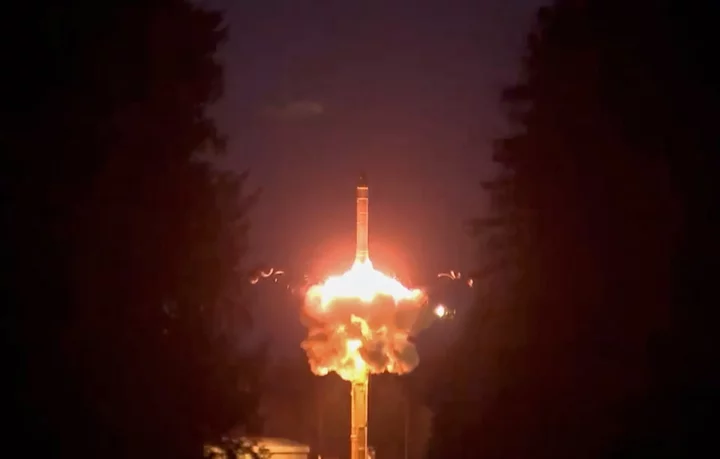
Vladimir Putin has tested Russia’s ability to launch a massive retaliatory nuclear strike as he pulled the country out of an international test ban treaty. “Practical launches of ballistic and cruise missiles took place during the training,” Russian defence minister Sergei Shoigu said. A Yars intercontinental ballistic missile was fired in Russia’s far east, a nuclear-powered submarine launched a ballistic missile from the Barents sea, and long-range bombers test fired air-launched cruise missiles, according to the Kremlin. On Wednesday, Russia’s parliament unanimously approved legislation pulling the country out of the international Comprehensive Nuclear Test Ban Treaty, designed to limit the proliferation of nuclear weapon testing. It comes as a Russian drone attack damaged buildings near the Khmelnytskyi nuclear power plant in western Ukraine, wounding 20 people. The Ukrainian air force destroyed all 11 Russian drones, according to the military. Damage was caused by blast waves and falling debris. “At night, the enemy struck territory near the Khmelnytskyi nuclear power plant. As a result of the explosion, windows in administrative and laboratory buildings have been damaged,” Ukraine’s Energy Ministry said on the Telegram messaging app. Read More Russian drones likely targeted Khmelnytskyi nuclear power station, Zelensky says Business owners in a Ukrainian front-line city adapt even as 'a missile can come at any moment' Russian forces simulate nuclear strike as upper house rescinds ratification of test-ban treaty
2023-10-26 14:59
Putin presides over rehearsals of ‘massive’ Russian nuclear strike
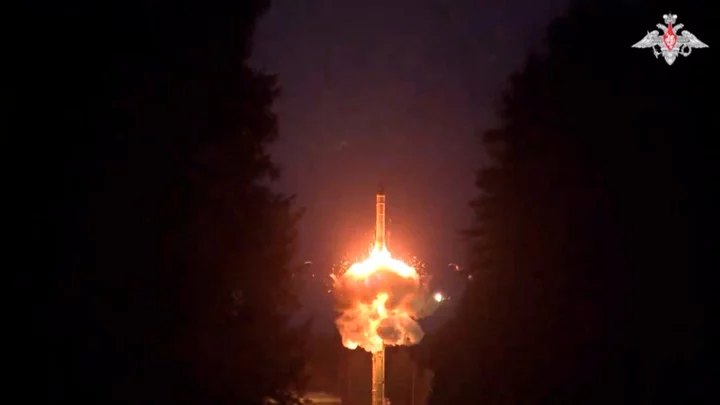
Vladimir Putin has presided over a rehearsal to deliver what the Kremlin described as a “massive” nuclear strike, including the test launch of multiple ballistic missiles. While Russia holds similar rehearsals every autumn, Wednesday’s show of force came just hours after Moscow’s withdrawal from a significant nuclear test ban treaty and as its invasion of Ukraine approaches its second winter. Footage broadcast on state television showed the Russian president overseeing the annual exercises, dubbed “Grom”, via video call. The purpose of the drill was to “deliver a massive nuclear strike... in response to an enemy nuclear strike”, said defence minister Sergei Shoigu. The Kremlin said a Yars intercontinental ballistic missile was launched from a test site to a target in Russia’s far east, a nuclear-powered submarine launched a ballistic missile from the Barents Sea and Tu-95MS long-range bombers test fired air-launched cruise missiles. Russia, which has the world’s largest nuclear arsenal, has passed a bill in parliament that would revoke its ratification of a key nuclear test ban treaty, the Comprehensive Nuclear Test Ban Treaty (CTBT). Though it has never formally come into force, the CTBT has helped deter nuclear weapons testing around the world, with only North Korea conducting an explosive nuclear bomb test this century. Ukraine has said Russia’s withdrawal of its CTBT ratification was an attempt at “nuclear blackmail”. Mr Putin, who will be sent the bill for final approval, has said revoking Russia’s ratification would “mirror” the stance of the US, which has signed but did not ratify the nuclear test ban. Video footage of Wednesday’s military exercise released by the Russian defence ministry showed the land- and submarine-launched missiles piercing the night sky with loud roars, while nuclear-capable bomber aircraft departed from an airfield under the cover of darkness. “Under the leadership of the supreme commander-in-chief of the armed forces of the Russian Federation, Vladimir Putin, training was conducted with the forces and means of the ground, sea and air components of the nuclear deterrent forces,” the Kremlin said in a statement. “During the training, practical launches of ballistic and cruise missiles took place. The tasks planned in the course of the training exercise were fully accomplished,” it said. The latest developments have raised widespread concerns that Moscow could resume nuclear testing in attempts to discourage the West from continuing to offer military support to Ukraine. Russia’s deputy foreign minister Sergei Ryabkov said earlier this month that Moscow will continue to respect the ban and will only resume nuclear tests if Washington does it first. On Wednesday, Mr Ryabkov said the Russian foreign ministry had received proposals from the US to restart discussions regarding strategic stability and arms control matters. However, he pointed out that, given the current political climate, Moscow does not view it as feasible. “We aren’t ready for it because the return to a dialogue on strategic stability... as it was conducted in the past is impossible until the US revises its deeply hostile policy course in relation to Russia,” Mr Ryabkov told reporters in comments carried by Russian news agencies.
2023-10-26 14:58
Taiwan ex-colonel gets 20 years for spying for China
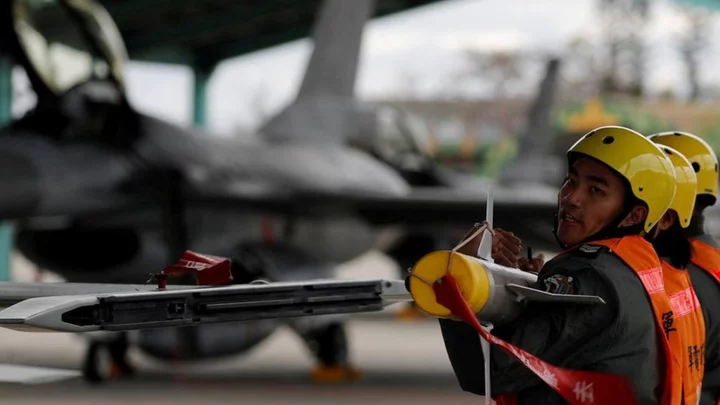
The retired officer was convicted of recruiting active-duty officers to give China military secrets.
2023-10-26 14:53

South China Sea: Biden says US will defend the Philippines if China attacks
Biden's statement comes days after collisions between Filipino and Chinese ships in the South China Sea.
2023-10-26 14:24

Hibernation mode: 5 small self-care adjustments to make before the clocks change
With the clocks going back on October 29, longer, darker nights are imminent – and many of us may be nervous about how this could impact our wellbeing. But, there are some little acts of self-care that could help. Here’s how to switch up your self-care routine as the clocks change… 1. Spend more time outdoorsIt may be getting colder, but time outside could be the best thing for you to protect your emotional welfare as the shorter days draw in. “When the clocks change, the internal body clock, our circadian rhythm, has to reset and it can become out of sync with our standard night-and-day cycle. It can take a few days for our body to adjust to the new sleep pattern, which can affect our hormones and temperature,” explains Dr Harriet Leyland, clinical advisor at myGP. To mitigate this, “spend more time outdoors”, she suggests. “Sunlight can alleviate drowsiness as it limits the release of melatonin, a hormone that induces tiredness and gets you ready for bed.” Jodie Relf, a Pilates instructor and registered dietitian from myOva, suggests making this part of your daytime routine. “[Getting outside] can be more challenging once the clocks have changed, it’s often dark for many of us both going to and returning from work. Therefore trying to get outside during the day, at lunchtime, perhaps, can be beneficial in the winter months,” says Relf. 2. Think about your body temperatureYou may be feeling the cold outside, but we don’t want to overheat indoors – especially at bedtime. “We sleep better in a cooler environment, with the ideal bedroom temperature reported to be a cool 16-17C,” says Dr Guy Meadows, co-founder and clinical lead at Sleep School. “For best sleep, switch off the central heating and swap your lightweight summer duvet for a higher tog winter one. Alternatively, use a combination of sheets, quilts and blankets, as this allows you to more easily regulate your temperature at night for better sleep.” 3. Prepare for good sleepIf you always struggle with sleep when the clocks change, give yourself a helping hand by being prepared. “Gradually adjust your bedtime in the few days leading up to the clocks changing – go to bed 15-30 minutes earlier each night for a few nights in the lead-up,” suggests Meadows, explaining this will help with the body-clock switch. 4. Eat a colourful plate While you may just want stodgy comfort food to warm the chillier evenings, eating well is one of the best ways to support your overall wellbeing – aiding energy, immunity, mood and sleep. “Eat a balanced diet with a colourful variety of plant foods including fruits, vegetables and whole grains, as well as lean protein,” explains Dana Moinian, a psychotherapist at The Soke. “Avoid heavy or high-sugar meals close to bedtime.” 5. See friends While social plans may have wound down compared with summer, hibernating and distancing yourself too much could be damaging to your wellbeing. “Spend time with friends and loved ones,” says Moinian. “Socialising naturally boosts your mood and reduces stress levels.” So get the diary out and plan in some fun outings and get-togethers! Read More 13 possible cancer symptoms you should get checked out Neglecting women’s health at work could cost UK economy £20.2bn a year – analysis Nearly three-quarters of mothers feel invisible, study suggests The best ways to work-out in 22 minutes – as study finds this is magic number for offsetting ‘negative impact of sitting’ What crops will we be growing in the future, as climate change alters the landscape? As Rebecca Adlington shares heart-breaking miscarriage news: How to support others experiencing baby loss
2023-10-26 14:24

Toyota CEO Sees EVs as ‘Missing Piece’ for World’s Top Carmaker
How’s this for a difficult job: taking over from the founder’s grandson, who led the family business to
2023-10-26 13:53

Facebook-parent Meta beats revenue estimates on digital ad strength
By Katie Paul and Yuvraj Malik NEW YORK (Reuters) -Meta Platforms beat expectations for third-quarter profit and revenue on Wednesday,
2023-10-26 13:47

Israel ground forces raid Hamas sites in Gaza, withdraw - military statement
JERUSALEM Israeli ground forces operated within the northern Gaza Strip on Thursday, attacking multiple Hamas targets before withdrawing,
2023-10-26 13:46

Three ramen recipes to change your life
“The more ramen I eat, the more I’m drawn to miso ramen,” says chef Tim Anderson. “Thanks to its complex tare and the many textures found in its stir-fried veg topping, it’s just so damn interesting. Cooking and plating are a little different for this one, so make sure you read the method below.” Miso ramen Ingredients: For the broth (makes around 2.4L)): 2 tbsp vegetable oil or animal fat 50g fresh ginger root, thinly sliced 1 onion, quartered 1 garlic bulb, halved 250g chicken skin 250g chicken feet 800g chicken wings 1.5kg chicken frames, roughly chopped ≈3.5L water 4 bay leaves (optional) ½ tsp white pepper For the miso tar (makes 400g): 150g red miso 100g white miso 50g brown rice miso 2 tbsp vegetable oil or animal fat 1 onion, finely chopped 4 garlic cloves, finely chopped 20g fresh ginger root, peeled and finely chopped 6 tbsp sake 1 tbsp sesame oil 1 tbsp sesame seeds, crushed 4 tbsp single cream 4 tbsp Ovaltine or malt powder 30g parmesan or mature cheddar, finely grated 1 tbsp shoyu For the garlic sesame oil (makes 80ml): 45ml vegetable oil or lard 60ml sesame oil 30g garlic (about 8 cloves), very thinly sliced For the toppings (makes enough for 4 bowls): 1 tbsp lard or vegetable oil ½ an onion, thinly sliced 100g minced meat (pork is typical but chicken, turkey or vegan mince work, too) ¼ of an hispi or flat cabbage, cored and coarsely chopped ½ a small carrot, cut into planks about 3mm thick A big handful of bean sprouts A few mangetout ¼ of a red pepper, thinly sliced A small pinch of salt and/or MSG (optional) 1 tsp sesame oil, or aroma oil of your choice Menma (tinned bamboo shoots) Shredded spring onions (scallions) or leeks Shop-bought noodles Optional toppings: Corn Butter Chilli oil Spinach or wakame Parmesan Beni shÅga (red pickled ginger, sharp, sweet and artificially coloured. Good with tonkotsu) Sesame seeds Ajitama (ramen egg) Method: 1. Make the broth: Heat the oil or fat in a roasting tray in a fan oven set to 200C (425F), then add all of the vegetables and chicken parts and roast for 40 minutes, turning everything once halfway through cooking. Remove the vegetables with tongs and set aside. Tip the chicken parts and any drippings from the tray into a stock pot and add the water (enough to cover) and bay leaves, and set over a high heat. Boil hard for four hours, topping up the water as needed to maintain the water level. After four hours, add the veg and the white pepper, and continue to boil for another two hours. In the final hour, stop topping up the water and allow it to reduce slightly. Remove from the heat, then bring back to a high simmer if using immediately. Remember to re-emulsify the broth with an immersion blender before serving. 2. Make the miso tare: Stir together the three types of miso until well mixed. Heat the oil or fat in a small saucepan over a medium-high heat, then add the onion, garlic and ginger. Sauté for about 10 minutes, stirring often, until everything softens and begins to colour, then add roughly half of the miso mixture and continue to cook for another seven to eight minutes, until the miso darkens as well. Whisk in the sake and boil for three to four minutes to cook off the alcohol, then add the sesame oil, sesame seeds and the cream. Bring to the boil and cook for another three to four minutes, stirring often. Remove from the heat, leave to cool for a few minutes, then whisk in the Ovaltine, cheese, shÅyu and remaining miso mixture. Transfer everything to a blender or food processor and process until smooth. 3. Make the garlic sesame oil: Pour the vegetable oil and one tablespoon of the sesame oil into a small saucepan and stir in the garlic, ensuring that none of the slices are stuck to each other. Set over a low heat and cook gently for about 15 minutes, stirring often, until the garlic is evenly golden brown (the reason for keeping the heat low is to cook off all of the garlic’s moisture before it begins to colour). Once the garlic is lightly browned (we’re looking for gold, not bronze), remove it with a slotted spoon, fork or similar, drain on paper towels and leave to cool. Leave the oil to cool for about 10 minutes, then tip into a jar and add the remaining sesame oil. Once the garlic chips have cooled, crush them into small pieces and keep in an airtight container lined with paper towels. 4. Make the toppings: Have all of your veg prepped and ready to go, because the cooking here should be very quick. In a wok or frying pan, heat the lard or oil over a high heat and add the onion and mince and stir-fry for a couple minutes, then add the cabbage and carrot and continue to stir-fry for two to three minutes until everything is wilted but still crunchy. Add the bean sprouts and mangetout and continue to stir-fry for another two to three minutes, then add the pepper and salt and/or MSG (use this sparingly, or not at all, if you’re going to boil the mixture in seasoned soup). Stir-fry for a further two minutes or so, then remove from the heat and stir in the sesame or aroma oil. 5. Build the ramen: You can build this bowl as you would any other ramen, but I think it’s tastier the way many shops in Sapporo do it, which is to combine everything in a wok and then transfer it to the bowl. Start with the stir-fry and when it’s done, stir in the tare, then the broth. Whisk to combine and bring to the boil. Meanwhile, cook the noodles in a separate pot of boiling water, and when they’re done, drain well and tip them into bowls. Pour the broth from the wok over the noodles along with the stir-fried and boiled veg, keeping the veg on top of the noodles as you portion them out. The fat can either be added to the bowl or to the wok; if you add it to the wok it will become emulsified with the broth upon boiling, but it will taste the same. If topping with butter and corn, add cold butter at the last minute, just before serving. ‘Nothing special’ ramen “Sometimes the ramen craving strikes and there’s no ramen to be found – what do you do? Instant ramen does the job, of course, and some of it is excellent, especially if you’re able to add good toppings,” says Anderson. “But even that is sometimes unavailable. This recipe is designed to tick the proper ramen box from common refrigerator and store cupboard ingredients – when you don’t have any good broth, nor tare, nor oils, nor nothing!” Serves: 1 Ingredients: 20g lard 80g minced pork 2 anchovies ½ an onion, thinly sliced A big handful of bean sprouts 2 garlic cloves, grated 1 tbsp sesame oil 2 tbsp red miso 1 tbsp sugar 1 tbsp white wine 1 tbsp tomato purée 2 tbsp shÅyu 1 tbsp peanut butter or tahini A pinch each of white pepper and smoked paprika 500ml water 1 tbsp grated parmesan or cheddar 1 portion shop-bought noodles A big pinch of sesame seeds 1 spring onion, thinly sliced Chilli oil, to taste (optional) Salt, to taste Method: 1. In a wok or medium saucepan, melt the lard over a high heat and add the pork mince, anchovies and onion. Stir-fry for a few minutes, breaking up the anchovies as you go, until the pork is cooked through and the onion has begun to soften. Toss in the bean sprouts and garlic and stir-fry for another one to two minutes, then tip everything out into a bowl. 2. Add the sesame oil to the pan and set over a medium heat, then add the miso and sugar and fry it for a few minutes until the aroma becomes rich and caramel-like. Stir in the white wine, tomato purée, shÅyu and peanut butter or tahini and cook for another few minutes, then add the pepper, paprika, water and cheese. 3. Bring to the boil, add the noodles and cook them to your liking. Once they’re done, taste the broth and add salt or more water as needed – different noodles will absorb different amounts of liquid, so you’ll have to adjust for this accordingly. 4. Transfer the broth and noodles to a bowl and top with the stir-fried mince and veg and garnish with the sesame seeds and spring onion. Add as much chilli oil as you like. Yu Xiang aubergine mixed noodles This recipe is inspired by aburasoba – a soupless ramen dish where the noodles are served in a bowl with tare (dipping sauce) and oil at the bottom and toppings on top, which is then mixed together at the table. “I’m tempted to call it an aburasoba… but it would not resemble any aburasoba I’ve seen in Japan,” says Anderson. “Aw heck, let’s just say it’s mixed noodles and call it a day!” Serves: 2 Ingredients: 1 large or 2 small dried shiitake mushrooms 150ml just-boiled water 1 large aubergine Oil, as needed for shallow-frying 1 tsp cornflour 2 tbsp shÅyu 1 tbsp dark red miso (such as HatchÅ miso) 1 tbsp oyster sauce 2 tbsp Chinkiang vinegar, Japanese black vinegar or similar, plus extra to taste 1 red pepper or a handful of small, sweet peppers, thinly sliced 2 garlic cloves, finely chopped 15g fresh ginger root, peeled and finely chopped 1-2 dried red chillies, or a few pinches of chilli flakes (to taste) 3 tbsp light brown sugar 1 tbsp sesame oil 2 portions noodles 2 spring onions, thinly sliced at an angle 2 egg yolks 50-60g Menma or tinned bamboo shoots Chilli oil, to taste Method: 1. Place the shiitake mushrooms in a small dish and cover them with the boiled water, then leave to rehydrate for about an hour. Meanwhile, cut the aubergine into batons or prisms about 2cm thick, and pour the oil into a large frying pan or wok to a depth of about 1cm. 2. Heat over a medium-high heat for a few minutes, then test the temperature by placing a piece of aubergine into the oil. If it sizzles vigorously immediately, the oil is ready. Add all of the aubergine to the oil and fry for about five to six minutes, turning often, until richly browned all over. Remove with a slotted spoon or spider and drain well on paper towels. Tip the oil out into a heatproof container, but leave about one tablespoon oil or so in the pan. 3. Once the mushrooms have rehydrated, remove their stems and cut them into thin slices. Stir the cornflour into the resulting mushroom dashi and stir together the shÅyu, miso, oyster sauce and vinegar in a separate bowl until no lumps of miso remain. 4. Ensure you have all of your prep ready to go before cooking, because the pace needs to be fairly quick once you begin. Place the pan with the reserved one tablespoon oil back over a high heat. Once the oil is shimmering, add the peppers and stir-fry for two to three minutes until browned. 5. Add the garlic, ginger and chillies, and stir-fry for another one to two minutes, then add the sliced shiitake mushrooms and sugar and stir-fry briefly so the sugar melts and bubbles. 6. Add the liquid seasoning mixture and stir well, then add the cornflour and mushroom dashi mixture and bring to the boil so it thickens. Finally, tip in the fried aubergine and stir well to coat. Reduce the heat to low to keep warm while you cook the noodles. 7. Divide the sesame oil between the two bowls and add a few spoonfuls of the aubergine sauce to each one. 8. Boil the noodles until tender, then drain well and tip into the sauce. Stir the noodles through the sauce, then top with the aubergine and its sauce, and garnish with the spring onions, eggs and menma. Serve with chilli oil and extra vinegar – add as much as you like. ‘Ramen Forever: Recipes For Ramen Success’ by Tim Anderson (Hardie Grant, £26). Read More World Pasta Day: Nigella Lawson’s spaghetti with Marmite This speedy king prawn pasta has a supermarket secret weapon Midweek meals: Baked pasta Siciliana with meatballs How to make a classic lasagne Dear Pret, this is what a £7 sandwich should look like Jack Stein’s Cornish mussels with spinach and cider
2023-10-26 13:46

Bank Indonesia likely to hold key rate at 6.00% through mid-2024- Reuters poll
By Veronica Dudei Maia Khongwir BENGALURU Bank Indonesia (BI) will keep its key interest rate unchanged at 6.00%
2023-10-26 12:51

Main shootings: 'Helicopters, sirens. It's crazy' - Lewiston resident
Billie Jayne Cooke tells the BBC the whole city is in lockdown, describing the attack as "unimaginable".
2023-10-26 12:24
Russian drones likely targeted Khmelnytskyi nuclear power station, Zelensky says
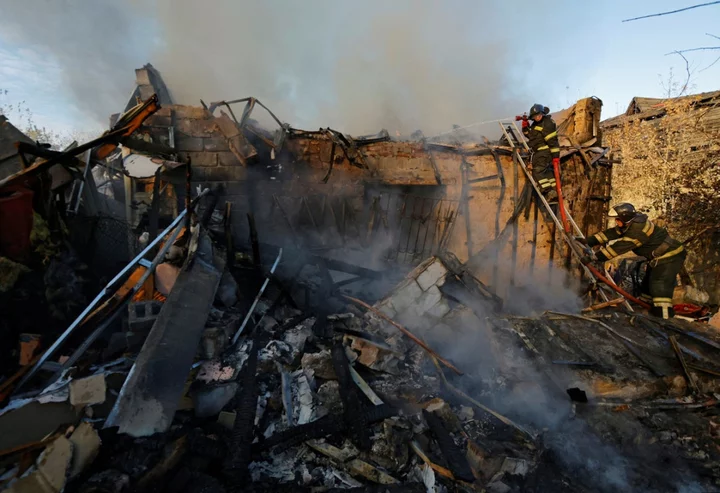
Russia’s drone strike in western Ukraine likely targeted the Khmelnytskyi nuclear power station, president Volodymyr Zelensky said. He said the strike on Wednesday presented yet more evidence that tougher sanctions were needed against Russia and its dangerous acts that bypass international sanctions. At least 20 people were injured in the attacks in Khmelnytskyi region that also led to shattered windows at the nuclear power plant and nearby sites, and destroyed power lines, causing outages, Ukrainian officials said. Power was temporarily cut to some off-site radiation monitoring stations at the power plant and hundreds of buildings in the area sustained damage. “It is highly likely that the target for these drones was the Khmelnytskyi nuclear power plant – the shockwave from the explosion shattered windows, including those on the territory of the NPP [nuclear power plant],” Mr Zelensky said in his nightly video address. “Every Russian strike, especially ones as audacious as those targeting nuclear plants and other critical facilities, is an argument that the pressure on the terrorist state is insufficient,” he said. He said the assessment of the drones used in the attack showed their “missiles, originate from various countries, various companies, including Western ones”. The International Atomic Energy Agency, the UN’s nuclear watchdog, said blasts from the drone attack did not affect the plant’s operations or its connection to the grid, but raised concerns over the proximity of the attack to the plant. “The fact that numerous windows at the site were destroyed shows just how close it was. Next time, we may not be so fortunate,” said IAEA director general Rafael Grossi. Some 1,700 buildings in the area sustained damage. These included 282 apartment blocks, more than 1,400 private homes, 41 educational institutions and six healthcare buildings, regional governor Serhiy Tyurin said. The incident also caused damage to power lines, affecting over 1,800 consumers in the neighbouring towns of Netishyn and Slavuta, resulting in power outages. The Ukrainian air force repelled all 11 Russian drone attacks overnight, the military said, adding that the damage was caused by blast waves and falling debris. "At night, the enemy struck territory near the Khmelnytskyi nuclear power plant. As a result of the explosion, windows in administrative and laboratory buildings have been damaged," the energy ministry said on the Telegram messaging app. Earlier, the Ukrainian president said Kyiv was preparing for the attacks on their energy infrastructure not only to defend but to respond, ahead of the second winter of the Kremlin’s invasion of the country. “We are preparing for terrorist attacks on our energy infrastructure,” Mr Zelensky said. “This year we will not only defend ourselves, but also respond.” Russia has launched assaults on the Ukrainian cities of Kupiansk in the north and Avdiivka, seeking to besiege the strategic grounds on the battlefield. Read More Ukraine-Russia war - live: Putin turns to new weapon for winter attacks as bombing of Avdiivka continues Russian forces simulate nuclear strike as upper house rescinds ratification of test-ban treaty Study finds ‘deepfakes’ from Ukraine war undermining trust in conflict footage
2023-10-26 12:17