

Kimberly Palmer: How to plan for a potential inheritance
Baby boomers are poised to pass on an enormous amount of wealth to their children and grandchildren over the next two decades
2023-10-09 23:29

'Grief and anger.' US business groups stand up for Israel after attack
Business leaders across the United States have expressed outrage and solidarity with Israel after the deadly surprise attack by Hamas.
2023-10-09 23:25

Lithuania Police Enhance Situational Awareness and Safety with New In-Car Video Technology from Motorola Solutions
CHICAGO--(BUSINESS WIRE)--Oct 9, 2023--
2023-10-09 23:22

Russian rouble rebounds from over 18-month low vs dollar
By Alexander Marrow (Reuters) -The rouble rebounded after slumping to a more than 18-month low against the dollar on Monday
2023-10-09 23:22
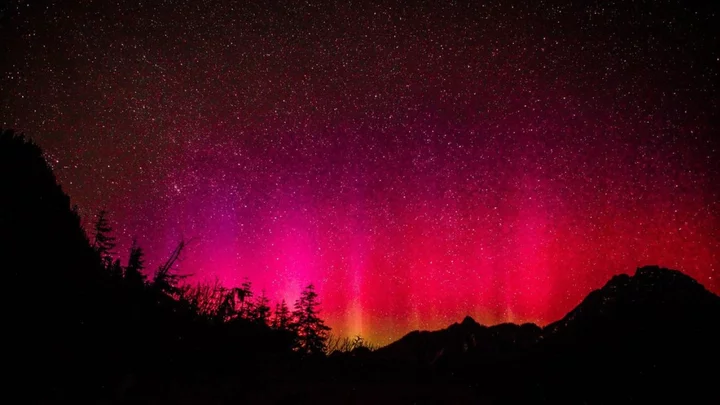
The sun ripped a hole in the Earth's magnetic field and the results were spectacular
The Sun has been punching holes in the Earth’s magnetic field lately – but that’s not as alarming as it sounds. Instead, they have been sparking magnificent light shows across Europe and North America, made up mainly of crimson auroras and sustained periods of red sky. The displays have been caused by disturbances in the Earth’s magnetic field, which happened after a massive ejection of plasma from the Sun came hurtling our way. The event, known as a coronal mass ejection, made a hole in the planet’s magnetic field, allowing highly charged particles to make their way in and cause a geomagnetic storm. Normally, the Northern Lights are made up of mainly green, with the occasional flash of other colours including red. However, longer periods of red light shows are very rare. The highly charged particles then get channelled towards the north and south poles, where they interact with gas molecules in the atmosphere. They, in turn, release photons, causing the aurora borealis in the north and aurora australis in the south. Normally, the Northern Lights are made up of mainly green, with the occasional flash of other colours including red. However, longer periods of red light shows are very rare. But what makes this geomagnetic storm different is that the particles coming from the Sun collided with oxygen atoms higher in the Earth’s atmosphere than normal. The altitude at which this interaction happens dictates the colour of the aurora. This time, the charged particles were between 300 and 400 kilometres in the sky. There, the oxygen is less concentrated and doesn’t need as much energy to cause it to react. It all adds up to a flash of crimson red light in the sky. Somewhat excitingly for aurora-watchers, this sort of event is likely to get more common over the next two years, as the Sun’s activity becomes heightened until its peak in roughly July 2025. Looks like there will be more of these incredible ruby light shows soon enough. Sign up to our free Indy100 weekly newsletter Have your say in our news democracy. Click the upvote icon at the top of the page to help raise this article through the indy100 rankings.
2023-10-09 23:21

The 2023 Top 25 Historic Hotels of America Most Haunted Hotels List Is Announced
WASHINGTON--(BUSINESS WIRE)--Oct 9, 2023--
2023-10-09 23:16
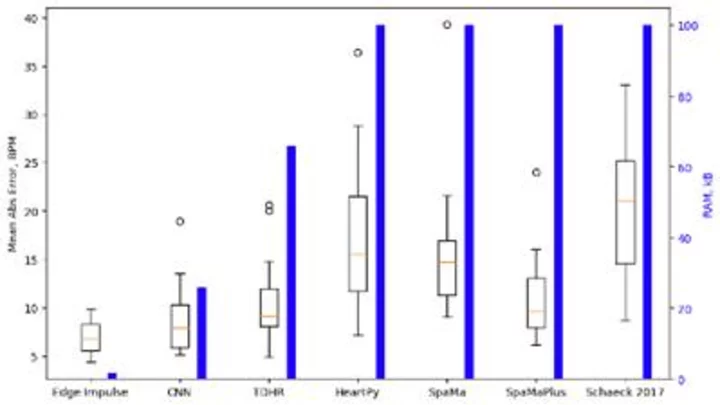
Edge Impulse Debuts Smallest, Most Precise HRV Algorithm, Alongside Other Health-Focused Tools
SAN JOSE, Calif.--(BUSINESS WIRE)--Oct 9, 2023--
2023-10-09 23:15

Two Northwell Leaders Named to the National Academy of Medicine
NEW HYDE PARK, N.Y.--(BUSINESS WIRE)--Oct 9, 2023--
2023-10-09 22:57

Scientists warn humanity has a '1 in 6' change of dying out this century
In 2020, philosopher Toby Ord published The Precipice, a book on the risk of human extinction. The chances of "existential catastrophe" for humanity in the next century according to Ord? One in six. It was a shocking number that alarmed many. After years of being flooded with warnings over climate change, rogue AI, nuclear weapons and pandemics, it's hard to disagree that humans face worrying chances. In his book, Ord discusses a number of potential extinction events, some of which can be examined through history. His research involved looking at the number of space rocks that have hit the moon over its history to figure out the likelihood than an extinction-sized asteroid hitting Earth. This was, in fact, looked at in 2022 by French scientists Jean-Marc Salotti, he calculated the odds of an extinction-level hit in the next century to be roughly one in 300 million. By contrast, Ord estimated the risk to be one in a million, although he does point out a considerable degree of uncertainty. Probabilities can be hard to understand in this context. Traditional probability, for example, relies on observations and a collection of repeated events, but human extinction would be a one-off. But there is another way to think if, called Bayesianism, after the English statistician Thomas Bayes. It sees probabilities as a ranking system of sorts. Specific number predictions shouldn't be taken so literally, but rather compared to other probabilities to understand the likelihood of each outcome. Ord's book contains a table of potential causes of extinctions, accompanied by his personal estimates of their probability. From a Bayesian perspective, we can view these as relative ranks. Ord thinks extinction from an asteroid strike (one in a million) is much less likely than extinction from climate change (one in a thousand). However, even using Bayesianism traditionally requires the incorporation of observational evidence. So, what do we make of Ord's "one in six"? Well it's better to take it less literally but to think of it as a warning, to jump start action on issues such as climate change to hopefully reduce the risk of human extinction in the next century. Sign up to our free Indy100 weekly newsletter Have your say in our news democracy. Click the upvote icon at the top of the page to help raise this article through the indy100 rankings.
2023-10-09 22:51

Get Lost in the Sauce: Jimmy John’s Announces the New BBQ Ranch Chicken Crunch, Available as a Sandwich or Wrap
ATLANTA--(BUSINESS WIRE)--Oct 9, 2023--
2023-10-09 22:29

Gender gap pioneer Goldin wins Nobel economics prize
By Johan Ahlander and Simon Johnson STOCKHOLM Harvard economic historian Claudia Goldin won the 2023 Nobel economics prize
2023-10-09 22:26
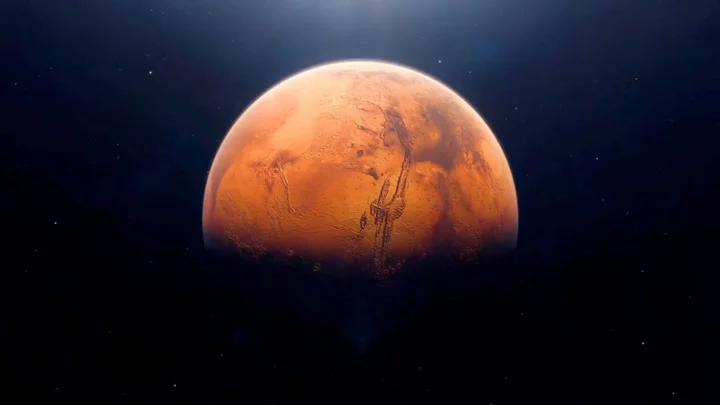
Perseverance rover captures stunning blue sunset on Mars
Mars is often called the Red Planet, but a recent image captured by NASA’s Perseverance rover from the surface would go some way to contradicting that. Earlier this year, Perseverance snapped a sunset from Mars in which the Sun looks blue, a sight which would never be seen from our own planet. The photograph was taken on the rover’s 842nd day on the planet, and shows a Martian horizon with the sun setting behind causing an eerily cool glow. Because of Mars’ distance from the Sun, it gets less sunlight than we do on Earth. Even at its sunniest, it gets less than half our quota of light from the star. And the planet’s atmosphere, which is weaker than Earth’s, is mainly made up of carbon dioxide, with a small amount of nitrogen and a trace of oxygen. This gaseous mix and weak atmosphere causes the light to scatter in a blue haze across the sky. It’s the same process which gives us our blue sky during the daytime, when the light has less atmosphere to penetrate before it reaches our eyes. On Earth, this changes when the sun dips below the horizon, and the light has more atmosphere to penetrate, filtering our blue and violet wavelengths, leaving only reds and oranges. Meanwhile on Mars, the sunlight interacts with the dust hanging in the atmosphere, scattering red light during the day. At twilight, that red light is filtered away, leaving blues. Atmospheric scientist Mark Lemmon of Texas A&M University told Science Alert: "The colours come from the fact that the very fine dust is the right size so that blue light penetrates the atmosphere slightly more efficiently. “When the blue light scatters off the dust, it stays closer to the direction of the Sun than light of other colours does. “The rest of the sky is yellow to orange, as yellow and red light scatter all over the sky instead of being absorbed or staying close to the Sun.” Sign up to our free Indy100 weekly newsletter Have your say in our news democracy. Click the upvote icon at the top of the page to help raise this article through the indy100 rankings.
2023-10-09 22:24