

Funding Circle Awarded “FinTech of the Year”
DENVER--(BUSINESS WIRE)--Nov 7, 2023--
2023-11-08 03:26

Analysis-Investors turn risk-on for some junk debt but not all
By Shankar Ramakrishnan It's fear and greed in the fixed-income markets once again as traders bet the Federal
2023-11-08 03:24
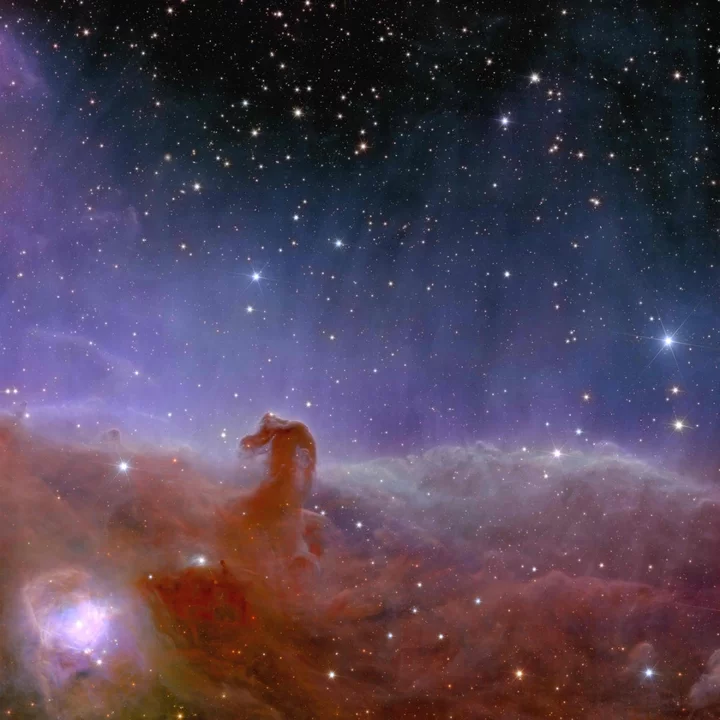
New telescope reveals stunning images of the universe as it has never been seen before
The Euclid space telescope has revealed its first full-colour images, showing the universe as it has never been seen before. The five images, taken by the European Space Agency’s newly launched flying observatory, show the shining lights of distant galaxies. Scientists hope they will also prove useful in better understanding those galaxies, which includes some of the most massive structures in the known universe. Many of the galaxies have never been seen before. And much of the information in them could help explain mysteries such as dark energy and the expansion of the universe. The images released on Tuesday include one of the Perseus cluster of galaxies which shows 1,000 galaxies belonging to the cluster, and more than 100,000 additional galaxies further away in the background. Many of these faint galaxies were previously unseen, and some of them are so far that their light has taken 10 billion years to reach us. Another image captures the spiral galaxy IC 342, nicknamed the Hidden Galaxy, because it is difficult to observe as it lies behind the busy disc of our Milky Way, and so dust, gas and stars obscure our view. One of the new pictures is of globular cluster NGC 6397 - the second-closest globular cluster to Earth, located about 7,800 light-years away. Globular clusters are collections of hundreds of thousands of stars held together by gravity. These faint stars tell us about the history of the Milky Way and where dark matter is located. To create a 3D map of the universe, Euclid will observe the light from galaxies out to 10 billion light-years. The first irregular dwarf galaxy that Euclid observed is called NGC 6822 and is located just 1.6 million light-years from Earth. And the fifth image shows a panoramic and detailed view of the Horsehead Nebula, also known as Barnard 33 and part of the constellation Orion. Scientists hope to find many dim and previously unseen Jupiter-mass planets in their celestial infancy, as well as young brown dwarfs and baby stars, in this new observation. Professor Carole Mundell, ESA director of science, said: “Dark matter pulls galaxies together and causes them to spin more rapidly than visible matter alone can account for; dark energy is driving the accelerated expansion of the universe. “Euclid will for the first time allow cosmologists to study these competing dark mysteries together. “Euclid will make a leap in our understanding of the cosmos as a whole, and these exquisite Euclid images show that the mission is ready to help answer one of the greatest mysteries of modern physics.” Rene Laureijs, the ESA’s Euclid project scientist, said: “We have never seen astronomical images like this before, containing so much detail. “They are even more beautiful and sharp than we could have hoped for, showing us many previously unseen features in well-known areas of the nearby universe. “Now we are ready to observe billions of galaxies, and study their evolution over cosmic time.” Euclid was launched on a SpaceX Falcon 9 rocket from Cape Canaveral in Florida on July 1. Named after the ancient Greek mathematician Euclid, the two-tonne probe made its way towards an area in space known as the second Lagrange point, where the gravitational forces of Earth and the sun are roughly equal - creating a stable location for the spacecraft. The UK has contributed £37 million towards the £850 million mission, with scientists playing key roles in designing and building the probe and leading on one of the two scientific instruments on board. Dr Caroline Harper, head of space science at the UK Space Agency, said: “These first colour images showcase Euclid‘s enormous potential, giving us incredibly sharp images of galaxies and stars, and helping us understand more about the impacts of dark matter and dark energy on the universe. “The UK has played an important role in the mission, leading on the development of the visible imager (VIS) instrument and on key elements of the data processing pipeline, funded by the UK Space Agency. “And this is just the start - UK researchers will be using Euclid data for many years to come to make significant new scientific discoveries about the composition and evolution of the cosmos.” Additional reporting by Press Association Read More Euclid space telescope releases first full-colour images of cosmos First full-colour images of universe captured by Euclid telescope revealed Watch again: ESA reveals first full-colour images of ‘dark universe’ from Euclid Tim Peake: Possibility of all-UK space mission a ‘very exciting development’ Strange purple light phenomenon ‘Steve’ spotted across UK skies Nasa sending VR headset up to ISS to treat astronaut’s mental health
2023-11-08 03:21

Fed's Bowman says she expects further policy tightening will be needed
Federal Reserve Governor Michelle Bowman on Tuesday repeated her view that the U.S. central bank will likely need
2023-11-08 02:59

15Five Unveils Spark AI, Enhanced HR Outcomes Dashboard to Deliver Quantifiable Results from Performance Management
DENVER--(BUSINESS WIRE)--Nov 7, 2023--
2023-11-08 02:58

IMF board approves plan to enhance lending resources without shareholding changes
By David Lawder WASHINGTON (Reuters) -The International Monetary Fund said on Tuesday its executive board approved a proposal for a
2023-11-08 02:53

US regulator says it plans to overhaul Federal Home Loan Bank system
WASHINGTON The U.S. regulator charged with overseeing the Federal Home Loan Bank system said in a report on
2023-11-08 02:46
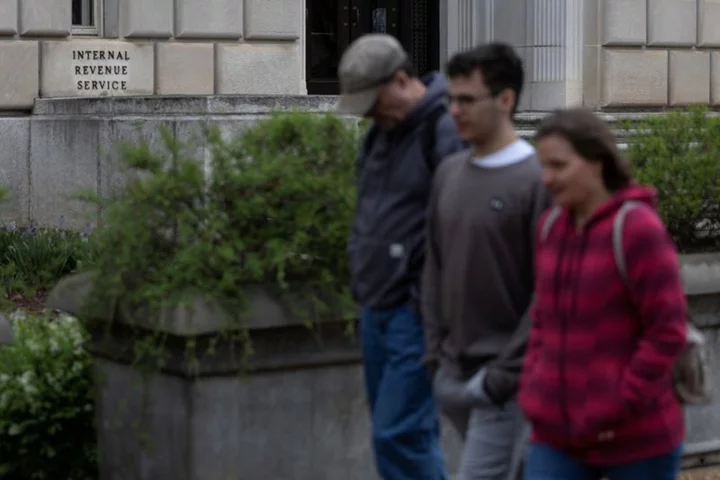
Yellen says Republicans' IRS funding cut would hurt customer service goals
By David Lawder WASHINGTON U.S. Treasury Secretary Janet Yellen said on Tuesday that the Internal Revenue Service will
2023-11-08 02:46
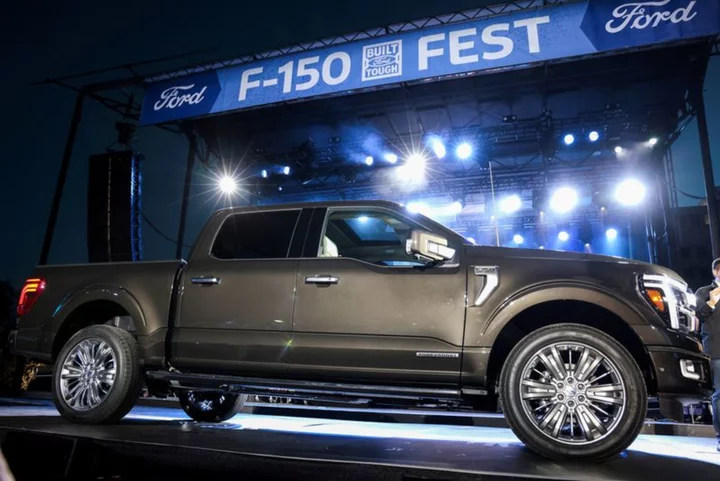
Large pickup trucks fare poorly in protecting back seat passengers -study
By David Shepardson WASHINGTON Four large pickup trucks fared poorly in protecting back seat passengers in tests measuring
2023-11-08 02:45

Peru miners say copper output could climb without impact from protests
LIMA The head of Peru's mining guild on Tuesday said that while copper mining investment might be slow
2023-11-08 02:25

US FTC disputes listing for more than 100 patents in FDA Orange Book
WASHINGTON The U.S. Federal Trade Commission (FTC) on Tuesday said it sent notice letters to Abbvie, AstraZeneca, Teva
2023-11-08 01:53
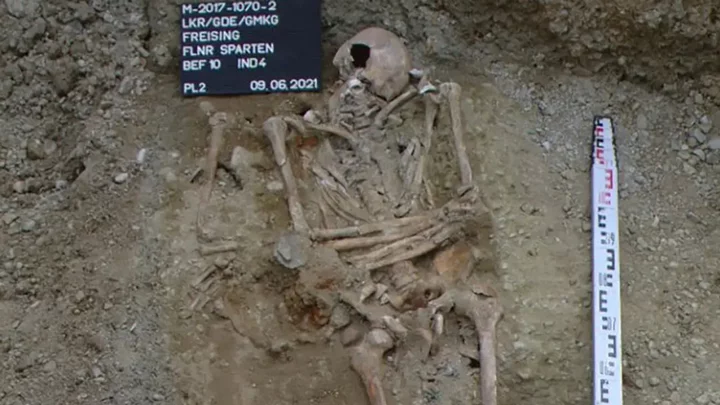
'Sophisticated' prosthetic hand found on medieval skeleton
If you thought prosthetic hands were too advanced for people living hundreds of years ago, think again. Archaeologists have found the remains of a man who died in Medieval Germany, who had prosthetics in place of several fingers. The grave was found by pipeline workers in Freising, a town near Munich. The Bavarian State Office for Monument Preservation said: “Even for experienced archaeologists, this was a particularly special find: a skeleton in which parts of the fingers of its left hand are missing.” The archaeologists removed the metal from the man’s skeleton to restore and analyse it. They came to the conclusion that he had lost his fingers at some point in his life. Walter Irlinger, deputy of the general conservator at BSOMP, said: “The hollow prosthetic on the left hand replaced four fingers. The index, middle, ring and pinky fingers are individually formed out of sheet metal and are immobile. The prosthetic fingers lie slightly curved, parallel to one another.” The prosthetic also had scraps of fabric and leather, suggesting that the fingers had a leather cover, and were tied to the hand using straps. There was also a gauze-like material inside the fingers, which may have acted as a cushion for the man’s skin from contact with the metal. That period of German history included the Thirty Years’ War, which ended in 1648, which would have increased the need for amputations and prosthetics. One of the most famous amputees from the time was Götz von Berlichingen – or “Götz of the Iron Hand”. He was a German knight who lost his right hand from a cannon injury at the siege of Landshut in 1504. “In the past, prosthetics looked very much like what they were replacing,” said Jacky Finch, a researcher in the KNH Center for Biomedical Egyptology at the University of Manchester. “Nowadays, implants are placed in the sensory system to control nerve action, rather than devices attached to the body by straps or artificially powered.” The BSOMP statement continued: “Doctors at that time were already thinking about how they could make life easier for amputees. “In central Europe, there are currently around 50 similar prostheses from the late middle ages to early modern age that are known.” How to join the indy100's free WhatsApp channel Sign up to our free indy100 weekly newsletter Have your say in our news democracy. Click the upvote icon at the top of the page to help raise this article through the indy100 rankings.
2023-11-08 01:49