

The secret queer history of flowers
LGBTQ communities have historically used the subtle language of flowers, such as lavender and green carnations, to communicate solidarity and belonging.
2023-06-25 20:58

Rod Stewart has no plans to retire despite string of health crises including beating cancer twice
Rod Stewart's children have been encouraging the 78-year-old rocker to slow down and focus on his health but he has no plans to do so
2023-06-25 20:58
Pakistan's parliament approves revised budget to clinch IMF deal
By Asif Shahzad ISLAMABAD Pakistan's parliament on Sunday approved the government's 2023-24 budget which was revised to meet
2023-06-25 20:46

Mikel Arteta speaks out on Arsenal's interest in Declan Rice & Kai Havertz
Manager Mikel Arteta discusses Arsenal's interest in both Declan Rice & Kai Havertz.
2023-06-25 20:22

Thai rates still low, tightening to be gradual, says central bank official
BANGKOK Thailand's policy interest rate remains low and further tightening will be gradual to curb inflation risks as
2023-06-25 20:22

China must act fast to bolster recovery, says senior economic official
BEIJING China needs to step up measures as soon as possible to bolster a faltering post-COVID recovery in
2023-06-25 20:21

Federal judge defends Clarence Thomas in new book, rejects 'pot shots' at Supreme Court
A federal appeals court judge previously on short lists for the Supreme Court is taking the rare step to broadly and publicly reject allegations that Justice Clarence Thomas has been improperly influenced by lavish gifts provided by a conservative billionaire, dismissing "pot shots" at the Supreme Court in general.
2023-06-25 20:18
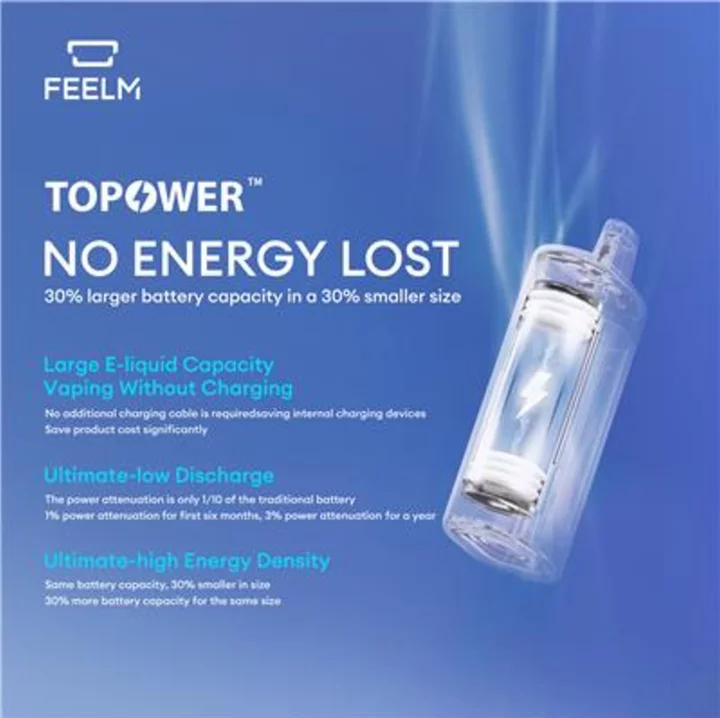
World’s Highest Puffs Charge Free Battery Technology “TOPOWER” — Real Disposables Exhibited in Dubai
DUBAI, United Arab Emirates--(BUSINESS WIRE)--Jun 25, 2023--
2023-06-25 19:57

Kim Kardashian concerned Kanye West's new spouse Bianca Censori is 'getting too close' with daughter North West
North West was spotted strolling hand-in-hand with Kanye West's supposed wife Bianca Censori during the rapper's recent birthday bash in LA
2023-06-25 19:56

Are investors ignoring the Federal Reserve's warning?
Stocks fell last week as several signs pointed to the Federal Reserve continuing to hike rates this year.
2023-06-25 19:28

Get $200 Bonus on a $1 Bet: How to Unlock Bet365 Colorado Promo
Colorado residents have an amazing opportunity to score a MASSIVE payday today thanks to Bet365's exclusive promo: Bet $1 (with a $10 deposit), Win $200 GUARANTEED on ANY bet! Whether you win or lose, you'll receive $200 no matter what.See below how to claim this exclusive offer.Bet3...
2023-06-25 19:26

Scientists have come up with a new meaning of life – and it's pretty mind-blowing
The meaning of life is the ultimate mystery – why do we exist? And is there a point to… well… anything? These are questions to which we may never find answers, but at least we can define what “life” means in scientific terms. And yet, our understanding of what life is is changing all the time, thanks to space exploration. As scientists continue to hunt for life beyond our own world, biologists are having to rethink the meaning of the word “life” itself. Sign up for our free Indy100 weekly newsletter Generally, biologists explain “life” as connoting a self-sustaining chemical system which is capable of performing functions such as eating, metabolising, excreting, breathing, moving, growing, reproducing, and responding to external stimuli. This definition works pretty well here on Earth (although there are some important exceptions, such as viruses), but experts have pointed out that if life exists elsewhere in the universe, it may not display the same properties that we’re used to. Indeed, it might be unrecognisable as life as we know it (forget those little green men). In which case, how will we spot it if it ever crosses our path? Astrobiologist Sara Imari Walker and chemist Lee Cronin think they’ve come up with a solution. The pair are now arguing that highly complex molecules found in all living creatures can’t exist thanks purely to chance. Therefore, they say, the universe must have a way of creating and reproducing complex information and retaining a “memory” of all of this.. In an interview with New Scientist, Walker, of Arizona State University, explained their radical idea on how objects come into existence. The concept, known as Assembly Theory, explains why certain complex objects have become more abundant than others by considering their histories. If the theory proves correct, it will redefine what we mean by “living” things and show that we’ve been going about the search for extraterrestrial life all wrong. In the process, we could even end up creating alien life in a laboratory, she stressed. In her discussion with New Scientist, Walker pointed out: "An electron can be made anywhere in the universe and has no history. You are also a fundamental object, but with a lot of historical dependency. You might want to cite your age counting back to when you were born, but parts of you are billions of years older. "From this perspective, we should think of ourselves as lineages of propagating information that temporarily finds itself aggregated in an individual." Assembly theory predicts that molecules produced by biological processes must be more complex than those produced by non-biological processes, as Science Alert notes. To test this, Walker and her team analysed a range of organic and inorganic compounds from around the world and outer space, including E. coli bacteria, urine, meteorites and even home-brewed beer. They then smashed up the compounds into smaller pieces and used mass spectrometry to pinpoint their molecular building blocks. They calculated that the smallest number of steps required to reassemble each compound from these building blocks was 15. And whilst some compounds from living systems needed fewer than 15 assembly steps, no inorganic compounds made it above this threshold. "Our system … allows us to search the universe agnostically for evidence of what life does rather than attempting to define what life is," Walker, Cronin, and others wrote in a 2021 Nature Communications article. The handy thing about this building block system – which they’ve dubbed the “'molecular assembly index” – is that it doesn’t rely on carbon-based organic materials to be identified. In other words, an alien could be made of entirely different stuff entirely and we’d still be able to spot it as life using the index. It also works regardless of what stage of “life” an extraterrestrial being is in – whether it is still in its infancy or has moved into a technological stage beyond our understanding. That’s because all of these states produce complex molecules which couldn’t exist in the absence of a living system. If all of this is hurting your head, let’s just get back to the basics: if there is a secret to life, it might all be down to what we do, not what we are. Have your say in our news democracy. Click the upvote icon at the top of the page to help raise this article through the indy100 rankings.
2023-06-25 19:26