

Josh Allen’s “Taylor Swift” audible is the new Yanni-Laurel
Did Buffalo Bills quarterback Josh Allen use 12-time Grammy Award-winning pop star Taylor Swift as an audible during Thursday night's game against the Tampa Bay Buccaneers?
2023-10-28 01:18

Why DR Congo wants East African troops to leave
After 11 months in action, the force set up to to curb violence in the DR Congo has been told to withdraw.
2023-10-28 01:17

FTX founder Sam Bankman-Fried acknowledges in court that customers were hurt but denies fraud
FTX founder Sam Bankman-Fried has begun testifying at his fraud trial, saying the innovative business he had hoped would move the cryptocurrency ecosystem forward ended up hurting customers instead
2023-10-28 00:58

Is Draymond Green playing tonight? Latest injury update for Warriors vs. Kings
After missing the Warriors' season opener against the Suns, could Draymond Green make his Warriors debut tonight against the Kings?
2023-10-28 00:56

Ronald Acuña Jr.’s social media activity is a vicious shot at Phillies
Ronald Acuña Jr. made even more enemies with simply delightful Philadelphia Phillies fans by liking a tweet that says he and the Atlanta Braves' accomplishments have been far more impressive than Philly's.
2023-10-28 00:56
Infrared ‘aurora’ like northern lights spotted on Uranus could help find alien life, scientists say
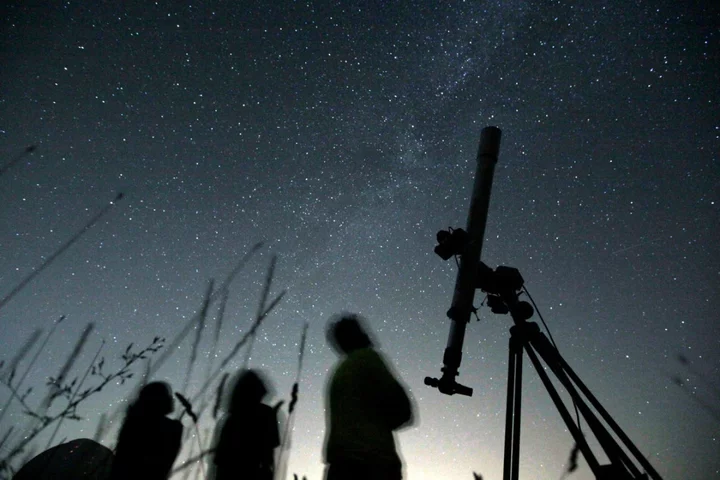
Scientists have spotted an infrared aurora on Uranus that could help us find alien life. On Earth, aurorae are best known in the form of the northern lights, when bright light streaks across the sky. Uranus also has its own aurora – though it is not visible in the same way, because of the different atmosphere on that planet. Researchers have known about ultraviolet aurorae on Uranus since 1986. But now scientists have confirmed there are infrared aurorae on the distant planet, too. Scientists hope that the findings could help explain the magnetic fields of other planets in our solar system. And it could help us find out whether distant planets support alien life. Aurorae happen when charged particles arrive at a planet and hit its atmosphere, brought down through its magnetic field lines. To better understand those on Uranus, researchers analysed the light from the planet and watched for a specific charged particle that changes brightness depending on how how it is and how dense the atmosphere is, so that it can be used as a thermometer. The researchers found that the density of that particle significantly increased, which suggests they are being ionised by an infrared aurorae, they say. Scientists hope that will inform our understanding of other, similar planets, as well as which worlds might be suitable for alien life. “The temperature of all the gas giant planets, including Uranus, are hundreds of degrees Kelvin/Celsius above what models predict if only warmed by the sun, leaving us with the big question of how these planets are so much hotter than expected? One theory suggests the energetic aurora is the cause of this, which generates and pushes heat from the aurora down towards the magnetic equator,” said Emma Thomas from the University of Leicester, who was lead author on the new study. “A majority of exoplanets discovered so far fall in the sub-Neptune category, and hence are physically similar to Neptune and Uranus in size. This may also mean similar magnetic and atmospheric characteristics too. By analysing Uranus’s aurora which directly connects to both the planet’s magnetic field and atmosphere, we can make predictions about the atmospheres and magnetic fields of these worlds and hence their suitability for life. “This paper is the culmination of 30 years of auroral study at Uranus, which has finally revealed the infrared aurora and begun a new age of aurora investigations at the planet. Our results will go on to broaden our knowledge of ice giant auroras and strengthen our understanding of planetary magnetic fields in our solar system, at exoplanets and even our own planet.” The findings might also help explain a mysterious phenomenon on Earth known as geomagnetic reversal, where the north and south pole switch around. Scientists still know very little about that rare phenomenon, and how it might affect things such as satellites and communications. That process happens every day on Uranus, however. Researchers hope they can use its aurorae to get better data on the nature of that reversal – and what might happen if Earth has one, too. The findings are described in a new paper, ‘Detection of the infrared aurora at Uranus with Keck-NIRSPEC’, published in Nature Astronomy. Read More People don’t know their Uranus from Eridanus when it comes to astronomy Scientists find surprise ‘layer’ underneath surface of Mars Scientists see huge explosion in space – and it could explain life
2023-10-28 00:46

Palau country profile
Provides an overview of Palau, including key dates and facts about this Pacific island nation.
2023-10-28 00:30

15 Great Family-Friendly Halloween Movies to Watch This Year
The best Halloween movies for kids are ones that also don't bore the adults.
2023-10-28 00:28

Exclusive-Telecom Italia's grid sale faces challenger plan
By Elvira Pollina MILAN (Reuters) -A London-based investment firm representing Telecom Italia (TIM) shareholders owning under 3% of the group
2023-10-28 00:26

EU's von der Leyen to attend Britain's AI summit
By Martin Coulter LONDON Two of the European Union's most senior officials plan to attend Britain's artificial intelligence
2023-10-28 00:26

Ivanka Trump must testify in fraud case, judge rules
She will have to testify in a $250m business fraud case against her father and brothers, a New York judge rules.
2023-10-28 00:25
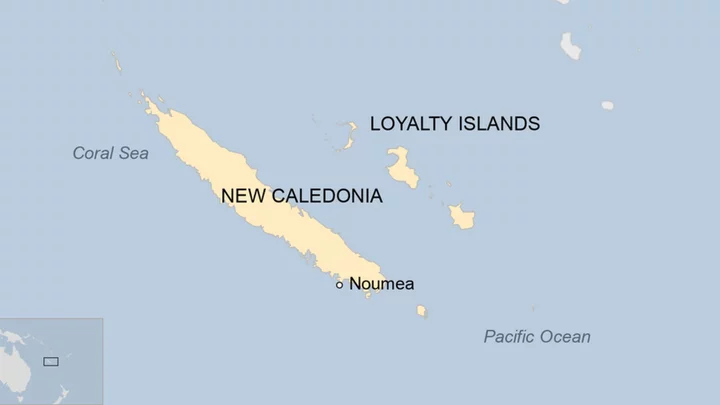
New Caledonia profile
Provides an overview of New Caledonia including key facts about this French Pacific Ocean territory.
2023-10-28 00:20