

Wisconsin's new liberal Supreme Court justice hasn't heard a case but Republicans may impeach
Even before the newly elected justice who gave liberals a one-seat majority on the Wisconsin Supreme Court has heard a case, Republican lawmakers are talking about taking the unprecedented step of impeaching and removing her from office
2023-09-01 01:15

UNC student newspaper front page displays community's texts during school shooting and lockdown
The entire front page of the University of North Carolina at Chapel Hill's student newspaper, The Daily Tar Heel, Wednesday displayed "text messages sent and received by UNC students," during the hours-long lockdown on campus after one faculty member was murdered on Monday.
2023-09-01 01:15

Election workers have gotten death threats and warnings they will be lynched, the US government says
More than a dozen people nationally have been charged with threatening election workers by a special Justice Department unit
2023-09-01 00:59

Ex-Proud Boys organizer sentenced to 17 years in prison for plot to keep Trump in power
A former organizer of the far-right Proud Boys extremist group has been sentenced to 17 years in prison for spearheading the U.S. Capitol attack to try to keep Donald Trump in power after the Republican lost 2020 presidential election
2023-09-01 00:57

U.S. denies blocking chip sales to Middle East
By Stephen Nellis The Biden administration "has not blocked chip sales to the Middle East," a U.S. Department
2023-09-01 00:57

UN committee 'raise red flag' over racism in Italian football
The United Nations committee responsible for combating racism "raised a red flag" over Italian football in its latest...
2023-09-01 00:55

U.S. judge sentences former Proud Boys leader to 17 years for role in Jan. 6 attack
By Sarah N. Lynch WASHINGTON A federal judge sentenced former far-right Proud Boys leader Joseph Biggs to 17
2023-09-01 00:53

EU grapples with its African army training dilemma as another coup rocks the continent
The European Union is growing increasingly concerned about “domino effects” as yet another military coup rocks Africa
2023-09-01 00:53
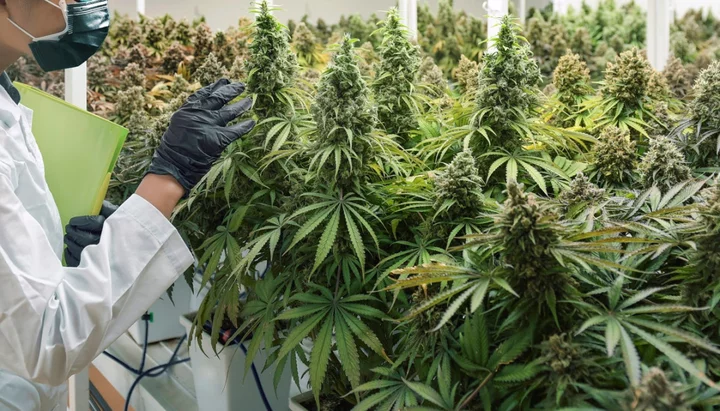
Marijuana users have higher levels of toxic metals in blood and urine, study finds
People who use marijuana were found to have higher levels of lead and cadmium in their blood and urine, in comparison to those who do not use weed, according to a new study. The team of researchers at Columbia University analysed data from blood and urine samples collected between 2005 and 2018 as part of the National Health and Nutrition Examination Survey, a program conducted by the National Center for Health Statistics. They looked at samples of 7,254 people who said they had used marijuana in the last 30 days. Participants were examined for levels of heavy metals and 358 people were found to have 27 per cent higher blood lead levels than those who said they didn’t use either marijuana or tobacco. There were also 22 per cent higher levels of cadmium in those marijuana users according to the research, which was published Wednesday in the journal Environmental Health Perspectives. Researchers also found that the urine samples showed similar results. High levels of cadmium can cause stomach irritation, abdominal cramps, nausea, vomiting and diarrhoea, according to Better Health. Researchers found that although tobacco is the main source of cadmium exposure in the general population, the study showed similar exposure levels among cannabis users. “For both cadmium and lead, these metals are likely to stay in the body for years, long after exposure ends,” Tiffany Sanchez, an author of the study and an assistant professor of environmental health sciences at Columbia’s Mailman School of Public Health said to NBC News. As cannabis plants can absorb heavy metals from soil - the new findings demonstrate that heavy metals in cannabis plants can also wind up in the human body. “Previous studies have measured metals in marijuana plants, products, or marijuana smoke,” study authors have said. Lead exposure can be particularly harmful to children and pregnant women. In adults, chronic exposure to lead increases the risk of high blood pressure, heart problems and kidney damage. “Our study wasn’t able to tease apart whether or not self-reported cannabis users were using medical or recreational cannabis, so we can’t say definitively if medical cannabis users specifically had higher metal levels,” Sanchez said as reported by CNN. “This is something that should be evaluated in future studies.” Heavy metals bind to parts of your cells that prevent your organs from doing their job, according to the Cleveland Clinic and symptoms of heavy metal poisoning can be life-threatening and can cause irreversible damage. “Immunocompromised people, such as those going through chemotherapy, may be at greater risk from metal exposure or from other common cannabis contaminants like molds. However, this is very much an understudied area,” Sanchez added. On Wednesday, the Department of Health and Human Services recommended that the Drug Enforcement Administration ease restrictions on marijuana by moving it from Schedule I drug to Schedule III. HHS Secretary Xavier Becerra said on X, the platform formerly known as Twitter, that the agency has responded to President Joe Biden’s request “to provide a scheduling recommendation for marijuana to the DEA.” “We’ve worked to ensure that a scientific evaluation be completed and shared expeditiously,” he added. Senate Majority Leader Chuck Schumer said in a statement that HHS had recommended that marijuana be moved from a Schedule I to a Schedule III controlled substance. “HHS has done the right thing,” Schumer said. “DEA should now follow through on this important step to greatly reduce the harm caused by draconian marijuana laws.” Rescheduling the drug would reduce or potentially eliminate criminal penalties for possession. Marijuana is currently classified as a Schedule I drug, alongside heroin and LSD. According to the DEA, Schedule I drugs "have no currently accepted medical use in the United States, a lack of accepted safety for use under medical supervision, and a high potential for abuse." Additional reporting from agencies Read More Biden health agency recommends classifying marijuana as lower-risk, opening potential for major policy changes Seth Rogen reveals why he smokes marijuana ‘all day, every single day’ Rugby star Ugo Monye: Boarding school shaped my career and my personality Queen Latifah calls for more ‘inclusive healthcare’ for people with obesity As Simon Cowell shares positive therapy experience, how can it help even if you aren’t in crisis?
2023-09-01 00:51
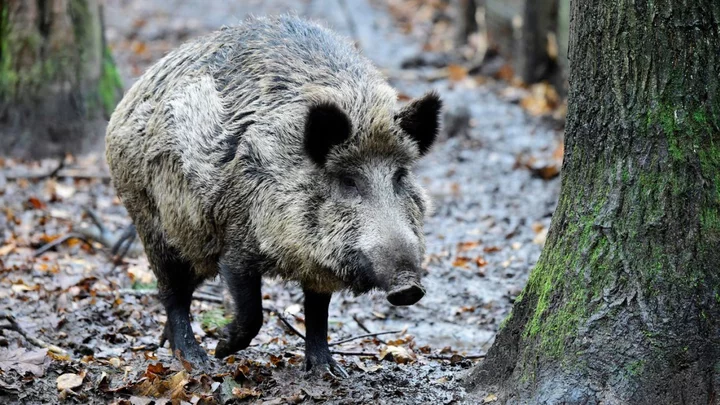
Wild boar in Germany are strangely radioactive – now scientists know why
Wild boar in southeastern Germany have long contained high levels of radioactive substances, which has been attributed to the 1986 Chernobyl nuclear disaster. But as radioactivity levels have fallen in other animals, they have stayed much the same among boar. Now, scientists have worked out the secret behind the so-called “wild boar paradox”. Research shows there is another culprit for the high levels of radioactivity: nuclear weapons tests from the mid-20th century. And both the weapons and the nuclear reactor meltdown continue contaminating the boar because of their diet. While the muscular boar seem healthy, the dangerous levels of radioactive caesium, the main contaminator, have prompted people to stop hunting them. In turn, there is now an overpopulation issue. “Our work reveals deeper insights into the notorious radio-cesium contamination in Bavarian wild boars beyond the total radionuclide quantification only,” radioecologist Felix Stäger from Leibniz University Hannover wrote in a paper. After a nuclear incident, radioactive materials can pose a significant threat to ecosystems. This happened after the Chernobyl meltdown in 1986, where there was an increase in radioactive caesium contamination. The main component of this, caesium-137, has a half-life of about 30 years, meaning it loses its radioactivity fairly quickly. However, caesium-135, which is created via nuclear fission, is far more stable. It has a half-life of more than 2m years. The ratio of cesium-135 compared to cesium-137 can help us work out where the cesium came from. A high ratio indicates nuclear weapon explosions, while a low ratio points to nuclear reactors like Chernobyl. So the researchers analysed caesium levels from 48 wild boar meat samples from 11 regions of Bavaria. It turns out that nuclear weapons testing was responsible for between 12 per cent and 68 per cent of the unsafe contamination in the samples. “All samples exhibit signatures of mixing,” wrote the researchers. “Nuclear weapons fallout and [Chernobyl] have mixed in the Bavarian soil, the release maxima of which were about 20−30 years apart.” So while Chernobyl remains the main source of caesium in wild boar, about a quarter of the samples showed enough contributions from weapons fallout to exceed safety limits even before the reactor meltdown comes into account. And because wild boar eat so many truffles, it has been exacerbated. The fungus absorbs high levels of contamination from both sources. Wild boars' diets, which include underground truffles, have absorbed varying levels of contamination from both sources, which has contributed to the animals' persistent radioactivity. “This study illustrates that strategic decisions to conduct atmospheric nuclear tests 60−80 years ago still impact remote natural environments, wildlife, and a human food source today,” the authors concluded. The study was published in Environmental Science & Technology. Sign up to our free Indy100 weekly newsletter Have your say in our news democracy. Click the upvote icon at the top of the page to help raise this article through the indy100 rankings.
2023-09-01 00:51

Whale hunting returns to Iceland despite hopes ban would last forever
Whale hunting is set to return in Iceland despite hopes the temporary ban would remain. Iceland‘s minister of food, agriculture and fisheries, Svandís Svavarsdóttir, announced on Thursday that this summer’s temporary ban on whaling would be lifted in a move international marine conservation organisation OceanCare has described as ‘disappointing’, A suspension on whaling was put in place by the Icelandic government in June, set to expire in August 2023, due to animal welfare concerns. It came after monitoring by Iceland’s Food and Veterinary Authority on the fin whale hunt found that the killing of the animals took too long based on the main objectives of the Animal Welfare Act. An investigation found that around 40% of hunted whales did not die instantly, with an average time to death of 11.5 minutes. Iceland’s Food and Veterinary Authority found that two whales had to be shot four times. One of the whales took almost an hour to die, while the other took almost two hours. In anticipation of the ban being lifted, two Icelandic whaling vessels left port yesterday to resume whale hunting, OceanCare said. The organisation said they are “gravely disappointed” that the ban has been lifted, and claimed the decision could mean that there will now “be a race to kill as many whales as possible in the remaining weeks of reasonable hunting weather” before whale hunting season ends in mid-September. “It is deplorable that this cruel practice has been allowed to resume,” said Nicolas Entrup, OceanCare’s director of International Relations. “We are bitterly disappointed by the decision which entirely goes against the clear facts that are available to the government and people of Iceland. We can almost be certain that the Icelandic whalers will not meet the imposed requirements. “This cruel, unnecessary and outdated practice needs to stop,” he said. Meanwhile, animal protection charity Humane Society International called Svavarsdóttir’s decision “devastating” and “inexplicable”. Ruud Tombrock, HSI’s executive director for Europe, said: “It is inexplicable that minister Svavarsdóttir has dismissed the unequivocal scientific evidence that she herself commissioned, demonstrating the brutality and cruelty of commercial whale killing. “There is simply no way to make harpooning whales at sea anything other than cruel and bloody, and no amount of modifications will change that. Whales already face myriad threats in the oceans from pollution, climate change, entanglement in fish nets and ship strikes, and fin whale victims of Iceland’s whaling fleet are considered globally vulnerable to extinction. “With the need for whale protection so critical. this is a devastating rejection of a once-in-a-generation opportunity to end the slaughter at sea. “There is a new shameful entry in the conservation history books―Iceland had a chance to do the right thing and it chose not to.” Iceland’s whaling season runs from mid-June to mid-September. Annual quotas authorise the killing of 209 fin whales, but none were killed between 2019-2021 due to a dwindling market for whale meat. Some 148 fin whales were killed in 2022 during whaling season. Iceland, Norway and Japan are the only countries in the world that have continued whale hunting in the face of fierce criticism from environmentalists and animal rights’ defenders. OceanCare said the lifting of the ban calls into question the announced phase-out of whaling over the next few years. A decision about Iceland’s self-allocated whaling quota for the next several years is expected towards the end of this year. In 2009, several countries including the UK, the US, Germany, France, Portugal and Spain condemned Iceland’s whaling policy. Japan, which is the biggest market for whale meat, resumed commercial whaling in 2019 after a three-decade hiatus. Read More Iceland suspends annual whale hunt due to ‘animal welfare concerns’ – and may never bring it back Humpback whale spotted off Cornwall coast in rare sighting Humpback whale found on beach died after entanglement in creel lines, tests show Italy's Meloni visits Naples suburb where 2 girls were allegedly raped by youths, pledges crackdown Putin’s forces pushed back by Ukraine counteroffensive after ‘largest’ drone strike Zelensky makes long-range weapon claim after strike deep inside Russia
2023-09-01 00:49

Niger's military regime orders police to expel French ambassador and revokes his diplomatic immunity
A statement from Niger's military regime says the junta has revoked the diplomatic immunity of France’s ambassador and ordered police to expel him from the African country
2023-09-01 00:47