
Credit Suisse SPAC Head Stabinsky Leaves for Santander
Credit Suisse Group AG’s departures continue with its head of blank-check companies leaving after the fortunes of both
2023-06-02 03:56
Volvo Cars September sales rise 25%, demand up in China
STOCKHOLM Volvo Cars' sales grew 25% in September from a year earlier to 61,666 cars as sales grew
2023-10-05 15:29
Trump argues against more restrictive rules over evidence in 2020 election interference case
Former President Donald Trump's legal team has proposed more lax rules than those sought by prosecutors over what he can do with evidence he is provided in the criminal election interference case.
2023-08-08 05:28
From the command centre in Kyiv, Olena Zelenska’s urgent plea to help her nation as war rages around her
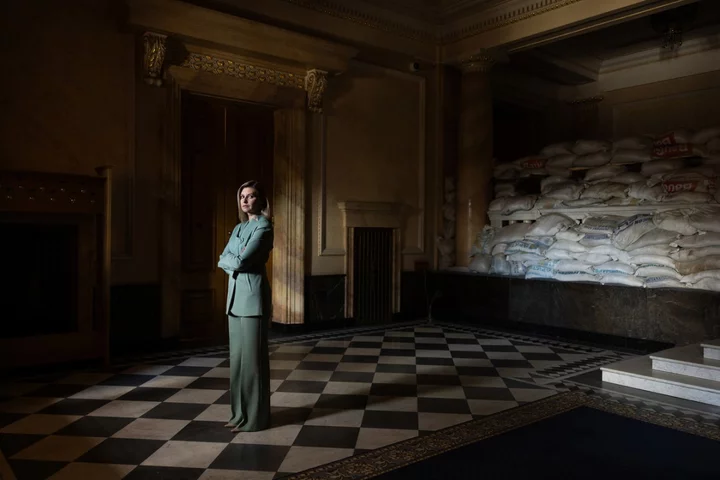
As if on cue, the haunting wail of the air-raid siren sifts through the sunshine as we pull up to the checkpoint by the presidential complex in Kyiv. Like swathes of Ukraine, the contours of this heavily guarded compound have been re-carved by President Vladimir Putin’s invasion. Instead of a sweeping pedestrian boulevard leading to 10 Bankova – Ukraine’s 10 Downing Street – the complex is a disorientating labyrinth of blast walls, sandbags, and soldiers. Inside this bunker, it is as quiet and dark as a sunken cathedral. The windows are boarded up and filters cover each light casting an eerie muted glow. Sandbags, like used tissues, are wedged between marble columns. A chandelier which is not switched on, crowns the sweeping stairwell which leads up to makeshift barricades punctured by embrasures. It feels like the presidential compound and its inhabitants are poised and prepared. Including the First Lady - Olena Zelenska - whom we are here to meet. “I would like to say, ‘I’m fine’ but no one can say this phrase now in Ukraine,” she replies, “How are you?” the simplest of introductory questions that lands a bit limply under the current circumstances. Watch the interview trailer below The full interview will be available to watch on The Independent’s website and on your smart TV from August 7. “We are all tense. We are all waiting for victory. We are trying, and I am also trying, to keep our hand on the pulse. To wait for good news and to not lose hope,” she adds, with the briefest flick of a weary smile. Weariness is perhaps an apt word. It underpins her main message of this interview: concern that as Putin’s war grinds into its 18th bloody month, the international community might begin to lose interest or perspective on the battles chewing up Ukraine, with deadly consequences for everyone. “If the aggressor wins now, it will be the worst-case scenario for all of humanity,” she says with a quiet assurance. “This will mean that global deterrents aren’t working. This will mean that anyone with power, strength and sufficient financial capacity can do whatever they want in this world.” “We keep hearing from our Western partners that they will be with us as long as it takes. I would like to say that the word ‘long’ is not the word we should use. We should use the word ‘faster’.” Olena Zelenska, 45, I would argue, has one of the trickiest jobs in the world. War aside, like so many women thrust into a public spotlight that she never sought, she faces unrelenting scrutiny. The former comedy scriptwriter turned First Lady-at-war cannot smile too much, lest she be seen as not taking the devastation of the invasion seriously. But she can’t smile too little, or she is labelled ungrateful. There are endless discussions about her clothes (she was named among the best dressed at the coronation of King Charles III which she attended). Ukrainian diplomats tell me quietly on the sidelines, she is almost always asked about being a mother-of-two, a wife, a crutch-like appendage to her husband Volodymyr Zelensky, 45, over the crucial work she is doing on the ground. She is inevitably tossed the emotional questions, that interviewers may shy from asking the men. And so today, as we sit in the heart of the country’s operations hub, in the wake of an air raid, our hour-long conversation centres on her work. This ranges from building a network of hospitals and prosthetic centres treating an estimated 20,000 new amputees in the country - to launching mental health programmes to smash stigmas on trauma. We also talk about her latest passion: changing the role of first ladies and gentlemen around the world from individual “decorative” accessories to something more. She wants to “set a trend” where presidential partners “communicate, exchange experiences, create joint projects”. She speaks warmly about specific families that keep her motivated in her work – including a Ukrainian grandmother who “knocked on every door” to find her granddaughter who, like thousands of other children, had been disappeared into Russia by soldiers. Finding the tens of thousands of children that Ukraine accuses Russia of abducting is a personal mission for the first lady, which she calls “one of the biggest wounds in Ukraine”. “We are trying to get our children back. It is hard to find an area of children’s life that the war has not touched.” That includes the lives of her own children, who are forced to live separately from their father for security reasons – a topic she tentatively opens up about. “Maybe [now] it is more frequent that we can see each other altogether but these are still isolated instances,” she says, with a quiet sadness. “I am sure that we will pass this test.” All of this is a far cry from the woman who four years ago said she struggled with public speaking after advising her husband, then a colleague in their comedy troupe, against running for president. In fact, she didn’t even know he was going to go through with it: like the rest of the country, Mrs Zelenska found out about his presidential bid after a New Year’s Day television special in 2019. Mr Zelensky apparently “forgot” to mention the life-altering decision to his wife. But ever since President Putin ordered his troops to march on Kyiv – in an instant making her husband the war-time protector of Ukraine – she has put her fears aside. He donned military khaki and, standing outside the very building we are in, vowed never to flee Ukraine. She morphed into frontline ambassador, rallying lifesaving international support for a country in the grips of Europe’s bloodiest war in generations. She became one of the architects of the rebuilding of this nation, ravaged by a 2,000km frontline, even while the fighting goes on. If Ukraine doesn’t rebuild during the war it is “wasting time” even if there is a threat it gets destroyed again, she insists. “Wherever there are people, there should be reconstruction as soon as possible”. The truth is Mrs Zelenska could have left Ukraine permanently, like the wives of other Ukrainian politicians (under martial law only women can evacuate the country). Effectively a single parent now, she would have been forgiven for taking a step back to focus on her children. But she did not. Last July she addressed Congress, in November she spoke to the British parliament and in January she was at Davos in Switzerland. In all her speeches she pulls no punches. “We know that the youngest girl who was raped by the Russian occupiers is four years old. The oldest is 85 years old,” she told Westminster bluntly while urging the UK to help establish a Special Tribunal so Russia can face justice for its crimes. Back in Ukraine, she rallies the Ukrainian public through her social media accounts, urging families to “stay strong”. Like this week when Russian shelling eviscerated an apartment block in the southern city of Kryvyi Rih, which is also her and her husband’s hometown. And now here, in the presidential palace where her husband also works, she is eloquent and concise when talking. “All the fears, all the phobias, all the unpleasant moments that we experienced in peacetime fade into the background,” she says, explaining her transition to a public figure in war. “The fact that I said that I don't really like public speaking - does not matter now. I have to be effective in my role to support the president and the people of Ukraine.” And with a pause and shy smile, she adds “I hope they feel that I am”. As we meet in Kyiv, Ukraine is careering towards another catastrophe of this bloody war: hunger. In July, Russia turned its artillery turrets on Ukraine’s food and farming infrastructure after pulling out of a United Nations-brokered grain deal which allowed the safe exports of Ukraine’s grains and oils via the Black Sea. Officials from the UN told me that at the start of this year, despite the war, the World Food Programme still purchased food from Ukraine to feed the most vulnerable in places like sub-Saharan Africa and the Middle East. And so it is unthinkable that Ukraine, the “breadbasket of the world”, may not be able to even feed its own population. But grain storages, ports and farmlands are on fire right now. This is having global consequences. Wheat prices have already soared, even driving up our shopping lists in the comfort of Western Europe. The UN has warned of famine and destitution. Mrs Zelenska reminds me this is only the latest in a series of humanitarian crises in Ukraine that ripple past its borders. In June the bombing of the Kakhovka Dam, which Kyiv blames on Moscow, unleashed the waters of one of Europe’s largest reservoirs over southern Ukraine – causing one of the worst ecological disasters on the continent in recent history. “Today's stage is another stage,” she says grimly of the attacks on food. “Ukrainians understand that our enemy is capable of inventing of any challenges for us.” She says Ukrainians have adapted and are now well prepared for any new horrors on the horizon. “The most popular Telegram [instant messaging] channel in Ukraine is not an entertainment channel, it is one that publishes the fastest news about the whereabouts and consequences of shelling and what is happening in relation to the war.” “The popularity of this Telegram channel speaks for what Ukrainians live by. We are no longer surprised by anything,” she adds echoing a popular refrain in the country. The cumulative consequences of these myriad crises in Ukraine are why the first lady says she decided to tap her contacts and create her own humanitarian aid organisation. The Olena Zelenska Foundation was eventually launched in September in New York with a star-studded guest list including US former secretary of state and first lady, Hillary Clinton, and Matt Damon. Among several projects, so far it has rebuilt hospitals in recently de-occupied areas like Izyum near the border with Russia and delivered tens of thousands of laptops to children, as a third of all schools in Ukraine are closed. “It seemed to me that just talking on international platforms is not enough for the first lady,” she continues, her eyes lighting up. “I realised that I could put together this puzzle, unite those who want to help and those who need help.” This is part of her wider mission to redefine what it means for everyone married to a president. She wants the spouses of world leaders to stop waving prettily on the sidelines and work together to build their own community to do good. “We can no longer perform only a decorative function. We cannot just stand nicely next to the head of state. First ladies and gentlemen can try harder and do much more.” “I hope this is the case, that we have set a new trend.” And so despite being at war, this September she will host a third “Summit of First Ladies and Gentlemen” in Kyiv where she will gather “her colleagues” in person and virtually. This session will focus on mental health, a topic which is already “very painful for Ukraine” and the world, she says. Ukraine is, in many ways, quite traditional. And since Moscow’s forces marched across the borders on 24 February, there has been societal pressure for everyone to have a stiff upper lip. There is a ‘Dulce et decorum est pro patria mori’ attitude, even if that means dying on the inside for your country. This war is brutal. It is bloody. It is frightening. Artillery – indiscriminate and terrible – is relentless. Drones hit so fast that you cannot hear them coming. Banned weaponry like cluster munitions, in a single rocket, can shower their terror on territory the size of a football pitch. Everyone lives in a world of averages and percentages of survival, a ruse to feel better that is obliterated by the deadly whistle of a single shell. An unknown number of people have been killed, there is no accurate casualty count. There could be significantly more than 100,000 missing people, one Ukrainian top prosecutor told me in February. We have also documented horrific testimonies of torture and rape at the hands of Russian soldiers adding to this wartime mental health epidemic (Russia denies all the accusations of committing crimes). Mrs Zelenska says Ukraine’s General Prosecutor’s Office is currently investigating a little more than 100 cases of sexual violence against men and women, but the true number of cases is hundreds of times that. “The main problem is that people are afraid to speak about this, afraid of judgement, afraid of gossip. They are afraid that their life will be destroyed,”’ she adds, describing a new programme called “How Are You?” which assists people in opening up and getting psychological support. “This is the most stigmatised crime of all the war crimes. It is terrible because victims pay with their whole lives. Some of them say that ‘it would be easier if they killed me, because what happened to me kills me every day and never ends’. “It destroys families.” Children are not spared this torment, she continues, her most emotional point in the interview. “Robbed of their childhood” she explains, many have “lost the will to live”. “It is the most tragic thing to see when a child cannot smile, does not speak, or stops eating, these are terrible things we have to deal with now.” According to Ukraine, at least 19,500 children have been forcibly transferred to Russia, a number Mrs Zelenska tells me is a woefully low estimate – as authorities have documented “whole orphanages have been cleared out”. Russia denies it has been abducting Ukrainian children but President Putin himself has been handed an arrest warrant by the International Criminal Court for the alleged crime. This, the first lady says, sends a powerful “symbolic” message that the world “sees this crime… and considers [President Putin] to be a criminal.” “We hope it will have practical implications. Because they take away children who were separated from their parents during filtration, they clear out whole institutions. They simply put all the children on buses and take them to an unknown destination.” So far, Ukraine has only managed to retrieve 380 of the missing children, but Mrs Zelenska indicates there is a new coalition of international partners that will start work on retrieving the rest soon. There are rare happy stories from these tragedies which the first lady says keeps her going and motivated. She talks about meeting a girl from the eastern Donetsk region who was taken to Russia after her mother, who had a military background, was captured by Russian soldiers at a “filtration” point. The grandmother worked day and night to find her, eventually enlisting the help of Ukraine’s top prosecutors. In the end the girl was located, the mother was exchanged in a prisoner swap and by some miracle they were all reunited. “Just imagine the tragedy of this family, which was scattered by this war, not knowing where they all are for such a long time. It is difficult to fathom how you can keep going and not break down,” she says. The Zelensky family has also been scattered by this war. And reading her face, it seems she is thinking in part about her own children as she speaks about this. For the first month and a half of the war, her husband – her college sweetheart turned number one target of the entire Russian army – could not see his family at all over concern for the safety of the children. They still live separately now but can at least sporadically visit each other in the building where we conduct the interview. It is easier for her eldest, Oleksandra, now 19, who is old enough to come to the presidential office on her own and see her father as she needs, Mrs Zelenska explains. Kyrylo, still only 10, “needs a father not just once or twice a week,” she says. “To raise children, you need a constant example,” not just “video calls”, she continues. “These are not only conversations and stories about how you should act. These are immediate examples of how you behave in everyday situations, and how you solve particular problems. And, unfortunately, our children don't get much of this help now. This “confuses” her, she says, repeating that phrase a few times. “I am sure that we will pass this test,” she adds, leaning forward. “We all love each other and trust each other. We really hope that somehow all this will change, and we will be able to live a more or less normal family life.” For a second, the personal motivations for wanting the war to end peep through her near-perfect stateswoman demeanour. For an instant, there is a glimpse of an exhausted parent just wanting her family back together again. And then she clicks back to speaking about the rest of Ukraine. For all families in the country this depends on winning the war, which in turn depends on the international community, she continues. Ukraine has “no other way out” than enduring. “It is a matter of survival. That's why it's so hard because it's been going on for so long. That is why we need news that gives us hope.” And they need help to do that. The first lady is worried that some countries have started to underestimate the threat of Russia because it seems “so far away” and if Moscow wins, it will impact the world order. “Ukrainians are paying for this with the lives of their compatriots, the rest of the world just pays with its resources,” she says in a direct appeal to the international community before we bring the interview to a close. She has a string of meetings to get to about the prosthetics centre she has helped build. “Please don’t get fatigued, because we as Ukrainians have no right to get tired.” “Ukraine defends not only its interests, not only its existence, we are trying to maintain the entire democratic balance of the world.” With additional reporting by Nikol Goldman The full interview will be available to watch on independent.tv and your smart TV from August 7. To find out more about our Independent TV smart TV app click here. Read More The Body in the Woods | An Independent TV Original Documentary The harrowing discovery at centre of The Independent’s new documentary Russia should expect more drone attacks on its soil after latest Moscow strike, Ukraine warns Drones, military confusion and cracks in Putin’s authority: Ukraine’s push to sow discord in Russia’s ranks On the ground in Ukraine, there’s one weapon troops want from the UK more than any other
2023-08-03 05:17
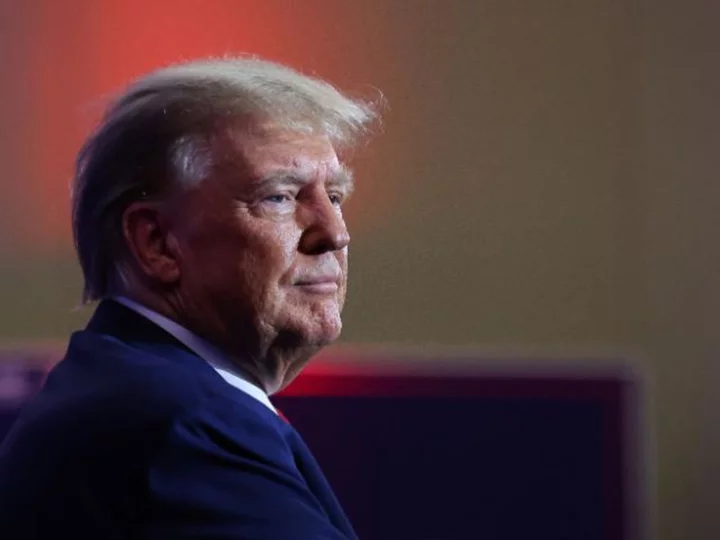
Trump team creating legal defense fund
Former President Donald Trump's team is creating a legal defense fund to help offset some of the enormous bills incurred as his legal troubles mount, two sources familiar with the planning told CNN.
2023-07-31 08:17

Internet in splits as 'Family Guy' takes a dig at Prince Harry and Meghan Markle over their multi-million dollar Netflix deal
In a recent episode, 'Family Guy' alluded to the $100 million Netflix deal that Prince Harry and Meghan Markle secured in 2020
2023-10-25 17:17
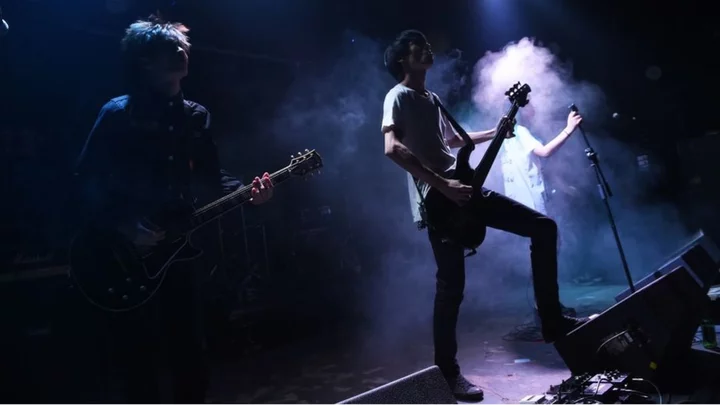
Beijing's comedy crackdown is hitting its music scene
The crackdown on stand-up comedy unleashed by a joke is now hurting Beijing's vibrant live music scene.
2023-06-03 07:18
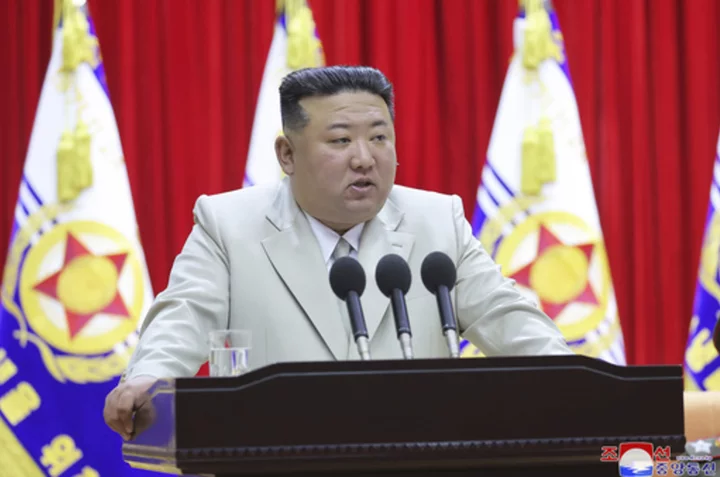
North Korea launches ballistic missiles toward the sea after US flies bomber during drills
South Korea says North Korea has launched two short-range ballistic missiles toward the North’s eastern waters
2023-08-31 00:19
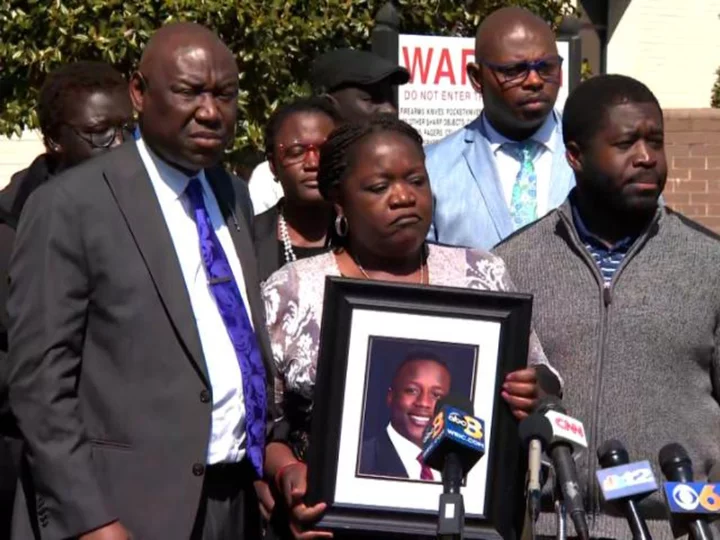
The family of Irvo Otieno is requesting a federal investigation into his death at a Virginia mental health facility
The family of Irvo Otieno -- who died in March while being admitted to a Virginia mental health facility -- is asking the Department of Justice for a federal investigation into his death, their attorneys announced Wednesday.
2023-06-29 16:53

Get a VPN that helps protect your IoT devices for life for $199
TL;DR: As of October 1, get the Deeper Connect Mini decentralized VPN for only $198.99
2023-10-01 17:19
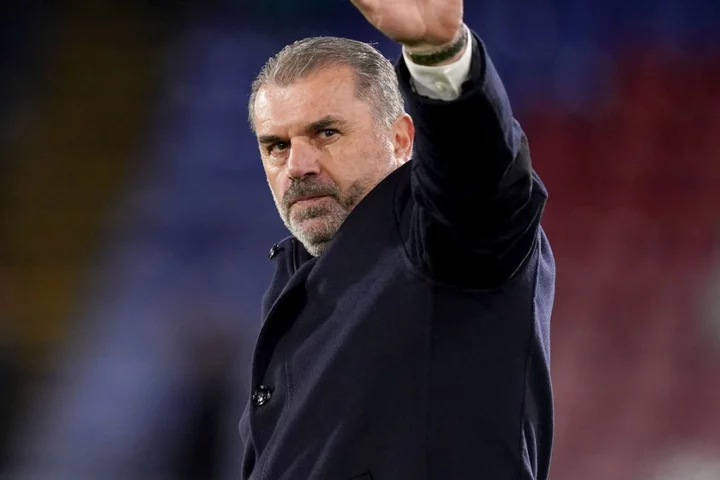
Ange Postecoglou pleased Premier League leaders Tottenham pass latest exam
Ange Postecoglou was pleased Premier League leaders Tottenham passed their latest exam with a hard-fought 2-1 win at Crystal Palace and was in no mood to stop fans dreaming of a title challenge. Spurs moved five points clear at the summit after they recovered from a sluggish first half at Selhurst Park to score twice in 13 second-half minutes. An own-goal from Joel Ward broke the deadlock in the 53rd minute when he deflected James Maddison’s cross beyond Palace goalkeeper Sam Johnstone and it was 2-0 soon after when Tottenham captain Son Heung-min steered home after Brennan Johnson’s assist. Jordan Ayew reduced the deficit for Palace in the fourth minute of stoppage-time, but Spurs held on to extend their unbeaten top-flight run to 10 matches and move five clear of Manchester City and Arsenal, who play Manchester United and Sheffield United respectively across the weekend. “Let them dream. That’s what being a football supporter is all about. It’s fair to say this lot have suffered a fair bit, so I’m certainly not going to dampen that,” Postecoglou said. “Top of the table is great and the results are great but it’s more in the manner we’re doing it. Pretty much from the first game we’ve had all sorts of different challenges we’ve had to overcome. “Every time there has been a real focus and clear-headedness about the group collectively to deal with that. We prep them for their exam at the weekend, but we don't know what the questions are going to be. They've got to work them out themselves Ange Postecoglou “That has been a really pleasing thing and because they’re getting rewards from that, then that gives us the opportunity to accelerate the growth of giving them more tools out there to help them for whatever we need to overcome. “I thought tonight was going to be a real difficult game for us. Coming here, Palace’s result last week, it’s a tight ground, they’d only conceded three goals in the four games so far and how were the lads going to cope with the fact we weren’t going to create as many chances as we had been? “I really liked the way we worked through that as a group.” After returning to the Premier League summit with a 2-0 win over Fulham on Monday, Spurs struggled in the first half at Selhurst Park and were indebted to fine early saves from Guglielmo Vicario to deny Ayew and Odsonne Edouard. Postecoglou, who had lambasted his side for their second-half showing earlier in the week, introduced Emerson Royal for Ben Davies at the break and watched Ward put into his own net from Maddison’s cross to open the scoring. It was 2-0 when Son fired home for his eighth goal of the campaign following Johnson’s smart pass, his first assist since a £45million deadline-day transfer from Nottingham Forest. While Ayew managed to reduce the deficit – in the fourth minute of stoppage time after a lengthy VAR check – Tottenham stood firm to claim a fourth-straight win and show another side with a dogged defensively display, despite enjoying more than 70 per cent possession. Postecoglou added: “I have always felt that matchdays are about the players. What we try to do on a daily basis is give them the tools to find the solutions. “We prep them for their exam at the weekend, but we don’t know what the questions are going to be. They’ve got to work them out themselves. “In an exam you are not asking anybody for help. You have to work it out yourself and hopefully what we’ve given them is the tools.” Palace boss Roy Hodgson was disappointed to suffer a second-consecutive defeat and admitted his substitutes weakened his team. “I thought it was an aggressive and quite-controlled first half from our side, but of course the first goal then produces a second,” he said. “That is when we start putting players on the field, players who have not really played with the first team, Jes (Rak-Sakyi), (Naouirou) Ahamada, (Matheus) Franca and we lost the intensity we were able to do in the first half. “In the end it became easy for them (Tottenham) to see the game through.” Read More Kyle Walker says Manchester City will be wary of Marcus Rashford in derby Wolves v Chelsea on Christmas Eve means ‘unhappy wife’ for Mauricio Pochettino Tyson Fury: Ngannou fight like Djokovic facing table tennis player at Wimbledon Matthew Mott wary of ‘raging favourites’ as England look to avoid further shame Pep Guardiola condemns Man City fans who sang offensive Sir Bobby Charlton chant Mikel Arteta calls for increased squad sizes as Arsenal suffer fresh injury blow
2023-10-28 07:23

MGM Resorts reaches labor deal with Las Vegas unions, averts strike
The unions representing hospitality workers in Las Vegas on Thursday reached a tentative deal with MGM Resorts International
2023-11-09 22:19
You Might Like...
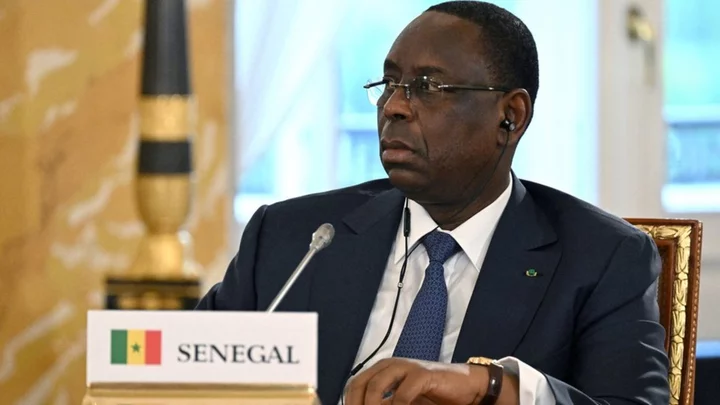
Senegal President Macky Sall says he won't run for third term
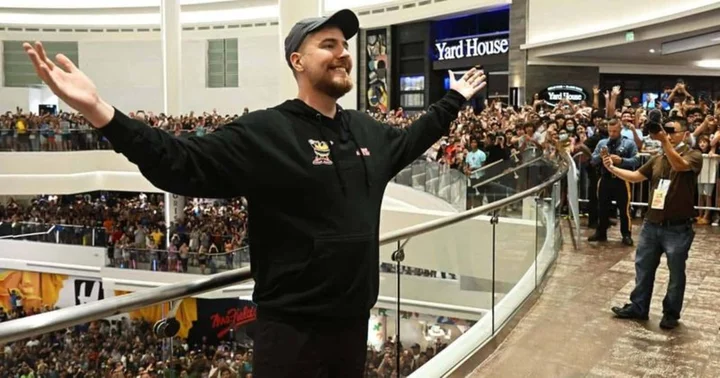
MrBeast cries over 'getting taller' in his 20s, trolls say he 'paid nurse who measured him'

SimScale Announces A.I. Based Physics Simulation Launch
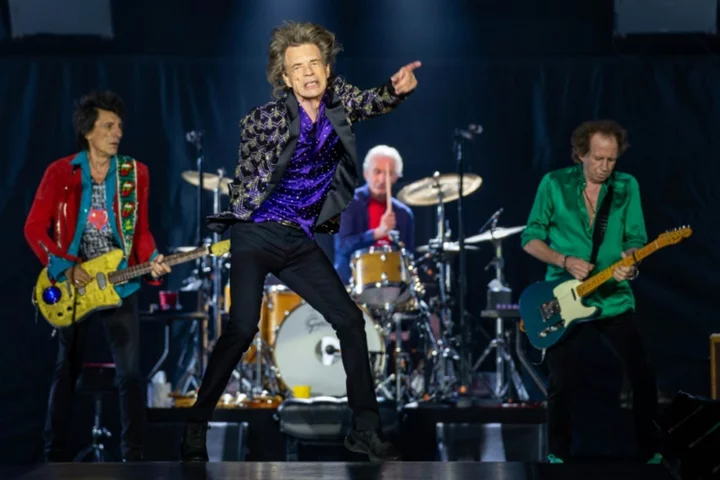
Greatest rock'n'roll showman Mick Jagger turns 80

Blinken urges Israel-Saudi normalization
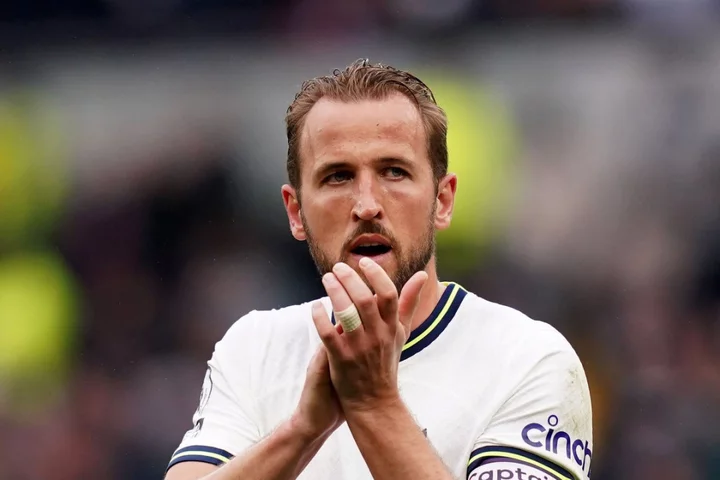
Football rumours: Real Madrid offered chance to sign Harry Kane
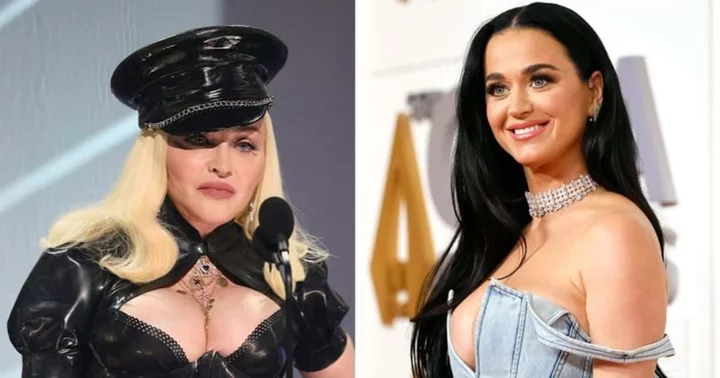
Madonna was allegedly working with Katy Perry just hours before being rushed to ICU, claims source

Is Jaxon Smith-Njigba playing today? Latest Week 1 injury updates for Seahawks vs. Rams