
Kristen Welker confirms Laura Jarrett as her replacement on 'Today', disappointed fans say 'you'll be missed'
‘Today’ show recently announced a major change for its weekend coverage which has left fans disappointed
2023-08-11 12:28
Louisiana lawmakers pressed to resurrect bill banning gender-affirming care for minors
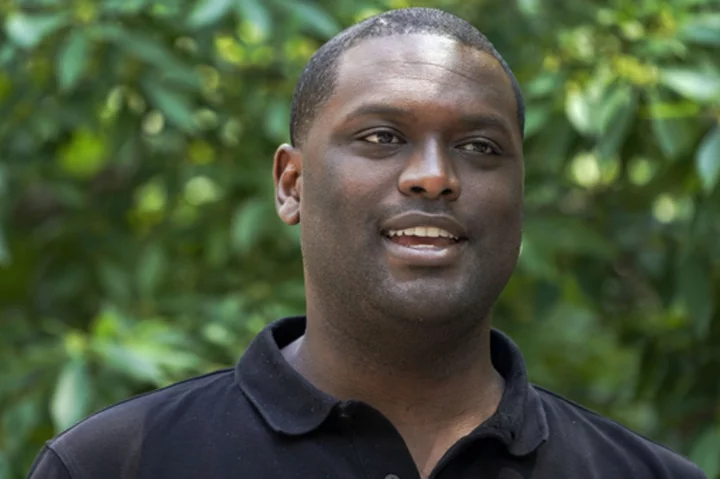
A longtime Republican lawmaker, in rural Louisiana, is facing national backlash following his tie-breaking vote to kill a bill that would ban gender-affirming medical care for transgender youths in the state. State Sen. Fred Mills told The Associated Press Friday that he stands by his decision. But state Attorney General Jeff Landry — who is a GOP gubernatorial candidate — and the Republican Party of Louisiana are pressing lawmakers to resurrect the bill and pass it. Mills’ decisive vote Wednesday poises Louisiana to be one of the few southeastern states that hasn’t enacted a ban or restrictions on gender-affirming care. Proposals are pending in North Carolina and South Carolina’s legislatures, and federal judges have temporarily blocked bans in Arkansas and Alabama. “While the topic of transgender rights is immensely complicated and socially polarizing, the bill before me was not,” Mills, a pharmacist, said in a written statement Friday. Mills is also the chairman of the Senate’s Health and Welfare Committee, where the bill was debated for nearly three hours. He added that he relied on “science and data and not political or societal pressure.” With Mills’ vote, the bill — which would have prohibited hormone treatments, gender-affirming surgery and puberty-blocking drugs for transgender minors in Louisiana — was deferred, 5-4. In the hours after, backlash mounted with anti-transgender activists taking to social media, including conservative political commentator Matt Walsh, who tweeted to his nearly 2 million followers that Mills would “regret” his decision and that it is “the biggest mistake of his political career.” In recent years, Republicans who blocked proposed transgender care bans have faced political fallout. In Arkansas, former Gov. Asa Hutchinson angered fellow Republicans in 2021 when he vetoed a similar ban. The GOP-led Legislature moved quickly to override Hutchinson’s veto and enact the ban, which has been temporarily blocked by a federal judge. At the time, former President Donald Trump criticized Hutchinson over the veto, calling him a “RINO,” or “Republican in Name Only.” Hutchinson, who signed into law other restrictions on transgender youth, argued the medical ban went too far. The Republican said he would have supported a prohibition that focused only on surgery. The deferral of Louisiana’s proposed ban marked a rare victory for LGBTQ+ advocates this legislative session, who continue to fight against multiple bills — from a bill critics call “Don’t Say Gay," to mandates regarding pronoun usage, to restrictions on access to library books deemed “sexually explicit,” which advocates fear would target the queer community. But, with two weeks left in the session, conservatives are hastily seeking and pursing ways to revive the legislation. “I don’t think you are going to see the last of it,” Mills said Friday. Already, House lawmakers added a poison pill amendment to Mills’ own bill — related to telehealth — that would bar that legislation from becoming law unless the ban on gender-affirming care also becomes law. Additionally, lawmakers can opt to discharge the failed bill from committee, meaning it can receive a vote on the GOP-controlled Senate floor despite failing in committee. This tactic is uncommon and rarely succeeds, but there is growing pressure from political forces outside of the Legislature to do so. “As attorney general for 8 years I have worked hard to protect our children. I urge the full Senate to take up and pass HB 648,” Landry tweeted Friday. “As governor, I would immediately sign this bill into law. Pediatric sex changes should have no place in our society.” In a press release, the Republican Party of Louisiana also urged the Senate to override the committee vote and debate it on the floor “where all senators will have the chance to weigh in on this pivotal piece of legislation.” The bill had already been passed in the House, mainly along party lines, 71-24. Proponents of the legislation argue the proposed bans would protect children from life-altering medical procedures until they are “mature enough” to make such serious decisions. Additionally, they fear the state could draw minors from surrounding states — where there are bans — seeking gender-affirming health care. Opponents of Louisiana’s bill argue that gender-affirming care, which is supported by every major medical organization, can be lifesaving for someone with gender dysphoria — distress over gender identity that doesn’t match a person’s assigned sex. Research suggests transgender children and adults are prone to stress, depression and suicidal thoughts, and advocates for the LGBTQ+ community fear that without the care, transgender children could face especially heightened risks. So far, at least 18 states have enacted laws restricting or prohibiting gender-affirming care for minors, and all three of Louisiana’s bordering states have enacted bans or are poised to. —— Associated Press writer Andrew DeMillo in Little Rock, Arkansas, contributed to this report. Read More Ukraine war’s heaviest fight rages in east - follow live Charity boss speaks out over ‘traumatic’ encounter with royal aide New York City mayor signs ban on weight and height discrimination Phoenix faces dueling lawsuits over homeless crisis as advocates scramble for more shelter Oregon, awash in treatment funds after decriminalizing drugs, now must follow the money
2023-05-27 04:57
Three things we learned from the first Ashes Test
Australia's dramatic two-wicket in the first Test at Edgbaston on Tuesday ensured a hugely-anticipated Ashes series got off to a thrilling start as skipper Pat Cummins and Nathan Lyon's unbroken stand...
2023-06-21 06:58
Who is Bella Hadid dating? Model spotted kissing Texan cowboy just four months after split from Marc Kalman
Bella Hadid was seen kissing, holding hands, and hugging Texan cowboy Adan Banuelos as they strolled the historic Fort Worth stockyards on Oct 17
2023-10-18 18:58
Marketmind: Fresh lira low, focus on Fed
A look at the day ahead in European and global markets from Kevin Buckland Another day, another market-positive appointment from
2023-06-09 12:59
What are depleted uranium munitions being used in Ukraine and why are they controversial?
The depleted uranium anti-tank rounds soon to be in Ukraine’s military stockpiles have kicked up a debate over its use in the continuing Russian invasion. Announced by the Pentagon in the latest military tranche on Wednesday, the controversial rounds have spread alarm among Vladimir Putin’s ministers who have warned against the escalation yet again. Britain has already promised armour-piercing rounds containing depleted uranium to Ukraine in March. Prime minister Rishi Sunak had backed drawing out the rounds from the UK military’s stockpiles ultimately “to degrade and deter – primarily – Russian aggression”. But what are these depleted uranium munitions? The 120mm anti-tank shells made of depleted uranium are self-sharpening and flammable penetrator in munitions. They are made of naturally occurring Uranium which has been stripped of mostly – not all – of its radioactive matter. So while it is not a nuclear weapon in itself, it acts as a fuel and also as a great explosive that can be used in tank armour, pressed between sheets of steel armour plate. They can be paired with top-tier tanks Western nations have already provided to Ukraine, and are particularly expected to boost the performance of 31 M1A1 Abram tanks set to be sent to the war-hit nation this fall. These rounds first emerged in the 1970s when the US army started making the armour-piercing rounds and has since used it along with tank armour to multiply the firing effect. Incredibly dense, more than lead, depleted uranium is considered a top-tier choice for projectiles. When fired, it becomes “essentially an exotic metal dart fired at an extraordinarily high speed”, RAND senior defence analyst Scott Boston said. “It’s so dense and it’s got so much momentum that it just keeps going through the armour – and it heats it up so much that it catches on fire,” Edward Geist, a nuclear expert at research organisation RAND said. The depleted uranium has also been added to the US ammunition fired by the Air Force’s A-10 close air support attack plane, known as the tank killer. Depleted uranium munitions, as well as depleted uranium-enhanced armour, have been previously used by US tanks in the 1991 Gulf War against Iraq’s T-72 tanks and again in the invasion of Iraq in 2003, as well as in Serbia and in Kosovo. Is the risk alarming? The UN nuclear watchdog has warned of the emissions of low levels of radiation from depleted uranium when handling and also warned of possible dangers of explosion. This is a bug, not a feature of the munition, says Mr Geist. Categorically, depleted uranium is not marked as a nuclear weapon. It is mainly a toxic chemical, as opposed to a radiation hazard. Particles in aerosols can be inhaled or ingested, and while most would be excreted again, some can enter the bloodstream and cause kidney damage. “High concentrations in the kidney can cause damage and, in extreme cases, renal failure,” the International Atomic Energy Agency has said. The US troops have questioned whether some of the ailments they now face were caused by inhaling or being exposed to fragments after a munition was fired or their tanks were struck, damaging uranium-enhanced armour. Experts have said that if the US military could find another material with the same density but without the radioactivity, it would likely switch. The IAEA has warned that handling of depleted uranium “should be kept to a minimum and protective apparel (gloves) should be worn” and “a public information campaign may, therefore, be required to ensure that people avoid handling the projectiles”. Initial signs of radioactivity from the Ukraine war have started trickling in. Russian foreign ministry spokesperson Maria Zakharova had recently claimed that the use of these munitions has already led to radioactive contamination. How has Russia reacted? In March, Russia was fuming after the Rishi Sunak administration announced it will give depleted uranium rounds to Ukraine, prompting them to issue nuclear threats. This time, after the US joined Britain in sending the depleted uranium shells, Moscow snapped and called the latest military aid of depleted uranium a “criminal act” beyond just escalation. “It is a reflection of Washington’s outrageous disregard for the environmental consequences of using this kind of ammunition in a combat zone. This is, in fact, a criminal act, I cannot give any other assessment,” Russian deputy foreign minister Sergei Ryabkov said. He also reiterated previous warnings by Russia about the risk of a nuclear war, because of what he called Western “pressure” on Moscow. “Now this pressure is dangerously balancing on the brink of direct armed conflict between nuclear powers,” he said. In March, Vladimir Putin had warned that Moscow would "respond accordingly, given that the collective West is starting to use weapons with a ‘nuclear component.’” Several days later, Putin said Russia’s response will see Moscow stationing tactical nuclear weapons in neighbouring Belarus, action to which effect was announced in July as Putin and the Belarusian president said they had already shipped some of the weapons. Read More The Body in the Woods | An Independent TV Original Documentary The harrowing discovery at centre of The Independent’s new documentary US sends Ukraine controversial depleted uranium weapons that can pierce tank armour UN nuclear watchdog report seen by AP says Iran slows its enrichment of near-weapons-grade uranium Ukraine Russia war: Izmail port under attack as Kyiv drones downed near Moscow
2023-09-07 18:16
Trump ballot disqualification trial opens in Colorado
By Jack Queen (Reuters) -A trial began on Monday in Colorado to determine whether former U.S. President Donald Trump is
2023-10-30 23:28
Sebastian Stan's four-hour meeting with Ric Flair creates buzz that he will star in ex-wrestler's biopic
Sebastian Stan had earlier said that he 'would do that in a second' two years ago
2023-05-23 21:20
‘They called me a witch’: When Winona Ryder revealed she was bullied at school after starring in ‘Beetlejuice’
Winona Ryder said she never had an 'icon status' at her school even after starring in movies like Beetlejuice
2023-05-20 10:50
Jennifer Garner celebrates 'farm life' harvesting vegetables as fans cheer on 'grounded' actress
The actress recently traded in her red-carpet gown for gloves, boots, and a simple blue striped dungarees to toil on her family farm
2023-05-24 17:49
Judge enters not guilty pleas on behalf of Bryan Kohberger, charged in Idaho student murders
An Idaho judge entered not guilty pleas on behalf of Bryan Kohberger, the man accused of killing four University of Idaho students last fall, during an arraignment in a Latah County Court on Monday.
2023-05-23 02:51
Leader of Spain's conservatives faces slim chances of winning Parliament approval for his government
The leader of Spain’s conservatives is trying to win the endorsement of the nation’s Parliament to form a new government
2023-09-26 18:53
You Might Like...
German government wants ex-minister to foot $267 million bill for a failed highway toll plan
Biden disappointed Xi will not attend G20 summit
Secret Service agents protecting Biden's granddaughter open fire when 3 people try to break into SUV
Bride shares wedding horror story as brother turns up in ‘disrespectful’ pirate costume
Workers at ZF plant in Alabama ratify labor deal, end strike
Gigabyte B760M Gaming X AX DDR4 Review
The Frantic Push to Solve Sovereign Debt Crises Irks Wall Street
Some Iowa voters shift favorites after GOP debate, while Ramaswamy stokes a divide