
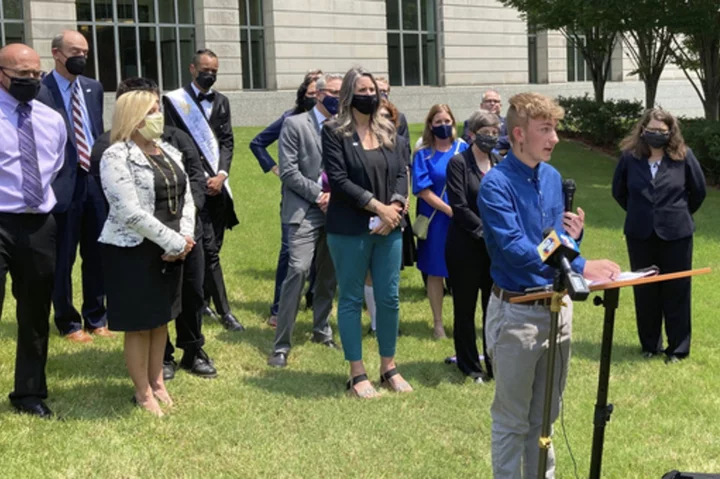
Judge rules Arkansas ban on gender-affirming care for transgender minors violates US Constitution
A federal judge has struck down Arkansas’ ban on gender-affirming care for minors
2023-06-21 10:56

General Mills forecasts dour profit as price hikes slow demand
General Mills on Wednesday forecast full-year profit that came in largely below analysts' estimates as the Cheerios cereal
2023-06-28 19:18
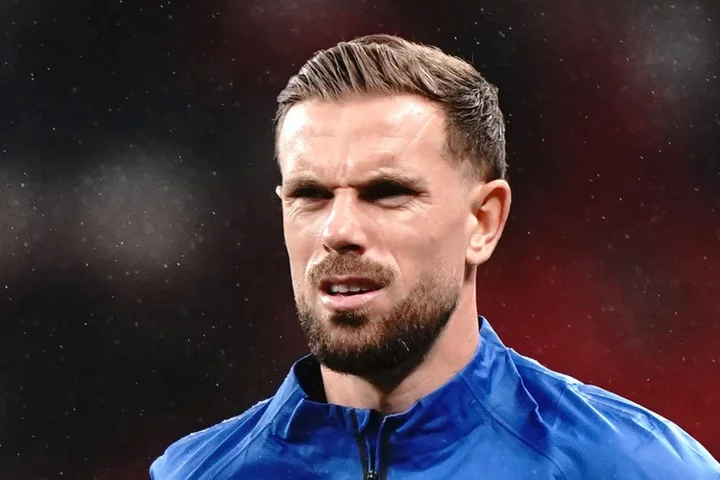
Jordan Henderson to play for England ‘as long as I possibly can’ despite boos
Jordan Henderson insists he will not walk away from international football despite being booed off the Wembley pitch by England fans on Friday night. Eyebrows were raised when Henderson swapped his role as Liverpool skipper for the Saudi Pro League, joining Steven Gerrard’s Al-Ettifaq in a controversial £12million deal. The midfielder had been a high-profile supporter of LGBTQ+ rights during his time at Anfield and last month apologised for any hurt he caused by moving to a country where homosexuality is illegal. There was no noticeable negative reaction towards him during September’s double-header against Ukraine and Scotland, but things were different when he captained England in their first home match since his controversial move. There were murmurs when Henderson’s named was read out before the 1-0 friendly win against Australia but a vocal minority very audibly jeered when he was replaced in the second half. “It’s not nice, your own fans (booing),” he said. “Everybody has got their own opinion. I love playing for England, I have done for many years, that’s why I’m still here. “I still want to play for England for as long as I possibly can and give everything for the team, for my country. “To lead the team out meant an awful lot to me and my family. Another special night and we got the win which is the most important thing. “But listen, people have got their own opinions. Whenever I bump into anyone on the street it’s always been positive stuff and nice things said. “It won’t change who I am and what I do for this team and for my country. I give absolutely everything every time.” England manager Gareth Southgate questioned those supporters who decided to boo his vice-captain, with Henderson admitting he was also unsure why – even if he accepted he would face criticism for his move to Saudi. Asked if he understood the jeers, the 33-year-old replied: “Not really. I don’t know… if people want to boo if I’m playing in a different country, that’s fine. “Like I said, everyone is going to have an opinion over when I’m playing over in Saudi. “I’ve spoken in the past about the reasons for that. Whether people believe us or not is up to them. “Of course it’s disappointing, but it won’t change what I do here. I want to keep playing and keep fighting and help the team become successful. “I haven’t been surprised by that because I can understand the reasons in what they’re saying. I look at it from a different point of view, obviously. “But I can understand it and I’ve got to take that on the chin.” Asked about Southgate’s public support and continued selection, the former Sunderland youngster added: “Yes, the gaffer has been really good as always. It's nice to know that you've got the backing of the manager and your team-mates Jordan Henderson “I’ve always felt support and backing from him and the rest of the lads. “It’s nice to know that you’ve got the backing of the manager and your team-mates but that’s never been in doubt for me. That’s always been the case.” Henderson may have switched Merseyside for the Middle East but he feels enough at home to have already backed Saudi Arabia’s bid to host the 2034 World Cup. The country abandoned a 2030 joint-bid with Greece and Egypt and announced their solo pitch on October 4 – with Henderson involved in the promotional video. “By that time I think they will put on a pretty good World Cup, to be honest,” Henderson said about taking part in the bid. “So I think that’s exciting times for them as a country and I think it will be a special tournament if they ended up getting it. “I’ve been there for two months and there’s been no issues in terms of fans or anything like that. “It is a long waiting time from now, but I think they’ll enjoy the experience there. “When we look at Qatar, the way that they did the job there, it was a good tournament; I think the fans enjoyed the tournament and I think Saudi would be no different.” Read More Wales defeat Croatia to boost Euro 2024 qualification hopes Steve Borthwick hails ‘written off’ England after reaching World Cup semi-final Stephen Kenny puts speculation to one side for Gibraltar clash Jos Buttler tells England to ‘let it hurt’ after World Cup loss to Afghanistan Baltimore boss John Harbaugh thrilled to end ‘heck of a week’ in London on high Talking Points as Republic of Ireland seek win against minnows Gibraltar
2023-10-16 06:20

New Jersey lawmakers eye tax break for offshore wind developer Orsted
New Jersey lawmakers are considering letting Danish offshore wind developer Orsted keep tax credits that it otherwise would have to return to ratepayers
2023-06-28 08:59
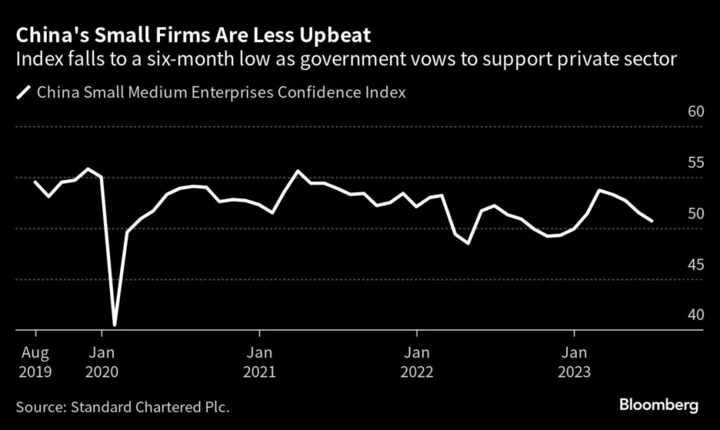
China Early Economic Data Show Growth Weakening More in July
China’s economic recovery continued to lose momentum in July, high frequency indicators show, with consumers pulling back on
2023-07-28 13:23

Dillon Danis trolls Logan Paul for making unique record in combat sports, internet says 'cry somewhere else'
Dillon Danis took to X to troll Logan Paul as the MMA fighter received a restraining order
2023-09-23 13:57

Noah Schnapp seen promoting 'Hamas is Isis' message in video
Actor Noah Schnapp has been seen promoting 'Hamas is Isis' and 'Zionism is sexy' stickers. Schnapp, who is Jewish, posted a statement to Instagram back in October saying he was "afraid" after the attacks by Hamas. Writing "you either stand with Israel or you stand with terrorism". On October 7 Hamas carried out an attack where they entered Israeli territory from the Gaza Strip, killing more than 1,400 people. Since then Israel have launched out a counter military campaign, with Palestinian officials saying more than 10,000 people have been killed in Gaza. As a result, waves of 'Free Palestine' marches have occurred worldwide. Zionism is defined by Cambridge Dictionary as "a political movement that had as its original aim the creation of a country for Jewish people, and that now supports the state of Israel". Schnapp was tagged in what appears to be an Instagram story whilst he and his friends hold up the stickers smiling and laughing in a restaurant. Many on Twitter/X have been sharing the video with their views. With some saying his blatant sharing of views contradicts with his claim of being afraid. Others compared Palestinian-American model Bella Hadid losing jobs for supporting Palestine whilst Schnapp and other Israel supporters such as Amy Schumer, do not. Many also called on the boycotting of season 5 of Stranger Things, the show where Schnapp made his name: Sign up to our free Indy100 weekly newsletter Have your say in our news democracy. Click the upvote icon at the top of the page to help raise this article through the indy100 rankings. How to join the indy100's free WhatsApp channel
2023-11-14 01:15

Athlete who ran over 200km through the desert shares advice for running in a heatwave
We’ve been hit with a September heatwave and, for runners – whether beginner or seasoned – it means added concerns around dehydration, chafing and generally keeping safe in the heat. Ultramarathon runner Leon Bustin, 36, completed a 220km run through the Wadi Rum desert in Jordan in October 2022, so he knows a thing or two about dealing with hot weather while exercising. Here is the athlete’s advice for heatwave running right now. Be sun safe “Covering your skin to avoid too much direct sunlight will really help,” says Bustin, who is also a content creator for Lean Machines and a personal trainer. “I highly recommend using a good zinc stick under the eyes and across the nose as well. “I used a bright purple one in the desert to remind me of my daughter and also to show very clearly if there was a part I’d missed. [Use] a higher factor than you think you need.” Hydration starts before a run “Working on your hydration starts before you take a single step out of the door,” he says. “I even start my day with an electrolyte-rich glass of water as we even become dehydrated in our sleep. “So having a good 500ml of electrolyte-rich water pre-run will really help, then as a good basic guideline take a further 500ml for each hour you are out. “The important thing is adding the electrolytes to the water. If we over-consume [pure water] we may dilute and flush out essential electrolytes and trace minerals as we pee.” Cool bare skin “Try cooling the glabrous – or none hairy- areas, it really helps flush heat out of your body fast,” says Bustin. “Those areas include the palms of your hands, under eyes, ears and soles of your feet. “Every time l arrived at an aid station in the desert l would hand over my water bottles to be refilled and plunge my hands straight into a bucket of coldish water, splash my face then keep the hands there for a good 30 to 40 seconds.” For those of us without air stations, Bustin suggests wetting exposed skin with water from a bottle. Pop a flannel in the freezer before going on a run and run it across your skin afterwards, or midway. “The key to keeping cool on a run is managing your core temperature because if that rises too much, put simply, it will be the end of your race,” he adds. Breath correctly “Breathing right for you is really important to get nailed down regardless of the running conditions, but especially in the heat as we don’t want to put any unnecessary extra stress on our bodies – because it will just cost more energy,” says Bustin. “We all tend to over-breathe through our mouth so simply focusing more of our inward breaths to be through the nose will help more than you think and over time both bring down and regulate your average heart rate greatly.” Be careful of the chafe Chafing can put you off pretty early in your running journey, and in the heat, where shorts can leave thighs rubbing together and slick with sweat, it’s a run-ruiner. “Anti-chafe cream is your best friend in the key areas (between the thighs and under the arms),” says Bustin, “but also if you get lots of toe blisters like me. “I put a generous dose between my toes of a good oil-based anti-chafe or even just some good old Sudocrem to keep those toes gliding. The right cream for you will take trial and error and is also combined with wearing the right run kit for you as well.” Read More Charity boss speaks out over ‘traumatic’ encounter with royal aide Ukraine war’s heaviest fight rages in east - follow live Women being invited to help shape the future of reproductive healthcare – from period pain to menopause How to style your home like a professional One in 10 ‘spending beyond their means’ – try these 7 cutbacks guaranteed to save families money
2023-09-07 19:22
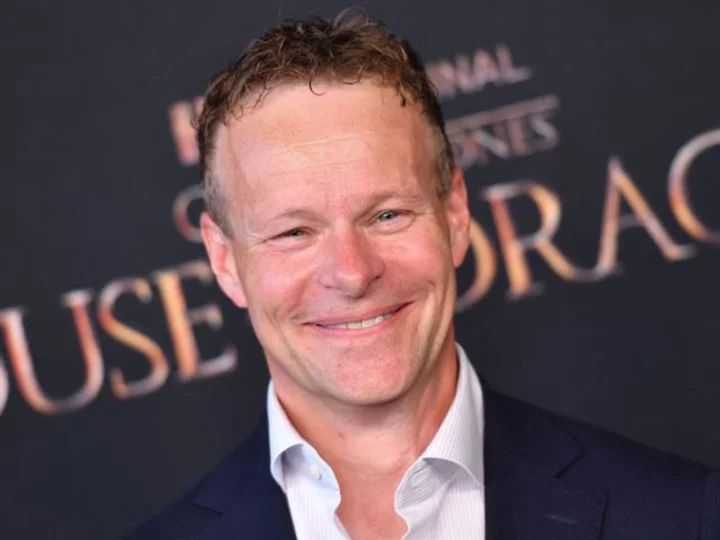
Embattled CNN chief apologizes to staff after embarrassing profile, vows to 'fight like hell' to win back trust
Chris Licht started CNN's daily network editorial meeting on Monday by directly addressing the elephant in the room.
2023-06-06 11:53

RBA to hold rates at 4.10% on Tuesday, but will hike again next quarter
By Devayani Sathyan BENGALURU (Reuters) -The Reserve Bank of Australia will keep its key interest rate unchanged at 4.10% on
2023-09-04 08:22
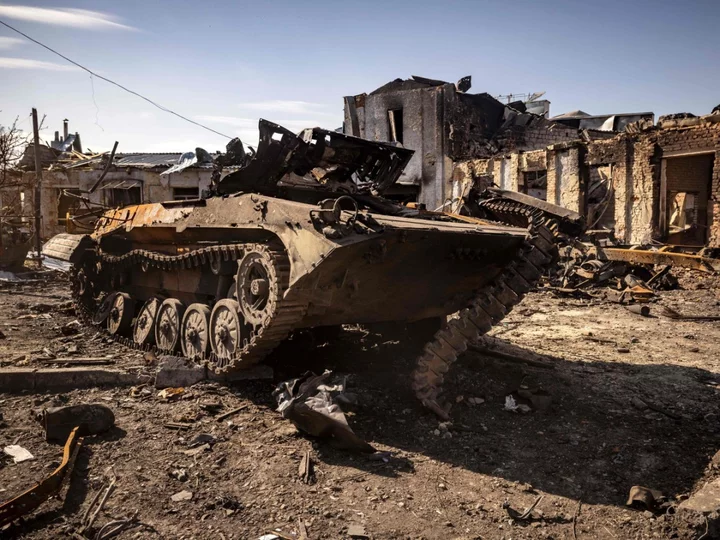
20 miles from the Russian border, one town struggles to move on from bloody occupation by Putin’s forces
Nobody believed the Russians would really invade, says Yuriy Bova, mayor of the small Ukrainian town of Trostyanets, just 20 miles from the Russian border – but 24 February 2022 will forever be etched in his mind. As Russian tanks trundled across the border in the early hours of the morning, there were no Ukrainian troops in Trostyanets – in Ukraine’s eastern Sumy region – and the residents of the town knew the enemy would arrive within hours. Bova says they tried as best they could to slow down the Russian advance. Felling trees onto the roads through the rolling hills and forests surrounding Trostyanets, brought one column of invading vehicles to a halt for two days. However, it wasn't enough. “There weren’t just four or five armoured vehicles, as we had imagined. Instead, there was another column with more than 100 vehicles, including up to 60 tanks and armoured personnel carriers, 20 troop-carrying trucks plus fuel tankers,” Bova says. The Russians rumbled into Trostyanets on the first day of the invasion, beginning a nightmare for the town’s 21,000 inhabitants. I'd heard about the plight of the town a month later, on 27 March – when it was freed from Russian occupation. In the intervening weeks, much of the town was destroyed, 49 of its people were killed and 13 others believed “disappeared” by the occupiers. I was in another area of Ukraine – and knew nobody in Trostyanets – but started to dial numbers I could find. The first person to answer was on a number for the “Hotel Trostyanets". The woman who answered, Tetyana Shevchenko, the hotel’s owner had just returned to her town. I could hear her trying to muffle her sobbing as she told me about how the hotel had been utterly trashed. Everything that could be stolen, such as TVs, fridges and air-conditioners, had been looted, while beds, furniture, even doors had been smashed. However, even while absorbing the destruction at the business she and her husband spent years building, Tetyana said she felt lucky compared to others whose relatives had been killed or homes had been reduced to piles of charred rubble. Such a refusal to surrender to despair is a trait that was to become ever more apparent across Ukraine. I finally managed to visit Trostyanets recently, more than 15 months into a war Moscow appeared sure would only last weeks. Hotel Trostyanets was easy to find on the town’s main street, standing intact as part of a row of burned and battered husks of buildings. The town, founded in 1660, contains onion-domed churches and a fortress enclosed by a stone white-painted wall, built in the mid-18th century. During the occupation, the Russians positioned heavy artillery inside, calculating – correctly – that Ukrainian forces would not target a structure listed as a historic treasure. The building was unscathed by Ukrainian shelling but its walls are peppered with bullet holes from machine-gun fire in a bile-filled farewell by the fleeing Russians. Every street bears some scars. The railway station and shops, restaurants and residential buildings that had fringed a large square and park are a scene of total devastation, with most of the structures blasted beyond redemption. The park is a churned-up mixture of tarmac and soil. Eerily perched at its centre, atop a high concrete pedestal, is a Second World War-era Soviet T-34 tank. One of its treads, hit by shellfire, trails limply. When the Russians arrived, they commandeered the hotel and kicked Tetyana out. She said they immediately set out to inspire terror in the town, whose people were often beaten or detained, without rhyme or reason. Many men were forced to strip at gunpoint and stand on the street throughout freezing nights, she says. “They intimidated people, looted shops. Soon they started rounding people up for torture. They used the basement at our railway station as a torture chamber, where they did whatever they wanted,” Tetyana adds. “They understood that we were frightened of them and they behaved even more arrogantly, they enjoyed it.” Two of her friends, a married couple, were riding bikes when the Russians shot at them without warning, says Tetyana. The woman died but the Russians “wouldn’t let her body be moved for burial and she lay there until the Russians left”. Tetyana is active in local politics and was head of the local election commission. She feared the Russians would eventually come for her and she and her daughter managed to leave in mid-March to western Ukraine. Both their husbands had previously left and were in the Ukrainian military. Tetyana and her husband started repairing their hotel as soon as the Russians left, using their savings – as well as help from the local authorities. She gives a wry smile as she shows a photo of the door of room number six, where a Russian scrawl indicates a Russian commander had stayed. The door will be part of a planned museum about the town’s occupation. The situation on the battlefield is now somewhat different. Ukraine has been pushing a counteroffensive to take other territory occupied by Russia in the south and east, and the border area not far from Trostyanets has become the centre of cross-border incursions by pro-Ukrainian forces. The bulk of these have been carried out by Russian partisans seeking to cause trouble for president Vladimir Putin. The Russian Belograd region, between two and three hours’ drive from Trostyanets into Russian territory, has faced shelling, as well as the raids. But Trostyanets had seen its own version of guerrilla activity during the Russian occupation. The mayor, Bova, relays how it worked. A powerfully-built compact man, Bova was born in Trostyanets and was formerly a businessman. He was first elected as a councillor when he was 24 and has been the town’s mayor for 18 years. British and American intelligence had warned the Ukrainian government that the Russians had prepared detailed lists of people in government, military, police, education, social activists, businesspeople and others they suspected would help organise resistance and who were marked for arrest or execution. Bova says: “I had to decide whether to stay in my office and wait to be arrested and taken away or perhaps killed. That would have been madness. Weapons were in short supply – we had just four machine guns. So we couldn’t fight with that.” He and his comrades established contact with the Ukrainian 81st Brigade operating in the area and they asked his people to provide intelligence on what was going on inside Trostyanets. “They said that would be much more valuable than any fight we could have put up at that time,” says Bova, who became commander of Trostyanets’s territorial volunteer forces. Some of the Ukrainian partisans stayed inside the town while Bova and others operated from bases in forests close to Trostyanets, gathering detailed information about the Russian forces – including where they ate and slept and where their heavy weapons and armoured vehicles were at any time. They also helped guide Ukrainian artillery firing at Russian positions. Ukrainian intelligence believes one of the first of the many Russian generals to be killed during this invasion died in Trostyanets. Bova secretly visited the town twice to show the partisans he was close by and boost morale. On 21 March last year, they and Ukrainian regular forces launched an attack on the occupying forces in an attempt to liberate the town. But after a fierce firefight they had to withdraw. Bova says quite a few Russians were killed but so was one of the partisans. However, Ukrainian forces were encroaching on the town and the demoralised Russians, fearing being surrounded, fled on the night of 27 March across the border into Russia. Bova speaks to me inside his office at the town’s main administration building which, he says, like other public and community buildings in the town, had been looted and wrecked by the Russians. “The Russians smashed and destroyed everything. Three days before they left they fired some 30 tank shells into our main hospital... They also deliberately destroyed residential buildings. It was pure malice.” Bova suspects the 13 “disappeared” people were among those tortured beneath the railway station. Two prisoners were found alive in the basements as the Russians fled. They told of victims who bled to death after their fingers were cut off. Anguish flickers across Bova’s face as he recalls how the first thing the torturers demanded while beating their captives was his whereabouts. Since the town was liberated, Bova says he has worked tirelessly to rebuild Trostyanets. Electricity, water and heating systems were destroyed or ripped out. The town’s firefighting vehicles, ambulances, buses and any movable equipment was stolen. He said the Russians took even basic toolkits and wrecked what they could not take. He says all the tasks had to be performed in parallel – a huge logistical puzzle – and Bova reached out to and has been contacted by 130 organisations and groups around the world eager to help rebuild Trostyanets. In addition, scores of individuals have helped, many turning up unannounced to donate funds or supplies or roll up their sleeves to assist. He says everything from food, clothing and medicines to hospital apparatus, emergency vehicles and buses needed to be replaced “to return some semblance of normality”. “Today there are no homeless people in Trostyanets living under a tree,” he says. “Everyone has some roof over their heads.” But the tension never really leaves. The enemy is never out of reach, being so close to the border. Bova has a vision to rebuild Trostyanets using innovative designs from around the globe – taking into consideration factors such as the needs of elderly or disabled people and employing energy efficient and green technologies kind to the environment. “We know that we can’t invent everything ourselves when searching for new concepts,” he says. Therefore, he believes, to rebuild their country, Ukrainians need to forge partnerships with groups and individuals around the world to learn their approaches on incorporating culture, education parks and recreation into town planning. To that end he has traveled to the US, where among other projects he is seeking to adapt for Trostyanets “a new philosophy of park design” being developed by the city of Chattanooga in Tennessee. And last month he was in London for “The Ukraine Recovery Conference 2023” which was co-hosted by the UK and Ukraine and aimed at ensuring Ukraine can come back stronger from the devastation it has faced. Bova believes rebuilding Ukraine must begin even before the fighting is over. “We’ve mastered swiftly the technology of the new [Western] weapons we’ve been given. This is a people who didn’t break despite the horrors inflicted by the Russians and our nation is capable of swiftly mastering the technologies and ideas to rebuild our country.” He says so many people have died to ensure Ukraine survives and that it is “a duty to make every one of those sacrifices count – by building a new future they would be proud of and not recreating the past.” Read More The Body in the Woods | An Independent TV Original Documentary The harrowing discovery at centre of The Independent’s new documentary Sunak ‘discourages’ cluster bomb use after Biden agrees to send them to Ukraine Thousands march in Bosnia to mark 1995 Srebrenica genocide as ethnic tensions linger on Ukraine's president hails the country's soldiers from a Black Sea island to mark 500 days of war
2023-07-08 20:49
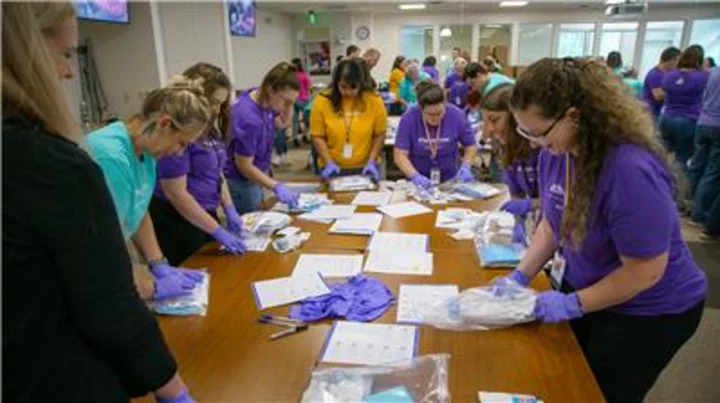
athenahealth’s Annual ‘September is for Service’ Program Supports 50 Nonprofit Organizations Worldwide
BOSTON--(BUSINESS WIRE)--Oct 23, 2023--
2023-10-23 22:17
You Might Like...
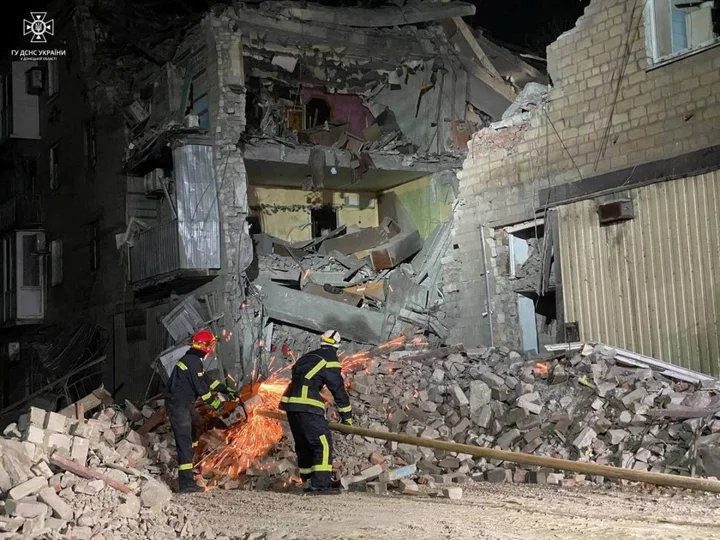
Russia-Ukraine war live: Moscow admits major breakthrough for Kyiv but warns troops face ‘hell fire’
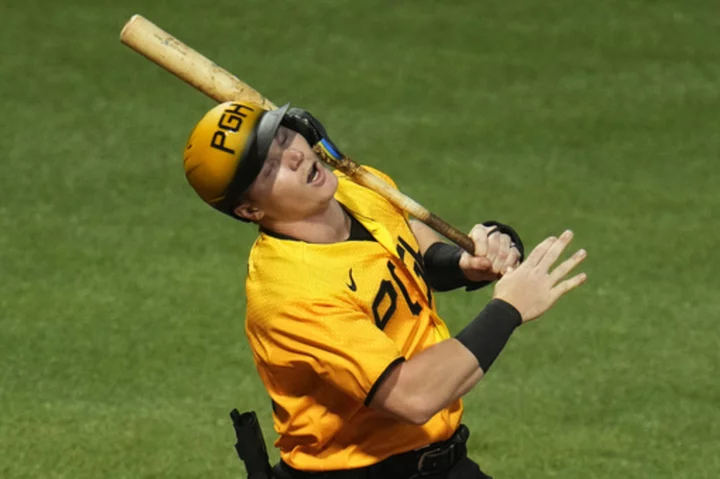
Strikeout numbers are still stubbornly high in MLB despite rules changes

FanDuel NFL Promo Code: Bet $5, Win $200 GUARANTEED Plus $100 off NFL Sunday Ticket!

Who stars in Peacock's 'Love Island USA' Season 5? Sarah Hyland to play host on reality dating show

DoubleLine's Gundlach expects interest rates to fall as US economy worsens

Opera singer David Daniels and his husband plead guilty to sexual assault
US federal judge, 95, faces fresh competency claims as she fights probe
Kivera Welcomes Joe Lea as CEO