
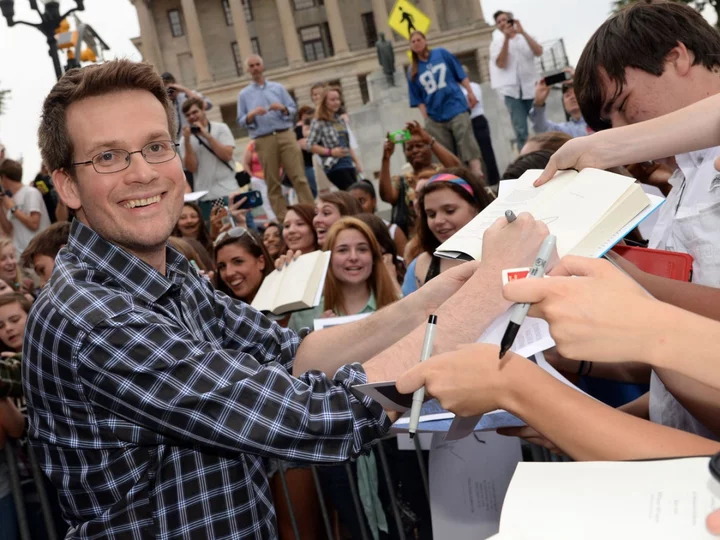
Author John Green hits back as his novel The Fault in Our Stars is moved to adult section in library
When John Green’s book, The Fault in Our Stars, was first published in 2012 it rose to the top of bestseller lists. The love story about two cancer stricken teenagers won the hearts of teenagers globally and was soon turned into a movie starring Shailene Woodley and Ansel Elgort. Now the book, a favourite of older teenagers, has been moved to the adult section in a library in the suburbs of Indianapolis. Green took to X, formerly called Twitter, to voice his frustrations. “This is ludicrous. It is about teenagers and I wrote it for teenagers. Teenagers are not harmed by reading TFIOS. This is such an embarrassment to the city of Fishers,” he said. “I only have a small voice in these decisions, of course, but you won’t catch me alive or dead in Fishers, Indiana until these ridiculous policies are revoked,” he added. “Which I guess means no Top Golf or IKEA for a while.” At the local library, staff have spent hours rummaging through books and moving those that don’t comply with the board’s policy to the general section from the young adult section. Books have been targeted for language about sexuality and reproduction, profanity and criminal acts. This isn’t the first time one of Green’s books has irked administrators and parents. His book Looking for Alaska, also aimed at older teenagers, has become a regular feature on the American Library Association’s top 10 most challenged books, making the list in 2012, 2013, 2015, 2016 and 2022, for being sexually explicit. In 2008, the author filmed a YouTube video titled “I Am Not A Pornographer” explaining that a school in Buffalo, New York was planning to teach Looking for Alaska to 11th graders. But some people, he said, found the book controversial so the school administrators gave parents the choice: their children could read the book or find an alternative. “But there were a few people who weren’t happy with this solution,” Green said in the clip. “These people didn’t actually have kids in the 11th grade, but no matter. They think that my book is pornographic, and that it will cause immoral thoughts and actions in children. These people believe that no one should be allowed to read the book, even those people whose parents signed the permission slip.” And now with book bans on the rise across America (2022 saw the highest number of attempted book bans), Green told The Independent earlier this year that these parent groups have rallied “to take over America’s school systems”. “There are attempts not just to ban books, but to ban entire subjects from high school curricula,” he said. “There are attempts to rewrite American history to better fit contemporary narratives around America’s purported greatness.” The book, a coming of age story with themes of loss and forgiveness, features a scene in which the main character Miles, receives oral sex from Lara, a friend. A few pages later, in a highly emotional scene, Miles kisses another character, Alaska. By juxtaposing the two scenes, Green said in the YouTube video, he attempts to show “that physical intimacy can never stand in for emotional closeness.” Yet, it’s these very scenes that have led to some seeking to ban the book. “It’s always a bummer to have your work read in bad faith,” Green told The Independent in an interview earlier this year. “It’s always a bummer when people read your work to find out what they hate about it, because that’s not, of course, why anyone writes.” Having this specific section read out of context, he adds, is “especially troubling,” because “removed from its context, it can’t do its work – which is to point out that the romantic encounter that Miles and Lara have is awkward and unfulfilling, precisely because they don’t have the emotional connection they need to have a fulfilling romantic encounter.” Read More John Green on book bans, bad faith, and the ‘history of folks trying to control what other folks can read’ Book bans in US schools increased by 28 per cent in the first half of the school year, says new report Texas county moves to restrict ‘explicit’ and ‘objectionable’ books at public libraries Tennessee educators file lawsuit challenging law limiting school lessons on race, sex and bias Jacqueline Wilson says censorship of children’s books is ‘a huge worry’ Biden reelection campaign offering joint meeting with Obama as ex-president enters 2024 fray early Biden wants to compensate New Mexico residents sickened by radiation during 1945 nuclear testing Trump campaign runs ad attacking Georgia DA who’s expected to indict him
2023-08-10 08:23

Drones attack Black Sea, Crimea and parts of Russia where thousands suffered power cuts
Several parts of Russia, the Black Sea and the Crimean peninsula came under drone attacks from Ukraine in the early hours on Monday, officials said as the strikes disturbed air traffic operations over Moscow’s two major airports. The Russian air defence systems destroyed four Ukraine-launched drones over the northwestern part of the Black Sea and over the Crimean peninsula, its defence ministry said on Monday. Another four drones were destroyed over Russia’s bordering cities Kursk and Belgorod, the ministry said in a separate post. The officials did not immediately mention any damage or injuries as a result of the reported attacks. Russia’s Tula region also came under drone attack in the early hours of Monday as the country engaged its air defence systems to repel strikes, officials said. The air defence was activated over the region bordering Moscow to its north, reported Russian news agency RIA. According to preliminary information, no damage or injuries were reported as a result of the attack, the Russian ministry of regional security said. The latest morning attacks caused limitation of air traffic as two of Moscow’s major airports – the Vnukovo and Domedovo – trimmed down operations on Monday. Flights flying into these airports were redirected to other airports, the Tass state news agency reported. A Russian city located right after like Bryansk and Kursk, cities that border Ukraine, Tula has witnessed increasing attacks and power outages recently. In late August, the Russian defence ministry claimed its air defences destroyed two drones over the city, but did not provide further details on the damage and casualties from the interception, if any. It also did not share any precise time and location of the attack. Last week, a loud explosion rocked the Russian city and was followed by a major power outage affecting thousands of people in a district. Local residents reported hearing sounds of an explosion in the vicinity right before the lights went out in Zarechensky district. Around 5,000 residents in the district suffered power outages, RIA reported. However, a Russian official said the two incidents of explosion and power outages were not related. The power blackout was caused by technical failure and not related to any sounds of an explosion, the Russian emergency situations ministry had claimed on Thursday. It also rejected the noise heard by residents to be of explosions and speculated it was caused by an aircraft’s transition to “supersonic speed”. The ministry said work to restore power supply to the Zarechensky “will be completed in the near future”. Read More Ukraine-Russia war – live: Drone attack south of Moscow after two killed in Kherson shelling Russia ‘weaponised food and deliberately caused starvation’ in Ukraine Rishi Sunak poised to delay northern phase of troubled HS2 rail link by up to 7 years India had been riding a geopolitical high. But it comes to the UN with a mess on its hands A Kremlin critic was transferred to a Siberian prison and placed in a 'punishment cell,' lawyer says
2023-09-25 15:58
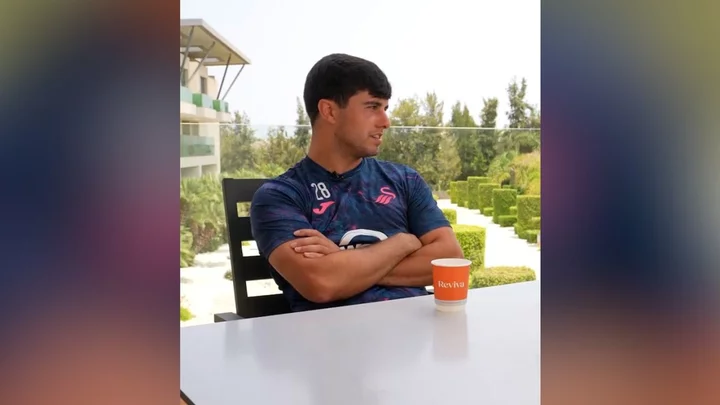
Swansea AFC players get final say on whether aliens really exist
The experts have weighed-in, and now it's time for the real verdict on whether aliens exist from the people that matter: Swansea City players. Liam Walsh and Jamie Paterson sparked a debate as part of the club's 'Spill The Beans' series, and there was a clear divide in opinion, with the Liverpudlian not buying the idea of aliens. "I believe in stuff, just not something daft", he argued, while Paterson clapped back: "You're such a sceptic mate". Sign up to our new free Indy100 weekly newsletter
2023-07-31 21:49
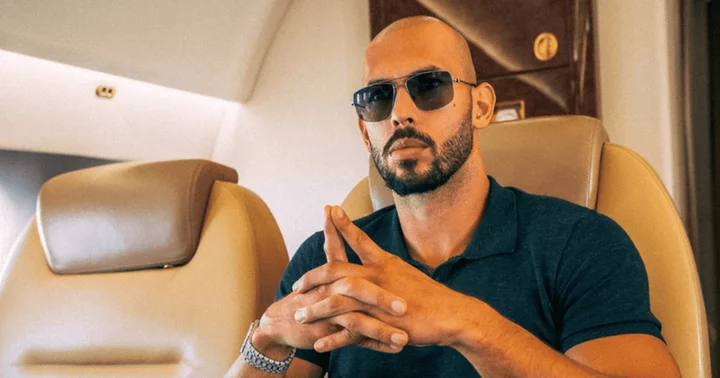
Andrew Tate slams DIICOT's attempt to seize new cars including Ferrari post house arrest release, trolls reminds Top G of 'Karma'
Andrew Tate said, 'This is petty and vindictive behaviour by Dicott who are upset they’re repeatedly losing in court'
2023-08-12 15:21

AWOL Vision to Unveil Ground-breaking Triple Laser Projectors with Dolby Vision at IFA 2023
BERLIN--(BUSINESS WIRE)--Sep 1, 2023--
2023-09-01 14:25

IKEA bets on remote interior design as AI changes sales strategy
By Helen Reid LONDON IKEA is training call centre workers to become interior design advisers as the Swedish
2023-06-13 13:21

Eni profits slump on lower oil and gas prices
Italian energy giant Eni said Friday its net profit fell 67 percent to 1.91 billion euros in the third quarter of 2023, hit by...
2023-10-27 16:27

Los Angeles police searching for suspect in three fatal shootings of homeless people
Los Angeles police are searching for a suspect in the fatal shootings of three homeless people in separate incidents around the city
2023-12-02 09:26

Hamptons Partygoers Cast a Worried Eye on New York’s Future
In a tent decorated with pineapples and rattan chandeliers, John Paulson watched the Broadway theater owner James Nederlander
2023-08-08 01:54

Suga announces military service start date, bids emotional goodbye to BTS Army
As per a fan’s translation, Suga feels his service time is nothing to be sad about and said to his fans that he’ll ‘see them again in 2025'
2023-09-19 05:53
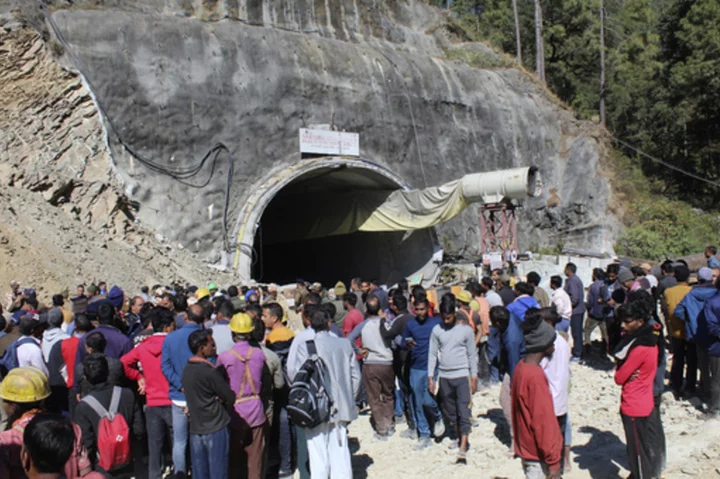
Indian rescuers prepare to drill to reach 40 workers trapped in a collapse tunnel since weekend
Rescuers in northern India are supplying food and medicine to 40 construction workers as officials prepare to start drilling through the rubble to reach the men who have been buried since a portion of the tunnel they were working on collapsed over the weekend
2023-11-16 12:48
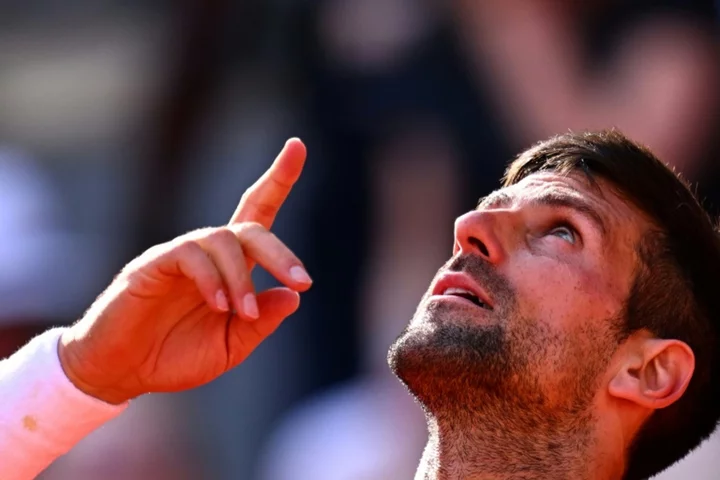
'History hovering' over Djokovic as Grand Slam record beckons
Novak Djokovic admits "history is hovering" over him as he takes on Casper Ruud in the French Open final on Sunday with a men's record...
2023-06-10 17:45
You Might Like...

How did Rudolph Isley die? Founding member of hit band ‘The Isley Brothers’ with career spanning 6 decades was 84

Russia energy exports to China to grow by 40 percent: deputy PM

Mary Lou Retton says she's 'continuing to slowly recover and staying very positive' following a health scare

Lockheed Martin raises full-year forecast on strong weapons demand

Roblox Plunges by Most in 9 Months as Daily Users Drop Off

Poland's lawmakers approve a divisive law on Russian influence

Indiana's Tyler Cerny Ejected, Suspended For Bringing Home Run Chain Onto the Field

Rockwell Automation and Microsoft Expand Partnership to Leverage Generative AI Capabilities for Enhanced Productivity and Faster Time-to-Market