
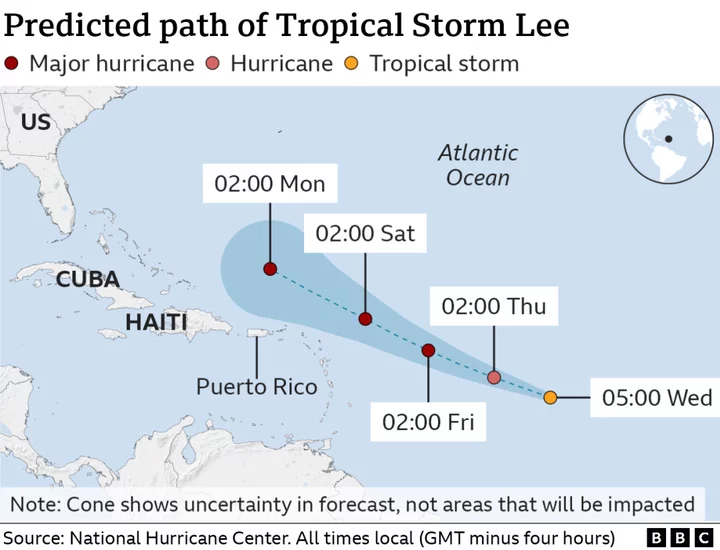
Hurricane Lee may become first category five storm of Atlantic season
The storm has rapidly gained strength in the Caribbean from category one status earlier on Thursday.
2023-09-08 07:59
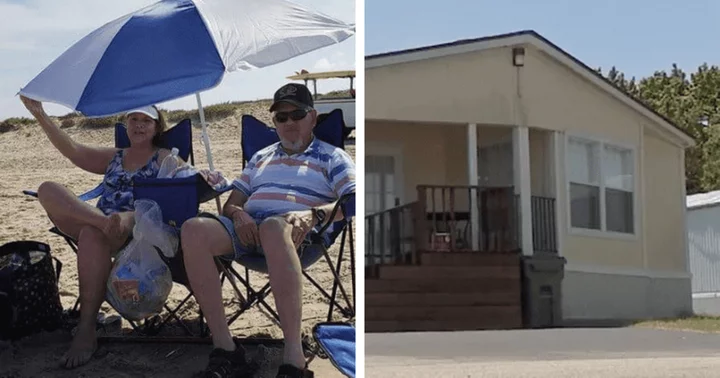
Who were Monway and Ramona Ison? Elderly Texas couple dies after they could not fix AC amid intense heatwave due to lack of funds
The bodies of Monway Ison, 72, and Ramona Ison, 71, were found on June 16 at their Baytown residence close to the body of their pet dog
2023-08-06 20:27
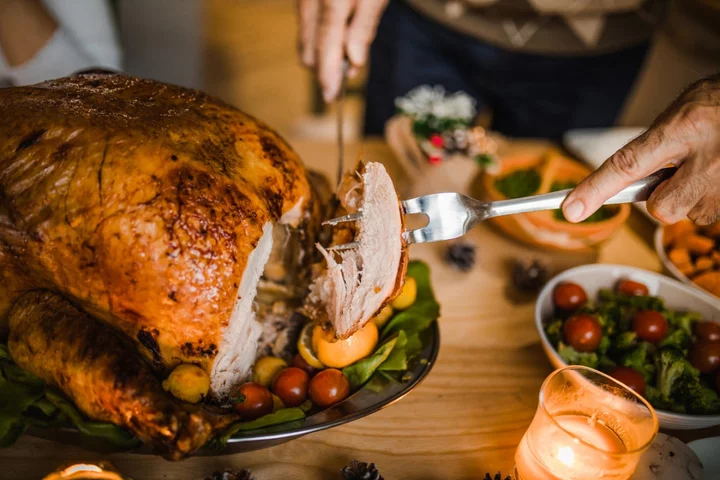
How to celebrate Thanksgiving when you’re not close to your family
Thanksgiving is only a day away and most Americans have solidified their family plans for the holiday. Whether you’re hosting the big meal or heading to a relative’s house, the holidays are often a chance to reconnect with loved ones. However, Thanksgiving Day isn’t always a family-oriented occasion. Over the years, several studies have found that the seemingly joyous holiday season isn’t always easy for everyone. In a survey conducted by the AARP Foundation in 2017, 31 per cent of respondents said they felt lonely during the holidays throughout the last five years. Meanwhile, 41 per cent of participants were concerned about a family member or friend feeling lonely around the holidays. In 2020, a survey conducted by ValuePenguin also found that 70 per cent of respondents struggled with different types of loneliness before Thanksgiving and Christmas, partly due to the effects of the Covid-19 pandemic. While socially-distanced holiday parties have mostly become a thing of the past since then, there’s still many reasons why some people spend the season by themselves. Some Americans have family members living on the opposite side of the country, or world, while others may not have a close relationship with their relatives at all. There’s no one concrete way to spend the holidays, and everyone has their own reasons why they choose not to see certain people on Thanksgiving. Speaking to The Independent, Emma Mahony, a therapist at Better Life Therapy based in Pennsylvania, acknowledged that, when we spend the holidays alone, our feelings of loneliness can be heightened. While everyone experiences loneliness in a different way, Mahony believes that the feeling could be tied to how Thanksgiving has been portrayed over the years. “I think a lot of the anxieties and concerns that come up have to do with unmet expectations of what you think a holiday is supposed to look like, and what you think your relationship with your family or your friends is supposed to look like,” she said. “I think that’s where a lot of people themselves feel a little bit of a stressful state. Just maybe feeling a little let down by the expectations they have for themselves, after watching other people experience the holidays differently than them.” The holidays are often referred to as the most wonderful time of the year, but that doesn’t ring true for everyone. In some cases, the winter months can be quite a triggering time, and potentially a reminder to people of how they’ve been hurt by those closest to them. According to Mahony, the best way to manage those feelings of animosity is by creating your own perspective about the holidays and new ways to celebrate. “I think you should allow yourself to reframe it as: ‘Okay, how do I want the holidays to look for me? Who are the people that I do want in my life? Who are the people that I don’t want in my life?’” she advised. “Don’t try to make something that shouldn’t happen happen. Instead, recreate your own memories and your own traditions, and give yourself space and permission to do so. But also, if you know that it’s going to be a hard time for you, create that support system, from reaching out to a therapist or to a close friend.” For those who do have a close support system, it can make skipping out on Thanksgiving dinner a little easier. On the other hand, your cousins may miss sitting next to you at the dinner table. Still, Mahony believes we shouldn’t try to convince our family members to attend an event in which they’ve already opted out. “If someone decides they don’t want to be with you over the holidays, respect that choice for them,” she explained. “Don’t make them feel bad for prioritising themselves and their needs. [It] will potentially, you know, make things worse long term. I just honour that everyone needs to do what’s best for them, whether that be financially, emotionally, or physically.” Even if you decide to celebrate Thanksgiving this year without your family, it doesn’t mean that you’re entirely on your own. Mahony suggested setting up a Zoom call or FaceTime with some friends, or planning a fun meal if you’re worried about eating solo. “You could really do whatever you want, so I would set up things for yourself to look forward to,” she said. For those who are spending the holiday alone, but still want to take part in Thanksgiving-related activities, spend the morning or afternoon at a local homeless centre. You can continue the day by hosting a Friendsgiving dinner or movie night with your pals who are still in town. When it comes to food, you can cook a mini turkey for one or ditch Thanksgiving dinner altogether and order take-out at a local restaurant. Then, close out the night with some early Black Friday shopping online or in person. Although this Thursday is indeed a federal holiday, who says the day can’t feel like any other? Ultimately, how you spend Thanksgiving is entirely up to you and there’s no right or wrong way to celebrate the holidays. Remember that you shouldn’t be too hard on yourself for avoiding family during the holiday season. “If Thanksgiving looks different for you year after year, that’s okay. There’s not a specific way to spend the holidays and no family looks the same,” Mahoney said. “If you’re coming to terms with the fact that being with your family for the holidays isn’t what’s best for you, give yourself a little bit of compassion there. “It will get easier over the years, as you figure out how to take care of yourself better.”
2023-11-23 05:50
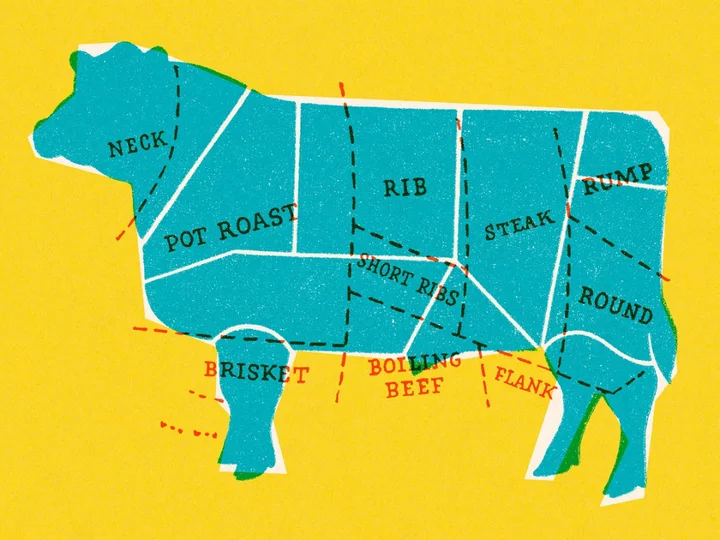
Blood, guts and cheap cuts: We need an alternative to eating animals – and ‘ethical meat’ isn’t the answer
Amber Husain was cooking dinner for a friend when she suddenly realised the meat she was preparing was a corpse. She looked at the chicken in front of her and was overcome with a visceral sense of disgust. Instead of food, she saw “a carcass – plucked, beheaded, and fleshy”. Husain was 26 when she had this epiphany, and it served as a wake-up call not just for her stomach but her mind, too – as her personal tastes shifted away from meat products, her political outlook on the meat industry and food production more broadly also altered and expanded. Five years later, that moment of revulsion forms the opening of her new book, Meat Love, in which she scrutinises the idea of “ethical” meat consumption, and dares to ask how the contemporary middle classes have come to criticise “the worst violence against animals” while still happily feeding on their flesh. Why, for example, has well-heeled, middle-class London gone nuts for slurping bone marrow from the shin bones of baby cows? Why is offal on so many trendy menus? How has contemporary culture at large come to accept that factory farms are monstrous, but that if animals are cared for, cherished and loved while alive, we should feel better about killing them for our carnivorous pleasures? “For ages, I was one of those carnivores who felt mildly bad about eating meat but just turned that into this inane, self-consciously sadistic part of the pleasure of it all,” Husein tells me. “The more my diet started to revolve around stuff that wasn’t meat, the weirder meat started to feel. Interestingly, once my stomach had been radicalised, I found I had a much greater intellectual openness to thinking about the politics of meat.” Having freed herself from the conflict of eating meat but also feeling bad about it, she found she was able to go beyond those questions of morality – which she suggests can be “stifling” – and think politically. “Now that I have no desire to eat animals, there’s nothing to stop me reckoning with what it means that the meat industry [consists of] an underclass of both humans and animals who are exploited and – in the animals’ case – killed for pleasure and profit.” This is the essential crux of Husain’s argument, and it’s something often lacking in discussions around the “ethics” of meat consumption. For Husain, the question is not, “how can humans eat meat responsibly?” but “how are certain lives devalued to an extent that their suffering can be written off, in order to ‘make a killing’?” What she’s saying, in other words, is that whether the meat on the table has come from a factory farm or an organic farm, or whether you’re tucking in at Burger King or the River Cafe, the path to the plate is still paved with violence. And, while current cultural trends may claim it is better to love and respect an animal before killing and consuming it, perhaps what this cultivates is the ability to embrace exploitation “in a spirit of virtuous indulgence”. What does it really mean, for all living beings, if love is imagined as compatible with killing? “To slide your buttery hand between the flesh and skin of a thing that, if only for a moment, you have re-learnt to perceive as a corpse, is to give an invigorating massage to your sense of political possibility,” Husain writes in Meat Love. By the slim book’s end, her invigorated “sense of political possibility” has led to “a ravenous hunger – a desire for a different culture, a different society”; a new world “in which no one, neither animal, immigrant, worker, woman, or peasant, was considered a thing to be owned, controlled, killed, or left to die”. For many, the leap from a chicken breast on a plate to the exploitation of oppressed people around the globe might seem like a vast one. Yet, it certainly seems clear that there has been a marked shift in the way meat is conceived and consumed – among the middle classes, at least. Since the turn of the millennium, foodie figures like Hugh Fearnley-Whittingstall have been promoting “seasonal, ethically produced food” as part of a broader commitment to caring for the environment. At the same time, a distinctly carnivorous spirit has taken hold – one that professes to be an “honest”, “grounded” and “down to earth” ethos. “Good food, good eating, is all about blood and organs, cruelty and decay,” Anthony Bourdain wrote at the start of the 1999 New Yorker article that would, eventually, catapult him into global foodie fame. I find it easy to laugh at Hugh Fearnley-Whittingstall and people like that, but I’m not totally convinced that they’re really the bad guys Lewis Bassett Then there’s Fergus Henderson and St John – the illustrious London restaurant, born in 1994 on the premises of a former bacon smokehouse, which popularised “nose to tail” dining. This offal-centric “no waste” approach is neatly summed up in Henderson’s oft-quoted phrase: “If you’re going to kill the animal, it seems only polite to use the whole thing.” Traditionally “cheap cuts” are “elevated” from a source of sustenance for the working classes, to a source of virtue for the urban bourgeois. According to its own cookbook, St John dishes combine “high sophistication with peasant roughness” – that winning aesthetic formula that also sees middle-class urbanites flocking to farmers’ markets and chugging natural wine. In a sharp and searing piece for food and culture newsletter Vittles, writer Sheena Patel dubs this “Rich Person Peasantcore”, asking: “Why are these influencers pretending that they themselves till the land and eat like 17th-century French peasants when in fact their chopping boards cost more than most people’s rent?” In the face of swathes of small plates adorned with offal, and slices of ham served for upwards of £20, it seems like a pertinent question not just for influencers, but also for today’s trendiest restaurateurs and diners. Lewis Bassett is a chef and the host of The Full English podcast, which, over its two seasons, has dived into everything from the birth of “modern European” cuisine to high food prices, factory farms, and why Britain is in love with Greggs. “It’s interesting the way we create these fantastical worlds for us to eat within,” he says. “It is clearly a fantasy to imagine that you can have the rural experience of a peasant in France or Italy, in modern-day Britain.” Yet, he also says that this trend is far from new. The current “rustic” style – typified by “nose to tail eating” – is, he suggests, “intimately tied with what you could call a culinary and broader cultural movement that appears in the wake of countercultural movements in the Sixties, and eventually finds its way into food, especially as some of those countercultural people get a bit older and a bit more affluence”. Essentially, “it’s the same thing that manifested in places like Habitat,” he says, of the homewares and furnishings brand founded in 1964 by Terence Conran. Both design and dining were transformed, offering experiences to the middle classes that were both refined and casual at the same time. Alongside that cultural shift, and “that fashion for pared-down forms of eating out”, Bassett notes the arrival of a broader awareness of environmental and animal welfare concerns. “It’s obviously easy to ridicule these middle-class forms of culture,” he says, “but these concerns are ones I certainly share and I think should be considerations for everyone. I find it easy to laugh at Hugh Fearnley-Whittingstall and people like that, but I’m not totally convinced that they’re really the bad guys.” So is there a danger that legitimate backlash to the “thrifty rural”, “nose to tail” trend – and bourgeois “peasantcore” more broadly – could spill over into an attack on all food industry attempts at sustainability? “I think people don’t want stuffy fine dining experiences,” Bassett says, “but at the same time, having the kind of pared-down, rustic, ‘peasant food’ – like, having ham served to you at St John costs you 20 quid – maybe people are slightly sick of that.” He quickly adds, though, that he is “not saying it can come any cheaper than 20 quid, because when you spend a lot of time and effort rearing animals properly, and paying chefs properly, and paying rents in your restaurants, that racks up”. It seems there is a tension, then, between practical and immediate ethical matters – such as paying food industry staff liveable wages or reducing food waste – and broader questions about what kind of society we wish to live in or create. Is the question of “ethical” meat consumption, as Husain suggested, “beyond morality” – a question of politics only? Or is it still, at heart, a moral dilemma, based on people’s personal sense of “right” and “wrong”? Summing up Husain’s attitude towards animals in Meat Love, Bassett suggests “she’s saying that, if you love them so much, why are you killing them? I suppose where Amber Husain and I would slightly disagree is that I’m not convinced that killing an animal is inherently wrong.” Away from the carnal appreciation and “peasantcore” of contemporary restaurant culture, meat-eating often seems to be conceived as either a “guilty pleasure” or a “grim necessity”. In all these cases, however, there appears to be an overriding sense that there is “no alternative” to a meat-eating status quo. The late cultural critic Mark Fisher famously used similar terms to define “capitalist realism”, meaning that capitalism is the only viable economic system, and thus there can be no imaginable alternative. Is it possible we’re also stuck in a kind of “carnivorous realism”? If so, it might be because the two are so interlinked. As Husain puts it, “meat is the inevitable outcome of an economic system that relies on cheap labour and cheap life. But that doesn’t mean meat is a necessity, it means a new economic order is a necessity.” Perhaps taking the leap from a vegetarian diet to full-scale social and economic revolution still seems unthinkable to many. But, in nasty, brutish and austere times, it has also perhaps never been more necessary to seriously consider who can eat, and who is made meat. “I think we need an avalanche of political will from within the food justice, land justice, climate justice and labour movements to radically transform society,” Husain says. With that as the goal, she believes it isn’t helpful “for us to be clinging to the idea of meat as a pleasure”: “If we can’t imagine something other than animal flesh to eat for dinner we might struggle to imagine an entirely different society.” ‘Meat Love: An Ideology of the Flesh’ by Amber Husain is out now Read More Between Brexit and Covid, London’s food scene has become a dog’s dinner – can it be saved? It’s time for booze bottles to have health warning labels Should I give up Diet Coke? With aspartame under suspicion, an addict speaks Food portion sizes on packaging are ‘unrealistic and confusing’, says Which? In Horto: Hearty, outdoorsy fare in a secret London Bridge garden Zero-fuss cooking: BBQ pork ribs and zingy Asian slaw
2023-07-30 13:52
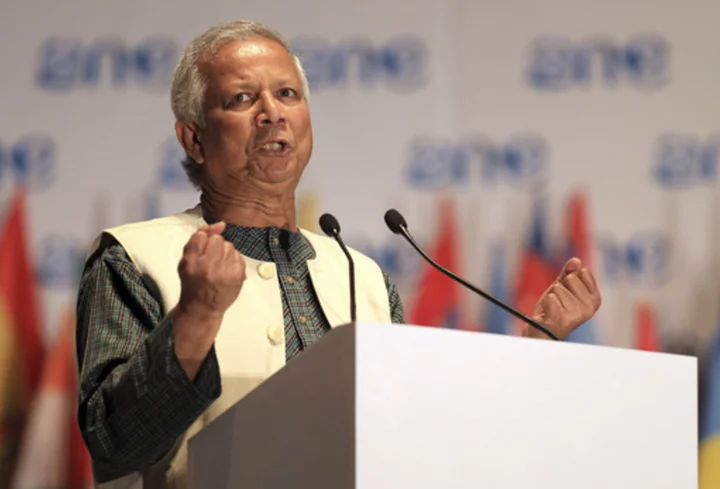
176 world leaders and Nobel laureates urge Bangladesh to halt legal cases against Peace Prize winner
More than 170 global leaders and Nobel laureates are urging Bangladesh to suspend legal proceedings against Muhammad Yunus, who was awarded the Nobel Peace Prize for pioneering the use of microcredit to help impoverished people
2023-08-31 11:22

'Ultimate showdown' as Djokovic, Alcaraz clash for Wimbledon title
Novak Djokovic says the sporting world will be watching his "ultimate showdown" against Carlos Alcaraz in Sunday's Wimbledon final where history and a...
2023-07-16 16:29
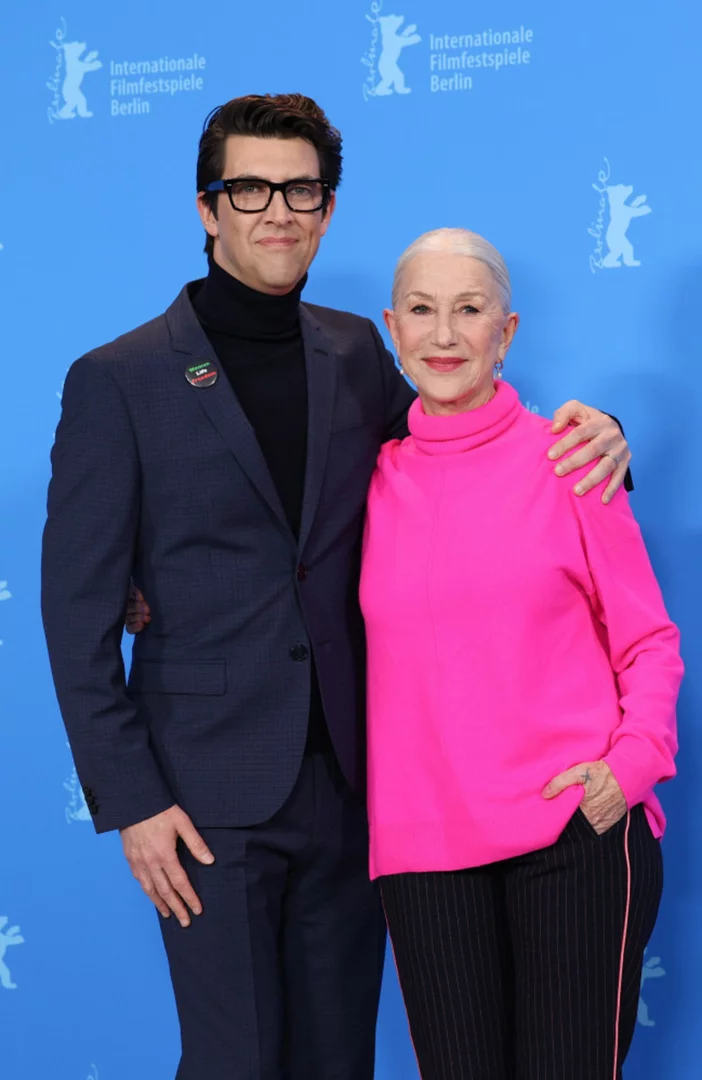
'It was a massive war movie': Golda director Guy Nattiv made drastic changes to the story
Guy Nattiv has revealed that his biopic 'Golda' was initially supposed to be a "massive war movie".
2023-09-03 15:22

Here's how to get alerts when your personal info shows up in Google Search
Have you ever Googled yourself and been surprised by the old social media images, usernames,
2023-10-30 03:23

Will Al Pacino's son become an actor? Noor Alfallah doesn't rule out the possibility for their newborn
Roman Pacino is the 'Scarface' actor's fourth child and Noor Alfallah's first
2023-06-21 16:20
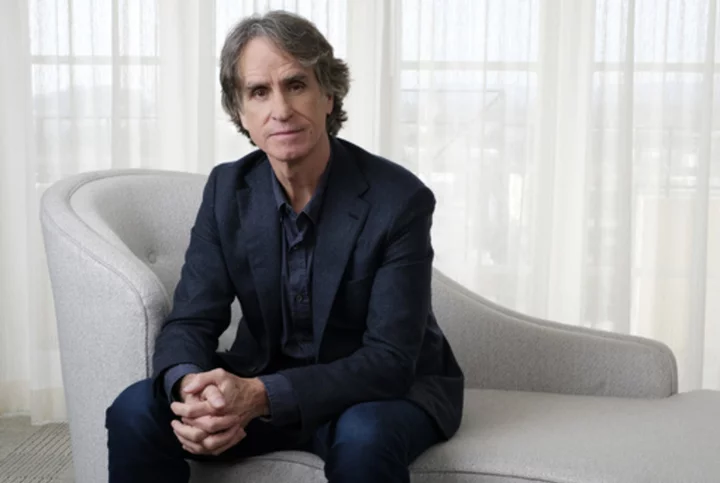
Jay Roach goes into the desert with Patricia Arquette for quirky, noirish Apple series
Filmmaker Jay Roach takes a detour from moviemaking in the desert with a new AppleTV+ series, “High Desert,” which is currently five episodes into its eight-episode run
2023-06-02 22:53

Biden to highlight climate commitments during West Coast swing
President Joe Biden will highlight climate commitments made by his administration and announce new federal funding for climate resilience projects as part of a three-day trip to the Bay Area in Northern California that begins Monday, according to a White House official.
2023-06-19 05:20

Desperately seeking staff: Paris Airshow lets jobless in for free
By Allison Lampert and Tim Hepher PARIS Jean Blondin usually attends the world's largest air show to find
2023-06-23 18:47
You Might Like...

Libya flood: Satellite images reveal destruction in Derna
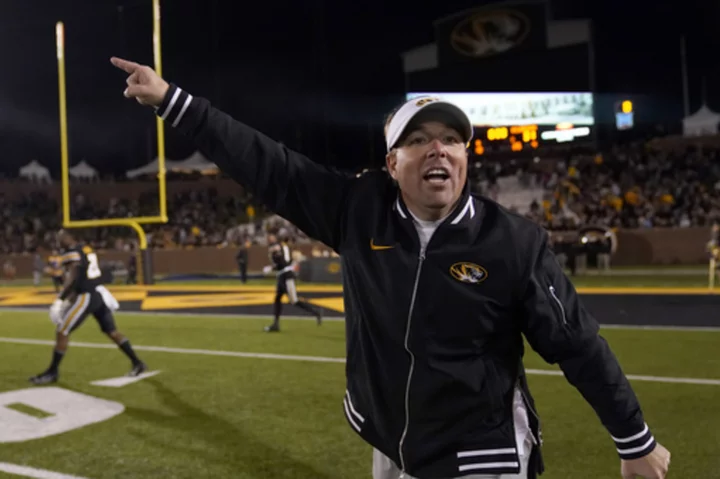
No. 10 Missouri seeks 10-win season in matchup with Arkansas for Battle Line Trophy

What has happened to Casemiro? The Manchester United midfielder exposed, isolated and bypassed

Donald Trump allegedly berated General Mark Milley over disabled vet at official event

Manchin's New Hampshire trip will leave Democrats shivering

'Fernandomania' lives again at Dodger Stadium with retirement of Valenzuela's jersey
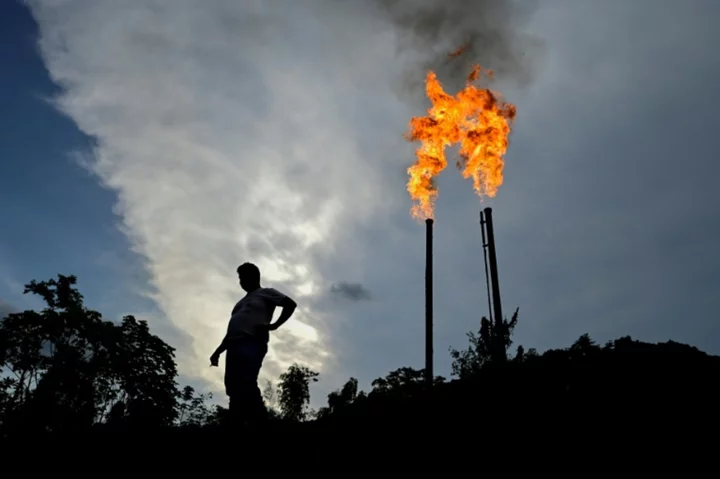
Oil firms face 'moment of truth' in climate crisis: IEA
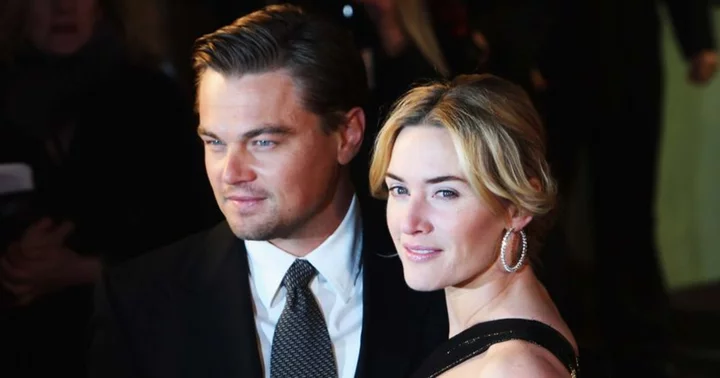
Kate Winslet trusted Leonardo DiCaprio enough to let him 'strangle her until she passed out' for scene