

Asia stocks meander, yen fragile ahead of US inflation data
By Ankur Banerjee SINGAPORE (Reuters) -Asian shares edged higher on Tuesday ahead of a crucial U.S. inflation report that could
2023-11-14 15:24

Japan and Vietnam agree to boost ties and start discussing Japanese military aid amid China threat
Japan and Vietnam have agreed to boost their security and economic ties in the face of China’s growing influence in the region
2023-11-27 22:56
Blood, guts and cheap cuts: We need an alternative to eating animals – and ‘ethical meat’ isn’t the answer
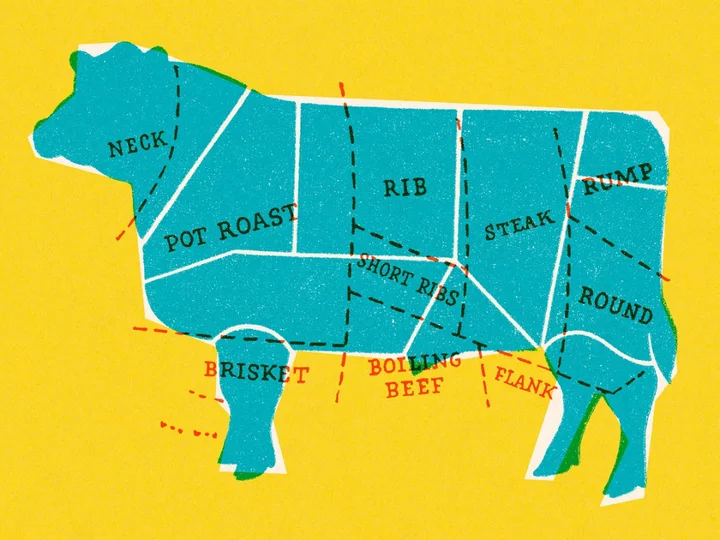
Amber Husain was cooking dinner for a friend when she suddenly realised the meat she was preparing was a corpse. She looked at the chicken in front of her and was overcome with a visceral sense of disgust. Instead of food, she saw “a carcass – plucked, beheaded, and fleshy”. Husain was 26 when she had this epiphany, and it served as a wake-up call not just for her stomach but her mind, too – as her personal tastes shifted away from meat products, her political outlook on the meat industry and food production more broadly also altered and expanded. Five years later, that moment of revulsion forms the opening of her new book, Meat Love, in which she scrutinises the idea of “ethical” meat consumption, and dares to ask how the contemporary middle classes have come to criticise “the worst violence against animals” while still happily feeding on their flesh. Why, for example, has well-heeled, middle-class London gone nuts for slurping bone marrow from the shin bones of baby cows? Why is offal on so many trendy menus? How has contemporary culture at large come to accept that factory farms are monstrous, but that if animals are cared for, cherished and loved while alive, we should feel better about killing them for our carnivorous pleasures? “For ages, I was one of those carnivores who felt mildly bad about eating meat but just turned that into this inane, self-consciously sadistic part of the pleasure of it all,” Husein tells me. “The more my diet started to revolve around stuff that wasn’t meat, the weirder meat started to feel. Interestingly, once my stomach had been radicalised, I found I had a much greater intellectual openness to thinking about the politics of meat.” Having freed herself from the conflict of eating meat but also feeling bad about it, she found she was able to go beyond those questions of morality – which she suggests can be “stifling” – and think politically. “Now that I have no desire to eat animals, there’s nothing to stop me reckoning with what it means that the meat industry [consists of] an underclass of both humans and animals who are exploited and – in the animals’ case – killed for pleasure and profit.” This is the essential crux of Husain’s argument, and it’s something often lacking in discussions around the “ethics” of meat consumption. For Husain, the question is not, “how can humans eat meat responsibly?” but “how are certain lives devalued to an extent that their suffering can be written off, in order to ‘make a killing’?” What she’s saying, in other words, is that whether the meat on the table has come from a factory farm or an organic farm, or whether you’re tucking in at Burger King or the River Cafe, the path to the plate is still paved with violence. And, while current cultural trends may claim it is better to love and respect an animal before killing and consuming it, perhaps what this cultivates is the ability to embrace exploitation “in a spirit of virtuous indulgence”. What does it really mean, for all living beings, if love is imagined as compatible with killing? “To slide your buttery hand between the flesh and skin of a thing that, if only for a moment, you have re-learnt to perceive as a corpse, is to give an invigorating massage to your sense of political possibility,” Husain writes in Meat Love. By the slim book’s end, her invigorated “sense of political possibility” has led to “a ravenous hunger – a desire for a different culture, a different society”; a new world “in which no one, neither animal, immigrant, worker, woman, or peasant, was considered a thing to be owned, controlled, killed, or left to die”. For many, the leap from a chicken breast on a plate to the exploitation of oppressed people around the globe might seem like a vast one. Yet, it certainly seems clear that there has been a marked shift in the way meat is conceived and consumed – among the middle classes, at least. Since the turn of the millennium, foodie figures like Hugh Fearnley-Whittingstall have been promoting “seasonal, ethically produced food” as part of a broader commitment to caring for the environment. At the same time, a distinctly carnivorous spirit has taken hold – one that professes to be an “honest”, “grounded” and “down to earth” ethos. “Good food, good eating, is all about blood and organs, cruelty and decay,” Anthony Bourdain wrote at the start of the 1999 New Yorker article that would, eventually, catapult him into global foodie fame. I find it easy to laugh at Hugh Fearnley-Whittingstall and people like that, but I’m not totally convinced that they’re really the bad guys Lewis Bassett Then there’s Fergus Henderson and St John – the illustrious London restaurant, born in 1994 on the premises of a former bacon smokehouse, which popularised “nose to tail” dining. This offal-centric “no waste” approach is neatly summed up in Henderson’s oft-quoted phrase: “If you’re going to kill the animal, it seems only polite to use the whole thing.” Traditionally “cheap cuts” are “elevated” from a source of sustenance for the working classes, to a source of virtue for the urban bourgeois. According to its own cookbook, St John dishes combine “high sophistication with peasant roughness” – that winning aesthetic formula that also sees middle-class urbanites flocking to farmers’ markets and chugging natural wine. In a sharp and searing piece for food and culture newsletter Vittles, writer Sheena Patel dubs this “Rich Person Peasantcore”, asking: “Why are these influencers pretending that they themselves till the land and eat like 17th-century French peasants when in fact their chopping boards cost more than most people’s rent?” In the face of swathes of small plates adorned with offal, and slices of ham served for upwards of £20, it seems like a pertinent question not just for influencers, but also for today’s trendiest restaurateurs and diners. Lewis Bassett is a chef and the host of The Full English podcast, which, over its two seasons, has dived into everything from the birth of “modern European” cuisine to high food prices, factory farms, and why Britain is in love with Greggs. “It’s interesting the way we create these fantastical worlds for us to eat within,” he says. “It is clearly a fantasy to imagine that you can have the rural experience of a peasant in France or Italy, in modern-day Britain.” Yet, he also says that this trend is far from new. The current “rustic” style – typified by “nose to tail eating” – is, he suggests, “intimately tied with what you could call a culinary and broader cultural movement that appears in the wake of countercultural movements in the Sixties, and eventually finds its way into food, especially as some of those countercultural people get a bit older and a bit more affluence”. Essentially, “it’s the same thing that manifested in places like Habitat,” he says, of the homewares and furnishings brand founded in 1964 by Terence Conran. Both design and dining were transformed, offering experiences to the middle classes that were both refined and casual at the same time. Alongside that cultural shift, and “that fashion for pared-down forms of eating out”, Bassett notes the arrival of a broader awareness of environmental and animal welfare concerns. “It’s obviously easy to ridicule these middle-class forms of culture,” he says, “but these concerns are ones I certainly share and I think should be considerations for everyone. I find it easy to laugh at Hugh Fearnley-Whittingstall and people like that, but I’m not totally convinced that they’re really the bad guys.” So is there a danger that legitimate backlash to the “thrifty rural”, “nose to tail” trend – and bourgeois “peasantcore” more broadly – could spill over into an attack on all food industry attempts at sustainability? “I think people don’t want stuffy fine dining experiences,” Bassett says, “but at the same time, having the kind of pared-down, rustic, ‘peasant food’ – like, having ham served to you at St John costs you 20 quid – maybe people are slightly sick of that.” He quickly adds, though, that he is “not saying it can come any cheaper than 20 quid, because when you spend a lot of time and effort rearing animals properly, and paying chefs properly, and paying rents in your restaurants, that racks up”. It seems there is a tension, then, between practical and immediate ethical matters – such as paying food industry staff liveable wages or reducing food waste – and broader questions about what kind of society we wish to live in or create. Is the question of “ethical” meat consumption, as Husain suggested, “beyond morality” – a question of politics only? Or is it still, at heart, a moral dilemma, based on people’s personal sense of “right” and “wrong”? Summing up Husain’s attitude towards animals in Meat Love, Bassett suggests “she’s saying that, if you love them so much, why are you killing them? I suppose where Amber Husain and I would slightly disagree is that I’m not convinced that killing an animal is inherently wrong.” Away from the carnal appreciation and “peasantcore” of contemporary restaurant culture, meat-eating often seems to be conceived as either a “guilty pleasure” or a “grim necessity”. In all these cases, however, there appears to be an overriding sense that there is “no alternative” to a meat-eating status quo. The late cultural critic Mark Fisher famously used similar terms to define “capitalist realism”, meaning that capitalism is the only viable economic system, and thus there can be no imaginable alternative. Is it possible we’re also stuck in a kind of “carnivorous realism”? If so, it might be because the two are so interlinked. As Husain puts it, “meat is the inevitable outcome of an economic system that relies on cheap labour and cheap life. But that doesn’t mean meat is a necessity, it means a new economic order is a necessity.” Perhaps taking the leap from a vegetarian diet to full-scale social and economic revolution still seems unthinkable to many. But, in nasty, brutish and austere times, it has also perhaps never been more necessary to seriously consider who can eat, and who is made meat. “I think we need an avalanche of political will from within the food justice, land justice, climate justice and labour movements to radically transform society,” Husain says. With that as the goal, she believes it isn’t helpful “for us to be clinging to the idea of meat as a pleasure”: “If we can’t imagine something other than animal flesh to eat for dinner we might struggle to imagine an entirely different society.” ‘Meat Love: An Ideology of the Flesh’ by Amber Husain is out now Read More Between Brexit and Covid, London’s food scene has become a dog’s dinner – can it be saved? It’s time for booze bottles to have health warning labels Should I give up Diet Coke? With aspartame under suspicion, an addict speaks Food portion sizes on packaging are ‘unrealistic and confusing’, says Which? In Horto: Hearty, outdoorsy fare in a secret London Bridge garden Zero-fuss cooking: BBQ pork ribs and zingy Asian slaw
2023-07-30 13:52

'Resting,' fired, believed dead: Russia's missing generals reveal cracks in faltering military
To lose one general during a war that's going badly might be seen as unfortunate; to lose two within 24 hours looks careless. But that is what's happened to the Russian command in southern Ukraine -- and the two cases illustrate further deficiencies and dissent among Russia's military leadership.
2023-07-13 22:58

‘The Kardashians’ left disgusted by nachos at Kourtney Kardashian and Travis Barker's gender reveal party, fans ask ‘who actually eats that food?’
The Kardashians fell sick from the nachos at Kourtney Kardashian and Travis Barker's gender reveal party, while Kourtney threw shade at her family
2023-07-03 16:17

Matthew A. Cherry's NFL past helped him tackle a sweet story of Black parenting that's for everyone in 'Young Love'
Matthew A. Cherry, a former NFL wide receiver turned Oscar winner who created the hit animated short film "Hair Love," wants to show with his latest project that young parenting is the ultimate game of grit and determination.
2023-09-20 21:50

Colombia overcome Jamaica - and show why they will scare England
It only took a moment for Jamaica’s plan to unravel. After keeping three clean sheets in their historic progression from the group stages, a goal was all it took for their World Cup dream to finally appear out of reach. As Deneisha Blackwood was caught under the high ball, Colombia found the quality they had long been searching for: Catalina Usme cushioned it perfectly on her left foot and a step later, it was guided into the far corner. For the first time in four matches at this World Cup, Jamaica and goalkeeper Rebecca Spencer conceded, and if this last-16 tie desperately needed a goal, so did Colombia’s entire approach. After taking the lead, they finally began to look like the team that shocked Germany in topping Group H, and who will now look to do the same against England in the quarter-finals. Playing Jamaica didn’t suit them. Facing the Lionesses might. When Colombia stunned the World Cup and beat Germany, it was a victory built on how effectively they disrupted the two-time champions when they were in possession. Not having as much of the ball allowed Colombia to pick, press and frustrate. But in the last-16 it was Jamaica who were succeeding in frustrating them. Jamaica barely left their half when the game was goalless, sitting deep and cancelling Colombia out with their defensive shape and resilience. Colombia were faced with having to create their own impetus, they struggled for fluency in a poor game and Jamaica’s plan, for 51 minutes at least, was working. But then Usme struck and as Jamaica were forced to open up, Colombia were released. They became the side that England will not enjoy facing, as Linda Caicedo showed the glimpses that the Lionesses need to somehow control. Colombia immediately looked more threatening as Caicedo, a nimble and electric dribbler from the left, had space to weave and drive. A goal up, Colombia were able to combine their combativeness in midfield with the 18-year-old’s speed and quality in attack. It should concern England, who were disrupted by Haiti in their opening game while being stretched by Michelle Dumornay. They are likely to face a similar challenge in Colombia, yet the South American side, who reached the final of last year’s Copa America, have a much sharper and more experienced edge. Of course, England have since settled on a new formation since that ragged opening display against Haiti and Dumornay, although the future of Sarina Wiegman’s 3-5-2 could also be now under consideration due to Lauren James’ suspension. What the system has given England is greater defensive solidity and the Lionesses have yet to concede from open play at the World Cup. They came under significant spells of pressure against Nigeria, but England still did not concede as many high-quality chances than they did against Haiti. Wiegman’s side have been less open and more disciplined with Jess Carter and Alex Greenwood alongside Millie Bright. Even as Nigeria targeted the sides of England’s back three, in what was an excellent tactical performance from Randy Waldrum’s side, Carter and Greenwood’s individual defending was exceptional. It will need to be again on Saturday, with Carter facing the eye-catching Caicedo and Greenwood likely to face the unpredictable Mayra Ramírez, who has licence to roam inside from the right channel. If England do keep their 3-5-2 and look to control possession, Lucy Bronze and Rachel Daly will again be asked to push high and wide, leaving Carter and Greenwood with another match of considerable defensive responsibility. Jamaica would have been a completely different test and had they defeated Colombia, Lorne Donaldson’s side would have played the same way against England. That they reached the last-16 at all was credit to their remarkable defensive organisation but it only took a moment for that to slip as Blackwood was caught under the switch to the far post. Jamaica finished the World Cup having scored once and conceded once - that they reached the last-16 at all was a remarkable achievement. Jamaica’s late assault on the Colombia goal was too little and too late. Drew Spence’s header that sneaked past the post was the closest they came, but Jamaica may regret not showing more adventure in the first half and they struggled to bring Khadija Shaw into the match. The Lionesses would have been more confident facing a low block, although it is aso fair to question whether Wiegman’s side would have been anywhere near as dangerous without James when they thrashed China 6-1 in the group stages. But that performance and Wiegman’s deployment of 3-5-2 came with China in mind. The England manager needed a response after two uninspiring 1-0 wins against Haiti and Denmark, and so found the formation that unlocked something new and unpredictable from England while exploiting China’s obdurate system. Now James’ suspension has given Wiegman a reason to go on the front foot again, and to make the changes that will cover for the absence of their star forward, but to pick holes in Colombia as well. And with their quarter-final opponent set, Wiegman and England can get to work. Read More Women’s World Cup TV schedule: How to watch every match today Who and when do England play next? Lionesses route to the World Cup final Lauren James apologises after World Cup red card Lauren James apologises after World Cup red card Trump goes on unhinged rant blaming Biden and ‘wokeness’ for USWNT’s World Cup loss A timeline of Donald Trump’s spat with Megan Rapinoe
2023-08-08 21:27

'Bama Rush' documentary explores highs and lows of Greek life and culture behind the viral #RushTok
Inspired by the viral sensation that became known as #RushTok on TikTok in 2021, the new Max documentary "Bama Rush" dives into the pros and cons of Greek life recruitment at the University of Alabama. (Max, like CNN, is a unit of Warner Bros. Discovery.)
2023-05-25 09:22

Biden will 'at some point' meet with China's Xi Jinping, top White House official says
President Joe Biden will "at some point" meet with Chinese President Xi Jinping, according to White House national security adviser Jake Sullivan, as the two countries work to reset normal relations amid what has been an extremely tumultuous and tense year in the relationship.
2023-06-04 23:29
US job growth soared in September, adding 336,000 positions
The US job market surged in September, adding more jobs than expected for the second consecutive month, according to data released Friday by the Bureau of Labor Statistics.
2023-10-06 20:55

Cubs activate third baseman Nick Madrigal from the 10-day injured list
The Chicago Cubs activated third baseman Nick Madrigal from the 10-day injured list Saturday and optioned infielder Miles Mastrobuoni to Triple-A Iowa
2023-07-30 05:53

BAE Systems: New Research Highlights Defence’s Contribution to British Jobs and the Economy
LONDON--(BUSINESS WIRE)--Jun 30, 2023--
2023-06-30 16:45
You Might Like...

Man City's Gundogan scores inside 13 seconds for quickest goal in an FA Cup final

Sudan conflict: Warring factions agree seven-day ceasefire, US says

After last weekend's abortive rebellion in Russia, the fate of some top generals is unknown

Oklo and Centrus Energy Sign Memorandum of Understanding for Fuel, Components, and Power Procurement to Support the Deployment of Advanced Fission Technologies in Southern Ohio

Renault CEO: China very competitive on electric vehicles, Europe needs to catch up

Chargers' Justin Herbert melts under Chiefs pressure in loss at Kansas City

Ryanair Q1 profits soar, cuts FY passenger forecast on Boeing delays

Ben Olsen hails Hector Herrera after 2-0 triumph over Columbus Crew